
For the visionary traveller: how to travel with glasses.

Your Ultimate Guide to Travel with Glasses
You wouldn’t board a long-haul flight without a backup credit card or a digital copy of your passport. Yet, for many intelligent professionals, the single point of failure in their itinerary rests on the bridge of their nose.
For glasses wearers, a broken frame or lost lens before a keynote speech or crucial client meeting is a professional disaster, not merely a holiday inconvenience. If you rely on glasses to navigate the world, you need a strategy that goes beyond simply remembering to bring them.
This is it.
Here are the essential tips for traveling with glasses.
Phase 1: The Pre-Flight Audit
The preparation begins long before you pack your sunglasses.
The cornerstone of travelling with confident vision is the “Two-Pair” Professional Standard.
Travelling with just one pair of glasses is bordering on negligence. If you lose or break that single set of glasses, your productivity grinds to a halt.
If you do not have a dedicated backup, even a cheap backup pair with an old prescription is better than nothing.
Before you leave, visit your optometrist or optical provider to ensure that your prescription is current.
A secret tip for the prepared traveller: ask your optician for your “PD” (Pupillary Distance). Most written prescriptions omit this measurement, but you strictly cannot order emergency replacement glasses online without it.
Upload a scan of your prescription (including the PD) to a secure cloud folder. This digital backup ensures that if you lose or damage your eyewear, you can source a new pair anywhere in the world and disaster will have been avoided.
Finally, do a quick mechanical check. A thirty-second inspection of your hinge screws can prevent a lens from popping out mid-flight. If they feel loose, tighten them now.
Phase 2: The Art of Packing
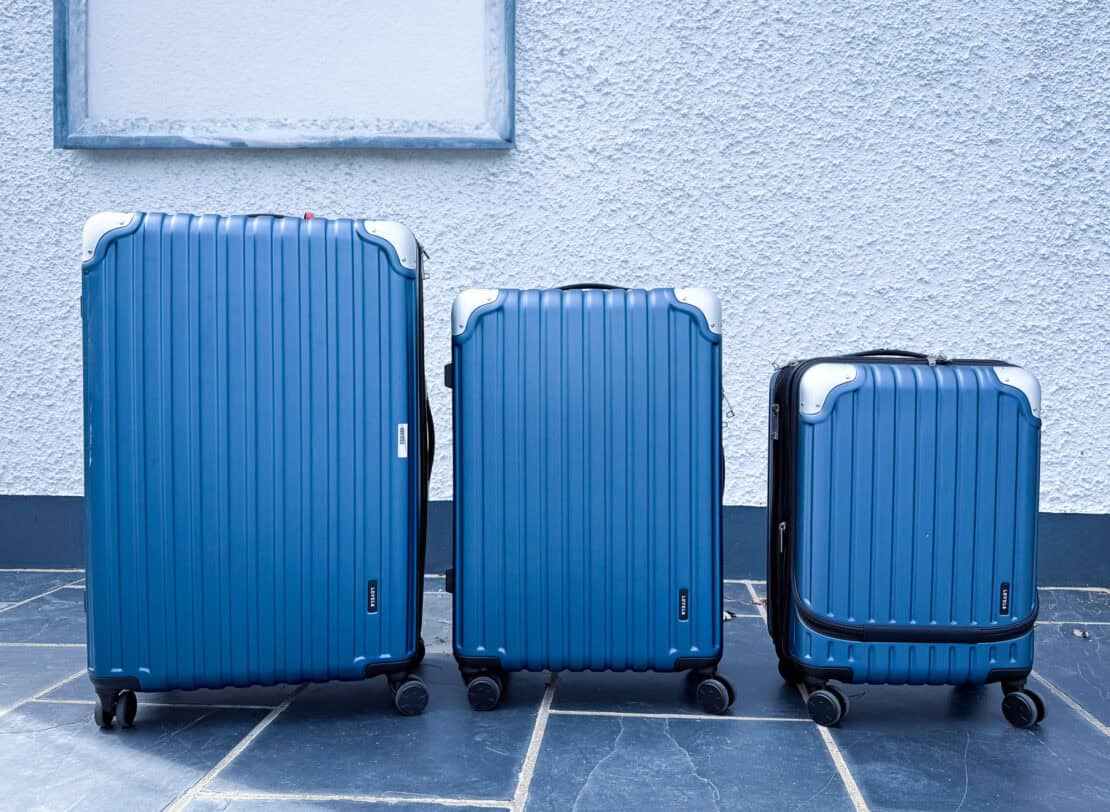
When it comes to packing tips, the golden rule is simple: eyewear never goes in the hold. Your prescription glasses and contact lenses must always stay in your carry-on luggage. The risk of crushed bags or lost luggage is simply too high for such a critical asset.
However, the bulky designer clamshell case that came with your frames takes up too much room in a briefcase. For a more efficient travel case, look for a slimline, crush-proof aluminium tube case or a repurposed hard-shell electronics case like this.
If you absolutely must pack a spare in checked luggage, use the “Shoe Safe” method. Place your glasses in their case, and then slide that case inside a formal dress shoe. Pack the shoe in the middle of your suitcase. The leather shoe provides a rigid exoskeleton that protects your eyes from heavy handling.
Phase 3: In-Transit Tactics
The debate between glasses or contacts heats up at 35,000 feet. While you might prefer wearing contacts for arrival, the cabin environment is hostile to them. Humidity on a plane drops to around 10-20%, causing contact lenses to dry out rapidly.
The best protocol is to wear glasses the moment you board. If you prefer contacts for the destination, pack daily disposable contact lenses in your hand luggage and switch them in upon arrival (after carefully washing your hands, of course.) This keeps your eyes hydrated and comfortable.
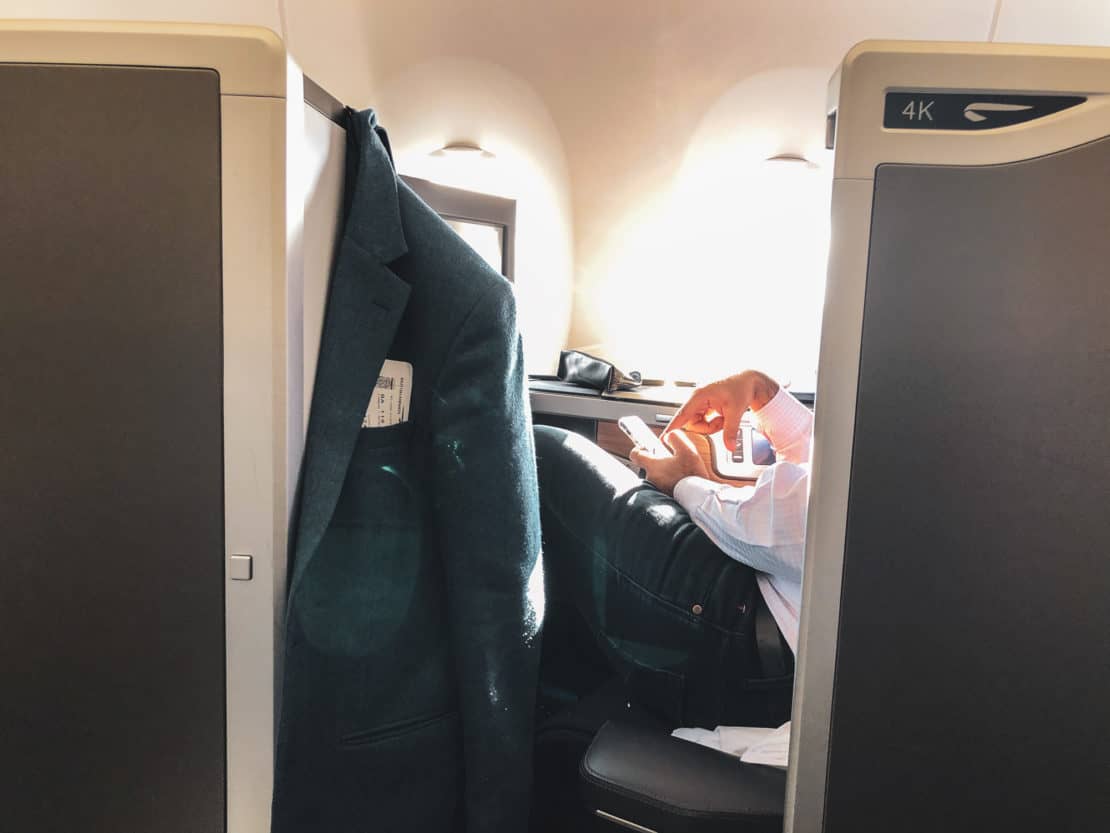
A critical warning for the flight: never put glasses in the seat back pocket. This is the Bermuda Triangle of eyewear. It is the number one location for breakage (when the passenger in front reclines) and loss (leaving them behind in the rush to get off). If they are not on your face, secure your glasses in a case when not in use, or use a magnetic eyewear holder on your shirt.
See also our guide on how to fly with contact lenses.

Phase 4: Managing Sun and Light
Protecting your eyes from harmful UV rays is just as important as protecting your skin. When you pack sunglasses for travel, you need to consider your itinerary.
For professionals moving constantly between indoors and outdoors, such as site inspections followed by client lunches, switching frames can be clumsy. In this scenario, photochromic lenses are a game-changer. These lenses darken automatically in sunlight, offering sun protection without the need to juggle multiple pairs.
If you prefer a separate pair of sunglasses, ensure they offer full UV protection. A clip-on is a space-saving alternative if you want to turn your main pair into shades without carrying a second bulky hard case. Alternatively, prescription sunglasses offer the best visual clarity for driving or reading by the pool.
When renting a vehicle, never leave your sunglasses in the car dashboard. The extreme heat through the windscreen can warp the frame styles and damage the coating on the lens. Always take your glasses with you.
Phase 5: Destination Strategies
Different climates pose different challenges. If you are travelling to a humid destination, stepping from an air-conditioned hotel into the street can instantly fog your lenses. A secret tip from divers: a tiny dab of shaving foam or specialist anti-fog spray on your lenses can create a barrier against condensation.
You should also curate a small maintenance kit. Forget the cheap repair kits found in gas stations. Pack a precision screwdriver that actually fits your specific hinge screws, a spare nose pad, and a high-quality microfibre cloth. Do not rely on your shirt tail to clean your lenses; dust on fabrics can scratch the coating.
In a Nutshell
Ultimately, the goal is to protect your vision so you can focus on the purpose of your trip. Whether you wear prescription glasses or contact lenses, treating your optical equipment as a vital business asset is key.
Check your travel insurance policy to see if it covers the replacement cost of high-end designer frames. By taking the right eyewear, organising a backup set, and knowing how to store your glasses correctly, you ensure that a broken frame never breaks your schedule.
Go check your backup pair of glasses right now. If they are five years old and scratched, you are not packed.
Secure your glasses, protect your eyes, and enjoy a trip where the only thing breathtaking is the view.
More Flight Hacks
- Long haul flight essentials – what you need for a more comfortable flight
- How much does it cost to charter a plane?
- Which airline has the best business class to London?
- The Cathay Pacific Business Class Review
- The British Airways Business Review: the new Club Suite
- The Virgin Business Class Review: is it worth it?
- The traditional British Airways Business Class Review
- Can laptops go in checked luggage? What you need to know.