Why it matters what you eat before, during and after a swim workout.
Earlier this year, in a bid to find more enjoyable ways to stay fit, I cycled 340 kilometres across Southern Albania. It was beautiful, challenging and, in places, involved more goats than seemed strictly necessary. It also taught me a fundamental truth: what you eat matters. A lot. When you’re pedalling up mountain passes in the midday sun, you begin to understand the difference between being “a bit hungry” and “I may never move again unless someone hands me a banana immediately.”
And truthfully? I realised this even sooner, in the grizzly, drizzly training routes in the winter in Wales.
Now, having recovered from both the hills and the goats, I’ve taken on a new challenge: swimming lessons. Proper ones. As it turns out, I’ve been doing it wrong all these years.
It’s exciting to finally get it right but it’s also interesting to notice just how much energy it quietly demands. As a woman of a certain age, I’m also battling migraines, which are often triggered by hunger.
All of which is a long winded way of saying that I’ve been thinking about what swimmers should actually eat to keep up energy levels, maintain focus and recover well, without getting a stitch.
Before we go further, a disclaimer: this is general guidance based on research and experience, not personalised medical advice. If you have specific needs, consult a qualified professional. You know, as always.
Let’s dive in. (Sorry.)

Why Swimming Requires a Different Fuel Strategy
Swimming uses almost every major muscle group while also demanding controlled breathing and steady technique. Add a cool-water environment, which encourages the body to burn more energy to stay warm, and the calorie needs increase faster than you might expect.
Unlike running, cycling or hiking, swimming hides the sensation of sweat and sometimes dulls appetite. It feels calm, even meditative, yet your body is working hard beneath the surface. That means you need to plan, not rely on vague hunger cues to remind you when it’s time to eat.
Meals and Snacks to Eat Before a Swim
A good pre-swim meal provides enough fuel to power your session without sitting uncomfortably in your stomach. Whole grains are great for this because you’re body will break them down slowly, releasing a little bit of energy over several hours. Refined carbs, like sweets or white bread, give a quick sugar rush but that then causes an insulin spike which causes your blood sugar to lower again.
If you have 2–3 hours before your swim: wholegrain toast with peanut butter; porridge topped with berries; baked sweet potato with cottage cheese; rice bowl with vegetables and lean protein.
If you only have 30–60 minutes: a banana; a slice of malt loaf; a small yoghurt; a handful of dried fruit. You don’t want to overdo it at this point.
Hydration matters too. Make sure to drink water before you swim, but not too much, obviously.
As for the classic full English breakfast: save that until afterwards, unless your goal is to discover what sinking feels like.
How to Fuel Longer Sessions
If your training runs over 60–90 minutes, a small carbohydrate top-up can help.
Consider diluted fruit juice, a sports drink, a few bites of an oat bar, crackers or granola during longer breaks, or water with added electrolytes if you’re training intensely. It’s worthing doing this even if you are hoping to shed some fat. The body needs some carbs in order to access its fat supplies, so don’t be afraid of them!
Most swimmers don’t need gels unless they’re in open water for extended periods, but they’re there if you fancy pretending you’re in the Olympic trials. And we won’t judge you. We’re all for a bit of competitive swimming.
It’s even more important to stay hydrated, of course, so remember to take a water bottle to the pool.
Recovery
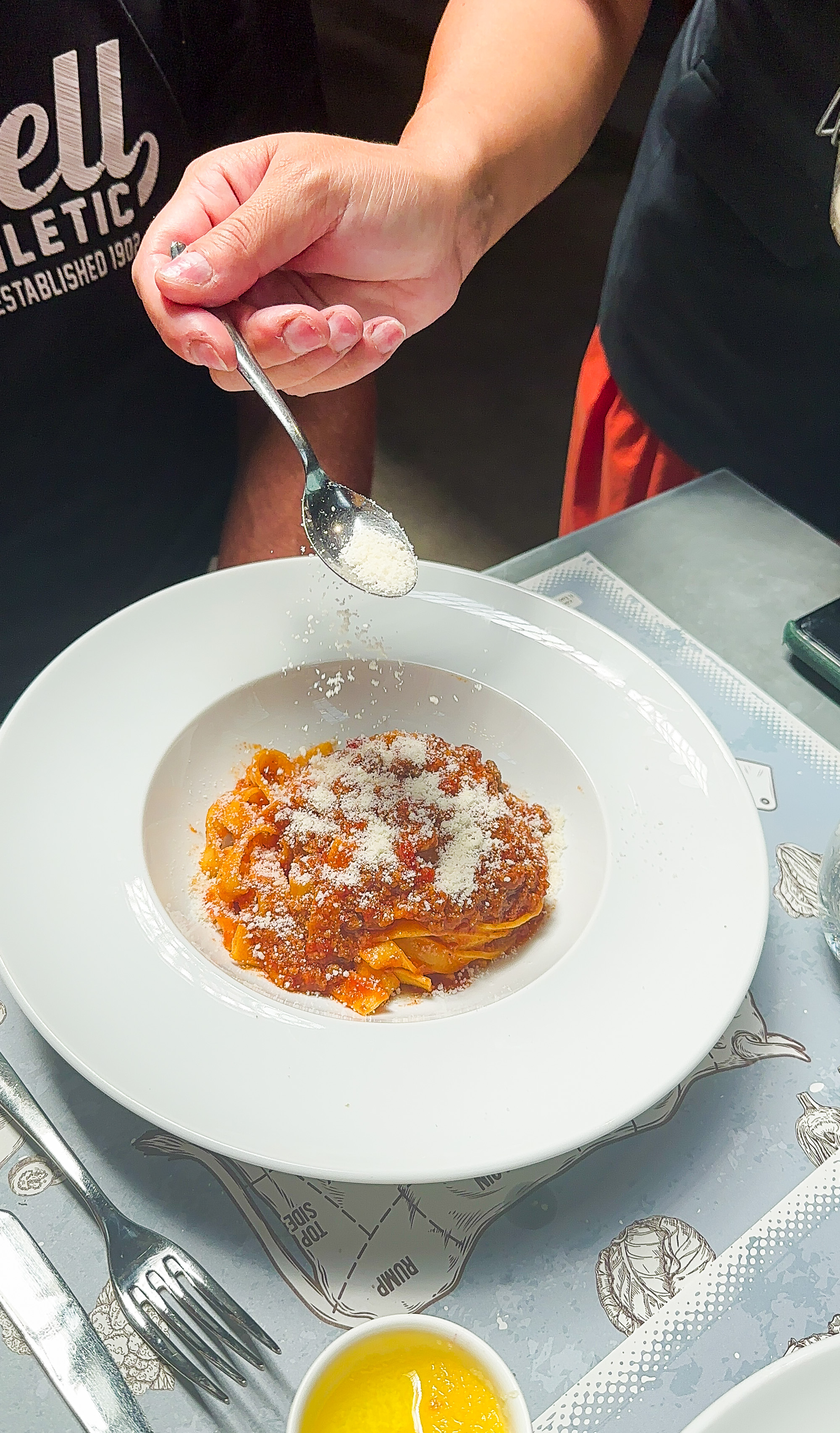
Aim for a mix of carbohydrate and protein within 30–60 minutes to replenish your supplies.
Examples include wholegrain pasta with pesto and salmon, an omelette with spinach, a rice and grilled chicken bowl, a smoothie with fruit or something like a high protein strawberry yogurt
Swimming can suppress hunger at first, especially in cooler water, so if you don’t feel like eating straightaway, have something light first and then top up through a meal later.
And one more time: don’t forget hydration! Just because you can’t see the sweat doesn’t mean it isn’t happening.
Practical Tips for Everyday Swimmers and Competitive Swimmers Alike
- Packable options: bananas, trail mix, small yoghurts, refillable water bottles, oat bars, granola bars.
- Early morning sessions: try a banana or half a cereal bar before you go, then breakfast afterwards.
- Training between work and family life: keep emergency snacks in your bag so you’re not relying on vending machines.
- Travelling swimmers: refillable bottles, lightweight snacks, and local markets for fresh produce. Check out our ultimate packing list to cover everything you need.
- Sustainability: choose local fruit, avoid excess packaging and carry reusable containers.
Why Hydration Matters As Much as Food Choices
Yes, I’m going to labour the point. While you do need to fuel your body with the right foods, you also need to hydrate and then rehydrate. Bring a water bottle to each swim and you’ll see more success in the pool. It’s not only about optimal performance, it’s about feeling good as you do it too.
Final Thoughts
Cycling across Albania was a test of stamina (and a lot of fun.) Swimming, so far, feels like a test of coordination, breath control and occasionally dignity.
But both have reminded me how satisfying it is to learn something new – and how it all feels so much better if you manage the basics right.
Fact Box: How Swimmers Train Around the World
Iceland – Geothermal warm-ups:
In Iceland, many outdoor pools are naturally heated by geothermal energy. Local swimmers alternate laps with a soak in hot pots. This is supposed to improve circulation and makes winter training surprisingly pleasant, even in sub-zero air temperatures.
Japan – The quiet lanes of onsen towns:
Several traditional onsen towns include swimming areas fed by mineral-rich hot springs. The water isn’t suitable for intense training (it’s way, way too hot), but Japanese athletes often use these pools for gentle recovery sessions after competitions.
Australia – Ocean pools and tidal timing:
Along Australia’s coast, ocean-fed pools allow swimmers to train with waves crashing just metres away. Some clubs still time their early-morning sessions to the tides, a practice that dates back more than a century. My favourite spot is the open air pool that stretches into the ocean: the Bondi Baths.
France – Lake swimming and long-distance culture:
French endurance swimmers frequently train in alpine lakes, valuing the cold water for stamina building. The annual Traversée du Lac d’Annecy has been held since 1931 and remains one of Europe’s classic open-water events.
General Travel Tips and Life Hacks
- How to travel more with a full time job
- How to become a race engineer: careers that travel the world
- The best ways to connect to the internet abroad
- The best travel websites and resources year on year
- 101 Food and drink quiz questions to quench your thirst
- Creative travel journal ideas for your next trip
- The best wildlife experiences in the world
- 31 luxury travel tips for your next trip
- How to set up a travel journal: your creative guide
- The ultimate business travel safety tips
- The best summer bucket list
- How to display travel souvenirs at home