
Wondering what to wear in Egypt? This guide to the Egypt dress code will make sure you pack what you need and nothing you don’t.
What Should You Wear in Egypt?
Are you someone who loves to work out what to wear? Or is fashion something that just seems to happen to other people.
When you’re planning a trip to Egypt, you do need to consider how you’ll dress.
Not just because of the heat (which is fierce), or the sand (which gets everywhere), or even the sun (which is relentless). But because clothing in Egypt – what you cover, what you reveal, and how you appear to others – threads its way through religion, history, and contemporary culture in ways that aren’t always obvious at first glance.
And because having the right clothes means that you will be more comfortable and more capable of taking in the country’s incredible sites.
Without offending local people.
Understanding Egypt’s Dress Code
After several visits to Egypt at different stages of life, I decided to finally sit down and share my thoughts. Not only on what to wear for female tourists, but also a few thoughts about my observations about the local customs and traditions beyond the beach resorts. And why they matter.
This guide doesn’t aim to impose a set of rigid rules but it should help you understand what’s going on, so that you can travel with respect, confidence, and comfort.
Here’s what you need to know about dressing for Egypt.
The Big Picture – Why Dress Matters in Egypt
Egypt has a lot going on. Or, it is a land of contrasts as travel writers say.
You can sip cocktails by infinity pools in Sharm el-Sheikh and scramble up sun-bleached ruins that predate most of recorded history all in the same week. But while the settings shift quickly, one thing tends to remain consistent: expectations around modesty.
Egypt is a Muslim-majority country, and although not everyone dresses the same, a general sense of conservative dress codes persists. This is all the more important in rural areas, religious sites, and outside the major tourist enclaves.
But it’s important to remember that it is just a code. It’s not the law. You won’t be arrested for wearing shorts or sleeveless tops. But you may, no will, attract attention, some of it curious, most of it unwelcome and far more intrusive than, say, on the streets of London.
It’s About Respect, Not the Law
Dressing modestly isn’t about erasing your identity; it’s about understanding that in many parts of Egypt, covering up is associated with respect, maturity, and even cleanliness.
And the rules – or rather, expectations – are not the same everywhere. In cosmopolitan Cairo, you’ll see locals in everything from jeans to niqabs. In small villages along the Nile or during mosque visits, the cultural norm leans more conservative. At Red Sea resorts, things loosen up again.
The trick is to pack adaptable clothing and approach each setting with a mindset of respect and observation.
It’s also worth noting that the Egyptian dress code isn’t just about manners. It’s about staying comfortable and healthy in the heat. Loose, long clothes really do help in this regard! Trust me!
What to Wear in Egypt (At a Glance)
If you’re short on time (or standing over an open suitcase in mild despair) this section is for you.
Here are the essentials to help you blend in, stay comfortable, and avoid awkward moments across most parts of Egypt.
For All Travellers:
- Loose, lightweight fabrics – Cotton, linen and breathable blends work best. Avoid clingy or sheer materials, especially in cities.
- Covered shoulders and knees – A good baseline for most public areas.
- Neutral colours – Lighter shades reflect the sun and attract less attention.
- Closed-toe shoes – Ideal for dusty streets and archaeological sites.
- Scarf or shawl – An invaluable item: use it as a sun shield, mosque covering or light wrap in the evenings.
- Something warm – The evenings are sometimes cooler and air conditioning on flights or buses can be fierce. A simple cardigan, jumper or light jacket will do. But it will spend most of the time scrunched in a bag, so don’t pack anything high maintenance.
For Women:
- Long skirts or loose trousers – Especially helpful in rural areas or religious sites.
- Tops with sleeves (at least to the elbow) – Vest tops tend to draw attention.
- Optional headscarf – Required for mosque visits, not for general public spaces, but useful to have on hand.
- Swimwear – Bikinis are fine at resort beaches, but not for public beaches or walking through hotels.
For Men:
- Avoid shorts in cities – Long, breathable trousers are more respectful and offer better sun protection.
- No sleeveless tops – Best reserved for poolside or gym settings.
- Smart casual for evenings – Particularly in hotels or nicer restaurants.
This checklist works as a rough compass but as ever with travel, observation is key. Take your cue from local guides, hotel staff and the general dress of people around you.
Need more tips and tricks? Don’t miss our ultimate pre-travel checklist.
For Women – Dressing Respectfully & Comfortably
I have to be honest. Egypt is one of only two countries where I have found the level of leering and hassle a problem. I’ve still loved my time in the country and am keen to return but it’s somewhere I really prefer seeing with a local guide and have not enjoyed being solo.
And I have always worn conservative clothes and covered up. I can only imagine how much more difficult it would be if I’d arrived with only tank tops and short shorts (an impossible idea at this stage of life but my day to day uniform when I was younger.)
Clothing choices won’t solve every problem, but they can help ease your way, showing cultural awareness while protecting you from the heat, the sun, and – occasionally – unwanted attention.
Cities vs. Small Towns
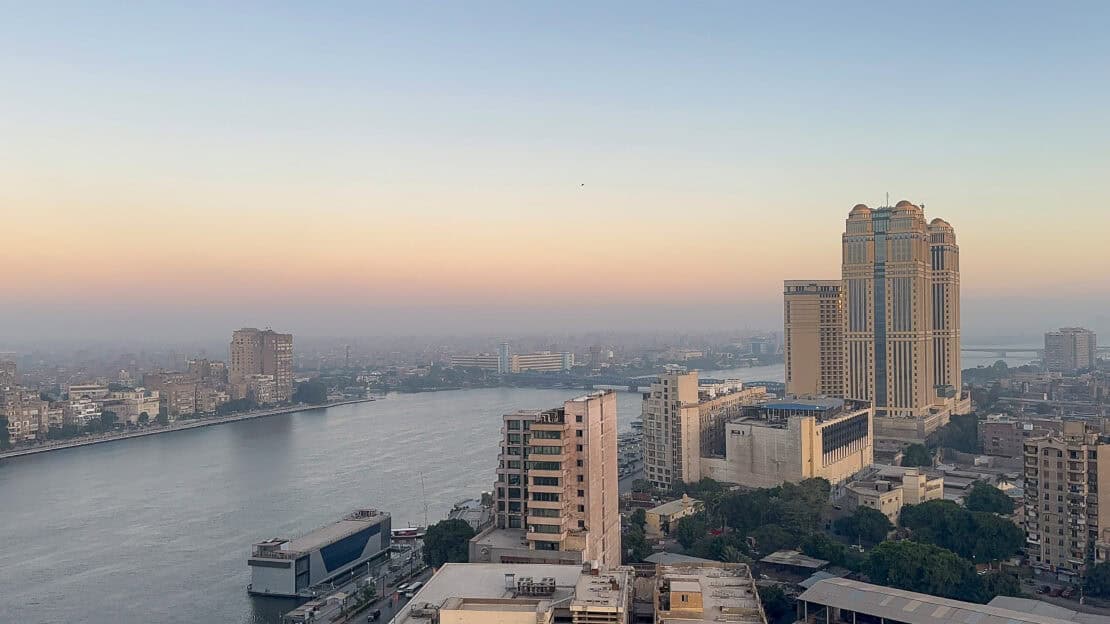
In Cairo and other large cities, there’s more flexibility in what’s considered appropriate. Looser jeans or trousers paired with a tunic or long-sleeved top will generally be fine when visiting key sites like the Egyptian Museum Cairo. In smaller towns and rural areas – particularly along the Nile or in conservative communities – I know I’m repeating myself here – but local dress tends to be more reserved. Here, opting for longer hemlines and sleeves is not only respectful but often more comfortable, too. I know I keep mentioning it but that sun is harsh.
At Religious Sites
When visiting mosques, more coverage is expected. Women should wear long trousers or skirts, long sleeves, and a headscarf. Shoes must be removed before entering prayer areas, so it’s worth packing socks or choosing footwear that’s easy to slip on and off.
Swimwear and Resorts
At Red Sea resorts like Hurghada or Sharm el-Sheikh, the dress code is far more relaxed. Western-style swimwear, including bikinis, is common at private hotel beaches and pools. That said, it’s still advisable to wear a cover-up when walking through public hotel areas or nearby towns.
For Men – Don’t Get Caught Out
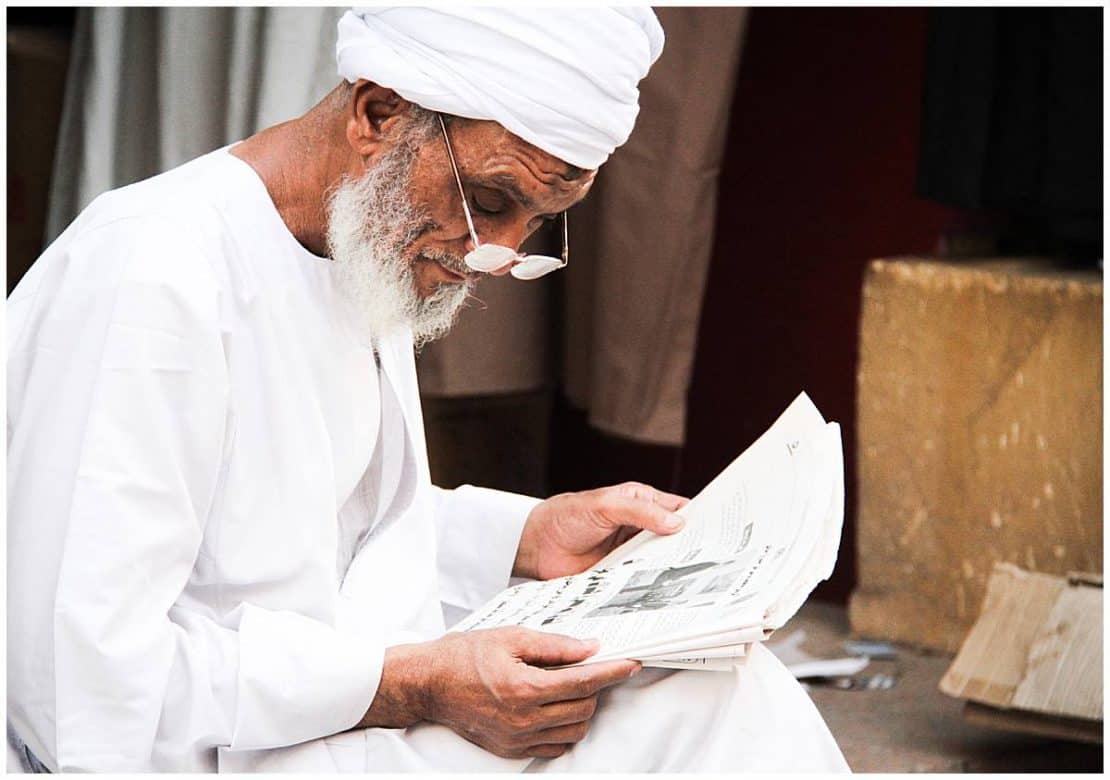
While much of the dress code conversation tends to focus on women, men aren’t entirely off the hook. Dress expectations may be more relaxed, but they still exist – and ignoring them can lead to raised eyebrows, restricted access to certain places, or simply feeling out of step with your surroundings. Mr Lab once received a slap on his legs when he was wearing shorts. So, if you don’t enjoy that sort of thing, then cover up!
Here’s how to put together a travel capsule wardrobe for men.
Shorts: A Grey Area
Shorts are where many male travellers go wrong. While you might get away with them at tourist sites or in resort towns, they’re often considered too casual for cities, religious sites and local neighbourhoods. Lightweight trousers or long linen-style pants are a safer and more versatile choice – offering both modesty and sun protection.
Sleeveless Tops and Gym Wear
Tops that reveal shoulder (like vests or tank tops) are best avoided outside of the beach or gym. In day-to-day public life, short-sleeved shirts or polos work better.
Footwear and Practicality
Sturdy, closed-toe shoes are ideal for navigating uneven pavements, temple ruins and crowded streets. Sandals are fine in relaxed settings, but best worn with an awareness of local norms – especially if entering religious or formal spaces.
Evening Wear
In more upmarket hotels, restaurants or on Nile cruises, a smart-casual dress code is often the norm. A collared shirt and decent trousers can go a long way. While you don’t need a jacket or tie, you may feel underdressed in scruffy tourist gear.
What to Wear at Specific Sites
Let’s drill down…
Temples and Archaeological Sites
These are some of the most awe-inspiring places in Egypt – and also some of the hottest and dustiest.
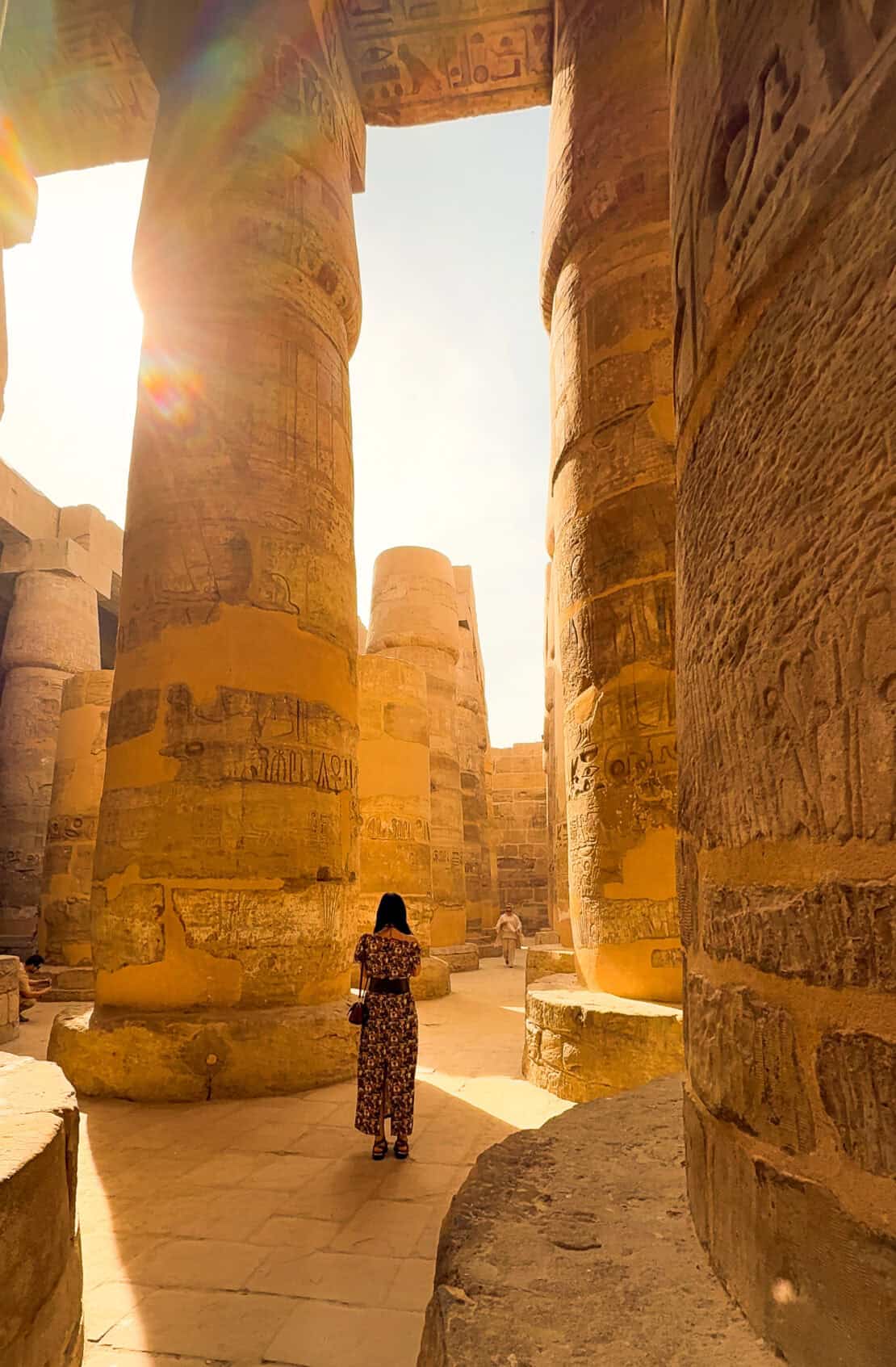
- Best attire: Loose-fitting, long-sleeved shirts and lightweight trousers or maxi skirts.
- Why it matters: Not only does this show cultural sensitivity, it also protects your skin from the sun and minimises contact with sandy, sunbaked stone surfaces that are common at Egypt’s UNESCO World Heritage sites.
- Footwear: Sturdy, closed-toe shoes help with uneven ground and offer better grip on worn stone steps.
- Headwear: It’s a good idea to wear a wide-brimmed hat as many historical sites offer next to no shade.
Mosques and Religious Sites
Egypt is a muslim country and this is where dressing appropriately and respecting the local culture becomes non-negotiable.
- Women: Long sleeves, full-length skirts or trousers, and a headscarf to cover your hair.
- Men: Long trousers and sleeved tops.
- Shoes: All visitors must remove their shoes, so bring socks or wear slip-on footwear.
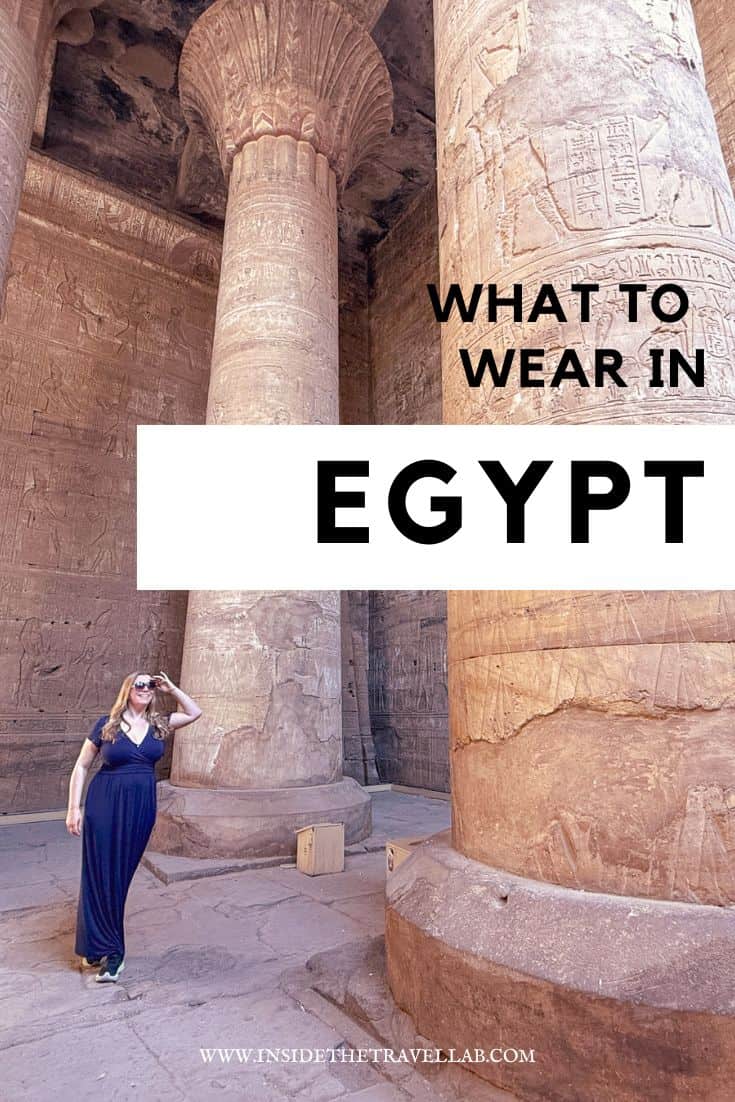
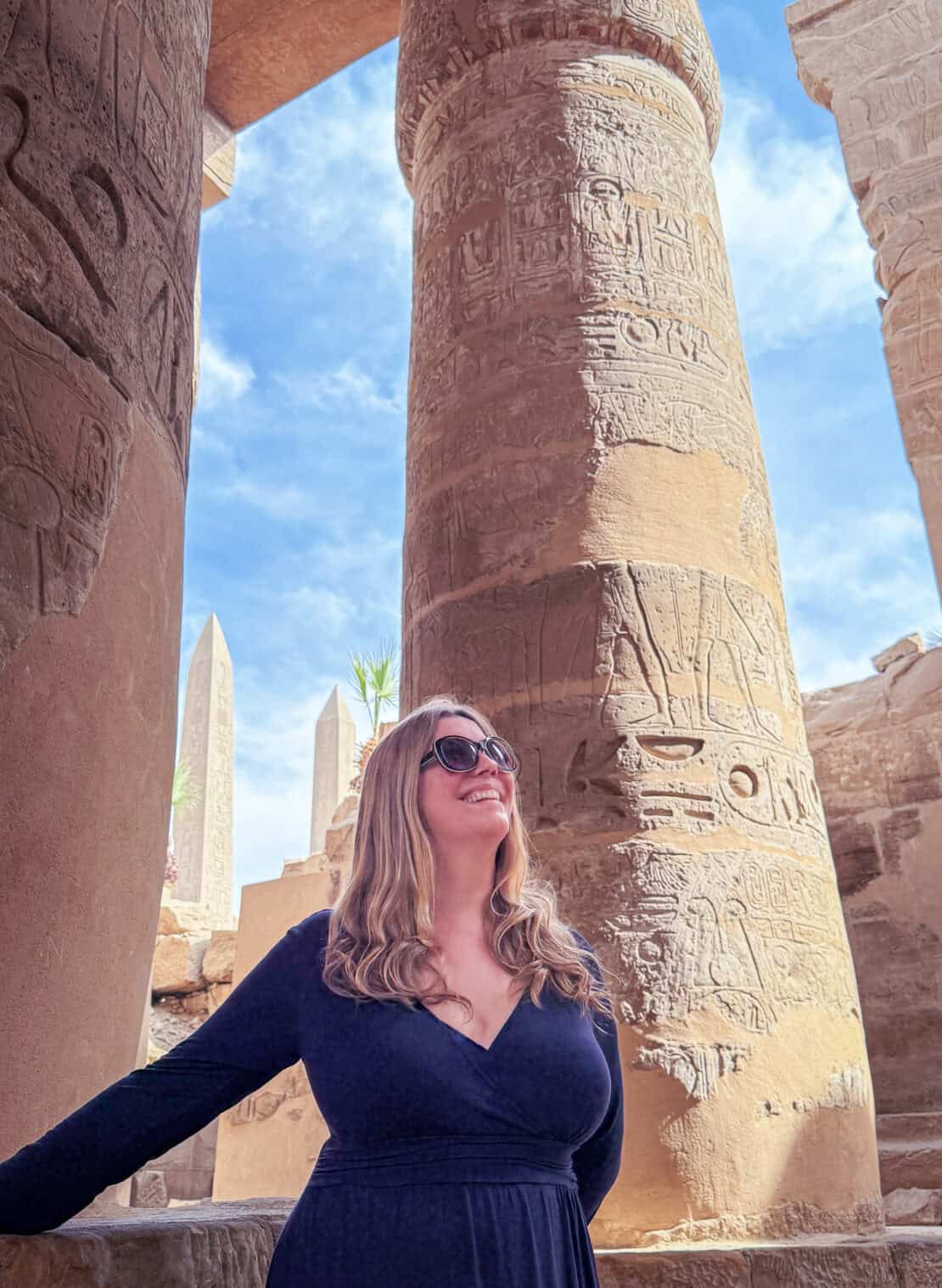
- Extra tip: Some mosques provide cover-up garments at the entrance, but it’s best not to rely on this. Also, make sure that nothing you wear is see-through in the sun. The maxi dresses you’ll see in the photos are fine for ruins but I would need a scarf to cover the V neck for a mosque.
Markets and Local Neighbourhoods
I’ve had some of my best – and worst – moments inside bustling souks. My tip would be to try not to stand out, keep covered up and don’t wear anything that looks valuable (like watches and jewellery.)
- Stick to modest wear: Covered arms and legs are a safe bet.
- Avoid flashy accessories or tight clothing: It’s not just about modesty; it’s also about reducing the impression of wealth or vulnerability.
Desert Excursions
Whether you’re heading into the Sahara or exploring the dunes near Aswan, conditions change rapidly.
- Layering is key: Temperatures can soar during the day and drop in the evening. It gets cold at night!
- Sun protection: Long sleeves, a wide-brimmed hat or scarf, and sunglasses.
- Shoes: Closed, breathable walking shoes or boots work best.
Red Sea Resorts
Places like Sharm el Sheikh or Hurghada operate under a more Westernised dress code, particularly within resort complexes.
- Swimwear: Bikinis and swim trunks are fine on private beaches and by hotel pools.
- Cover up elsewhere: Walking through lobbies, restaurants or towns in beachwear is considered impolite. A simple cover-up or sarong does the job.
Cultural Etiquette & Common Misconceptions About the Egypt Dress Code
Let’s deal with a few myths.
Misconception 1: “Everyone wears black and covers up.”
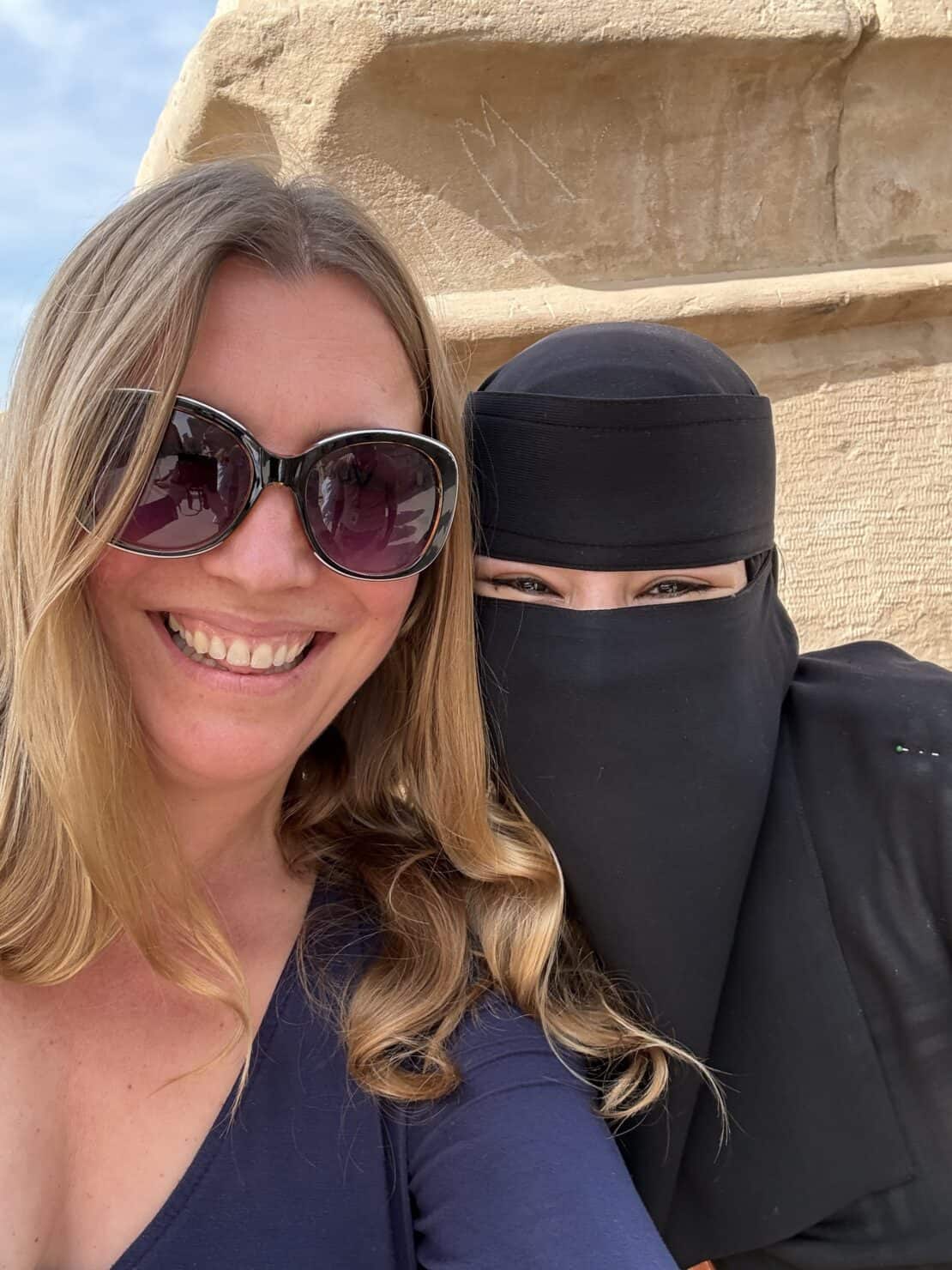
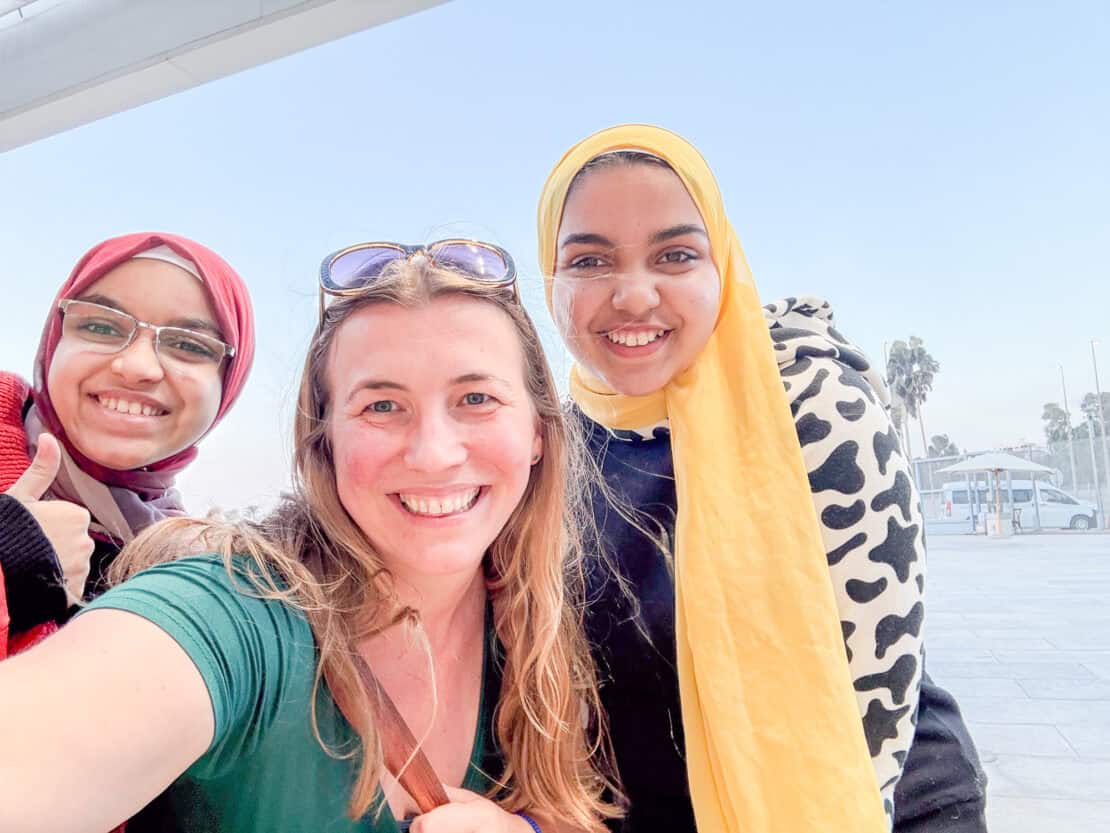
It’s true that modesty is the cultural norm, especially for women, but that doesn’t mean dull or uniform. Egyptian women often dress in colourful, layered outfits that balance style with tradition. You’ll see headscarves and flowing coats alongside fitted jeans and heeled shoes in Cairo. In smaller towns, the tone is more conservative, but again, not uniform.
Misconception 2: “As a foreigner, it doesn’t matter what I wear.”
While you may not be expected to dress exactly like a local, your clothing still communicates something – whether you intend it to or not. A little effort to align with local customs often goes a long way in how you’re treated and welcomed.
Misconception 3: “It’s about religion, so it’s not my problem.”
Religion plays a role, yes, but dress codes in Egypt are also about broader ideas of respectability, professionalism and hospitality. Egyptians take pride in dressing well in public- even on a casual outing. Looking scruffy or overly exposed can come across as careless rather than carefree.
Respect vs. Judgement
There’s a common fear among travellers of “doing it wrong” and being judged. The reality is that most Egyptians are generous and understanding – especially if they see you’re making an effort.
In short, don’t stress about it. Just do your best.
Packing Tips for Egypt
Let’s get you ready to pack that bag and nail the Egypt dress code.
Build a Capsule Wardrobe
Focus on lightweight, mix-and-match pieces in breathable fabrics that can be layered and dressed up or down. Think neutral tones with a few accents, and clothing that moves easily from day to evening.
Suggested Staples:
- Loose, breathable long-sleeved tops. One per day of your trip.
- 1 – 3 long skirts or wide-leg trousers.
- Alternatively, a maxi dress with sleeves (great for mosque visits or dinners out). One per day of your trip.
- Lightweight cardigan or wrap for cooler evenings.
- Scarf or shawl (multi-use: sun cover, mosque entry, plane blanket).
- Comfortable walking shoes + slip-on sandals.
- Swimwear + cover-up (for resorts or cruise pools).
- Sun hat and sunglasses.
- Wide-brimmed hat.
Consider the Seasons
- Summer (May to September): Extremely hot, especially in Upper Egypt (Luxor, Aswan). Pack light in both senses – fabrics and colour.
- Winter (November to February): Mild during the day but surprisingly cold in the evenings. Add a jumper or light jacket.
- Spring & Autumn: Comfortable and ideal for travel. A few layers should see you through.
Laundry and Rewearing
Many hotels offer laundry services, although they are annoyingly expensive. Local laundrettes are affordable and quick but it depends if you are on a tight schedule with a group tip.
What Not to Pack
- High heels – Impractical on cobbled streets and sandy paths. Stick to comfortable shoes and leave more space for souvenirs.
- Heavy jeans – Hot and slow to dry.
- Anything sheer or too short – Tempting in the heat, but often inappropriate outside resort areas.
FAQ: What to Wear in Egypt – Your Questions Answered
How Should Female Tourists Dress in Egypt?
Cover up! Female travellers are advised to dress modestly in most parts of Egypt, especially outside resort areas. That usually means covering shoulders, cleavage and knees. Long skirts, loose trousers and tops with sleeves are ideal. In tourist hubs like Cairo or Luxor, you’ll see a range of styles, but dressing more conservatively generally leads to a smoother experience. In resort towns, standards are more relaxed, but it is still respectful to wear a cover-up when leaving the beach or pool area.
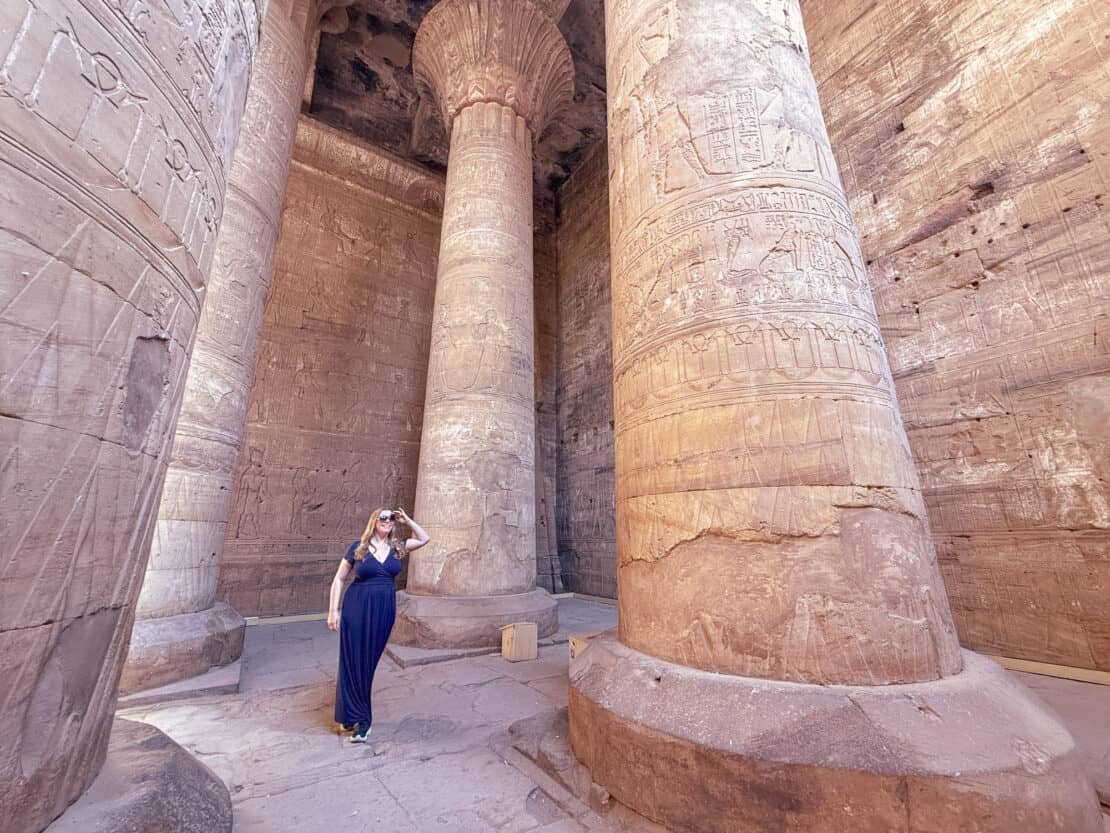
Maxi Dresses
I am a huge fan of maxi dresses like this in the Middle East. They cover up perfectly but allow for a cooling breeze against your skin. That makes them perfect for local markets, ancient temples and for covering up at the hotel pool if you need to get changed in a semi public place. I did worry about the V neck but have been told that it is fine everywhere other than in a mosque. I always pack a light scarf if that’s on the itinerary. It’s helpful to cover up and also protects my face in a sand storm.
These dresses also have pockets, which is perfect for tissues and small amounts of money when heading to the toilet (in many places, you need both and there’s no hook for a handbag, so it makes sense to leave the bag with someone else.)
They are smart enough for formal wear and always make it onto my packing list.
Is There a Strict Dress Code in Egypt?
There is no official legal dress code for tourists, but there are strong social expectations in many parts of the country, particularly in rural areas and religious sites. Egyptians often dress more formally than visitors expect, even in everyday life. While you will not be stopped or fined for wearing shorts or sleeveless tops, you may feel out of place or attract unwanted attention.
Is it Okay to Wear Shorts in Egypt?
It depends on where you are. In beach resorts and private hotel spaces, shorts are A-OK. In cities, religious sites and more traditional areas, they are often seen as too casual, particularly for men. For women, shorts that expose the thighs are best avoided in public spaces. Instead, opt for longer skirts or lightweight trousers. For men, knee-length cargo shorts may be tolerated in tourist areas but are still better swapped for long trousers in most settings.
Is There a Dress Code to Visit the Pyramids?
There is no formal dress code at the pyramids of Giza or other ancient sites, but modest dress is strongly recommended. You will be climbing, walking on uneven ground splattered with camel poo and exposed to strong sun and wind, so practical, comfortable clothing is key. Choose breathable fabrics, long sleeves for sun protection and sturdy shoes. Revealing or overly tight clothing will attract a crowd of attention and will not protect you from the elements or the dust.
Do I Need to Wear a Headscarf in Egypt?
Not in general, but you will need one to enter mosques or other Islamic religious spaces. Outside of that, it is optional. Many Egyptian women wear headscarves, but many others do not. As a visitor, it is not expected in public, though having a scarf in your bag is useful not only for mosques but also for sun and dust protection.
What Can I Wear at the Beach in Egypt?
At resort beaches and hotel pools, Western swimwear including bikinis and trunks is generally fine. The further you get from tourist zones, the more modesty is appreciated. On public beaches, local women usually swim fully clothed or in modest swimwear. If you are unsure, wear a cover-up to and from the water and avoid sunbathing in public areas.
Can I Wear Leggings in Egypt?
Leggings are acceptable if worn with a long tunic or top that covers your bottom. Worn alone, they may come across as too revealing in more traditional areas.
What Do Egyptian Locals Wear?
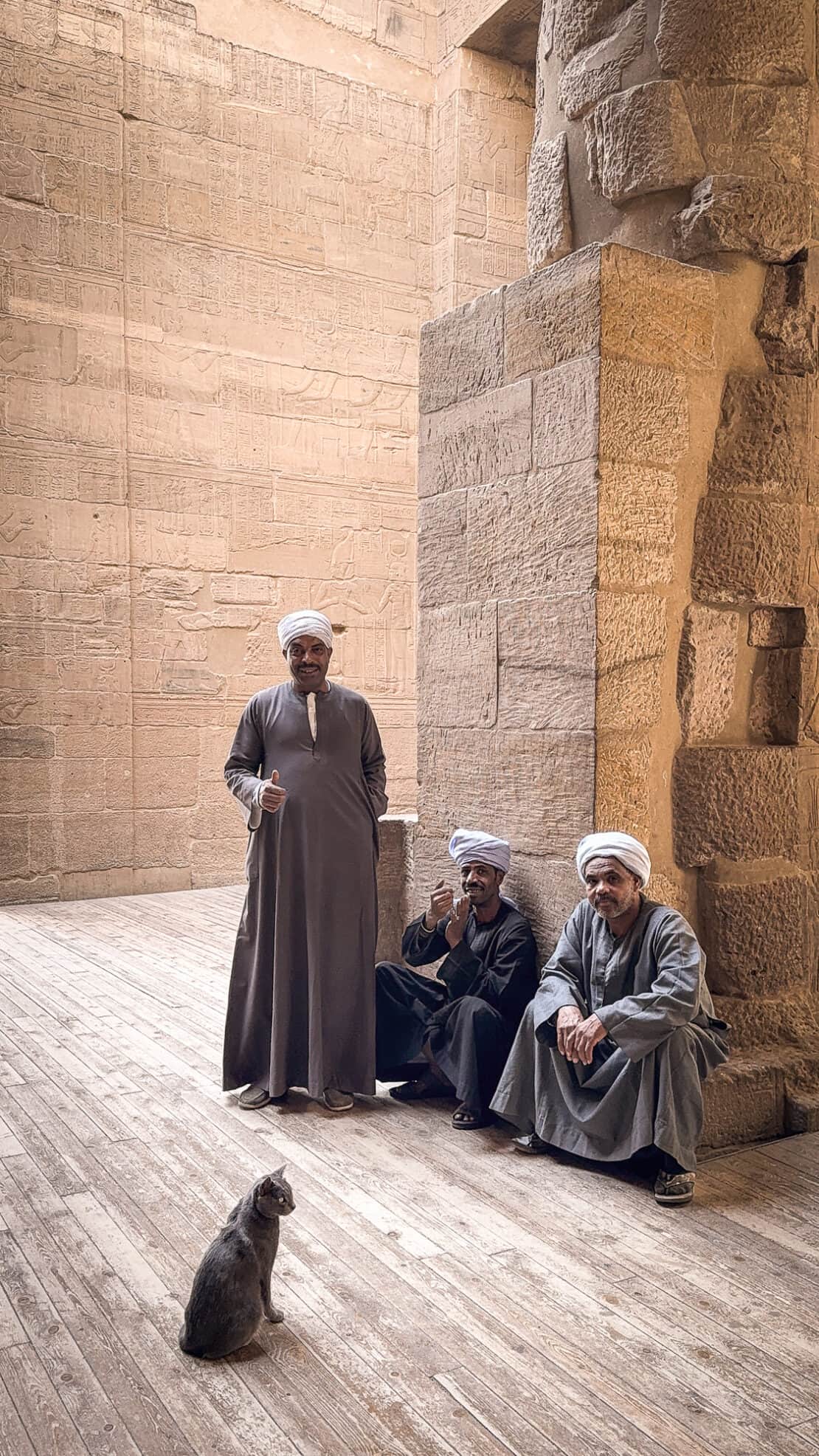
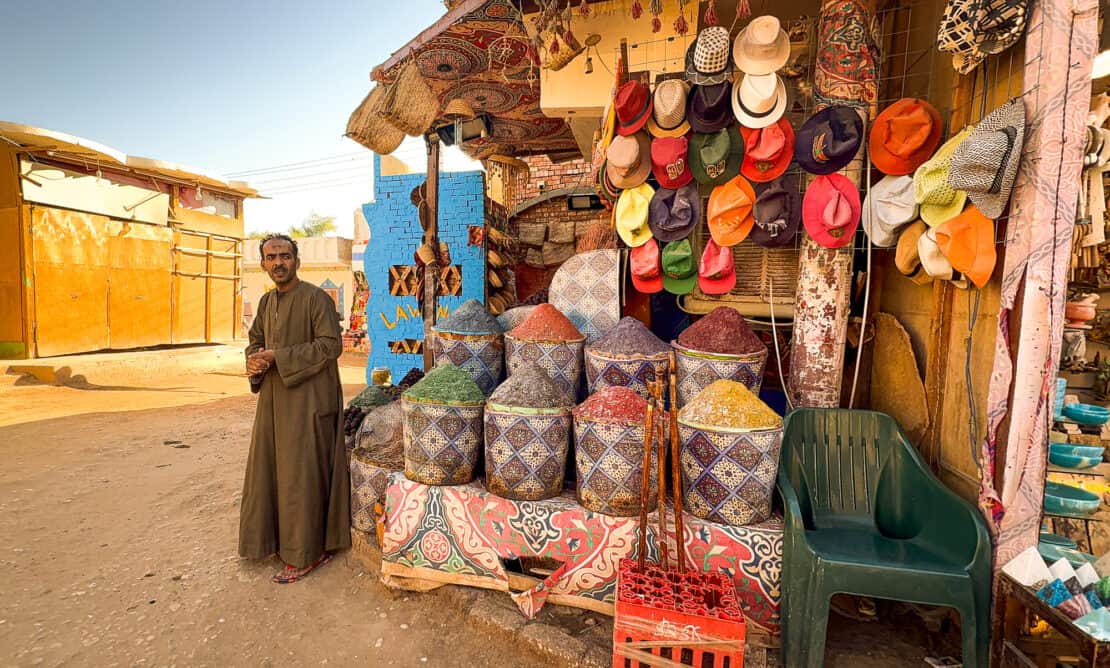
Egyptian dress varies widely by region and personal style. In big cities, you will see everything from jeans and headscarves to high-street fashion and flowing robes. In more conservative or rural areas, women often wear long dresses or abayas, and men wear trousers and shirts, even in hot weather. Across the board, people tend to dress neatly and with care, even when dressing casually.
Now, get packing and go and have the best time in Egypt!
The Best Places to Visit in Egypt
More About Travel in Egypt
- The Viking Nile cruise review
- What’s new in Ancient Egypt?
- The Viking Explorer Suite review on the Nile (with video)