Discover why a travel photo book is the perfect gift to capture memories, relive adventures and inspire wanderlust.
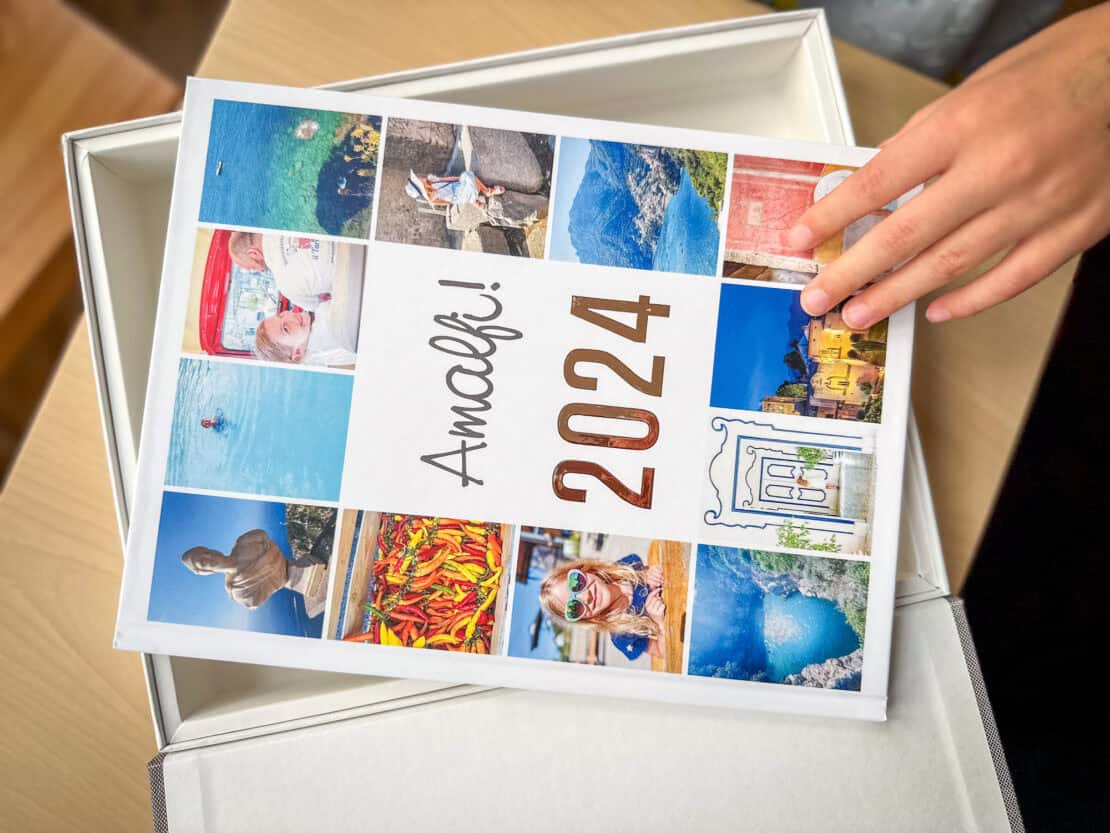
Many travel gifts are terrible.
You know what I mean. The aromatic local spirit that sits in a cupboard, even over Christmas because things never get quite that bad. The travel towel that seemed like a good idea until you actually tried drying yourself with it. And the travel journal so heavy it never made it on the plane.
Why a Travel Photo Book is a Different Kind of Gift
A custom travel photo book, though? Different story. Especially for the kind of traveller who queues at the Uffizi at dawn, who seeks out neighbourhood markets in Quito, and who can tell you exactly what you’ll find at the top of Sigiriya.
Here’s why travel photo albums make such thoughtful gifts.
They Overcome Digital Inertia
Most of us take thousands of travel photos, then what? They sit on phones. They get dumped on social media for a week or two. Then we never look at them again.
Creating a physical travel photo album changes this. Your adventures matter enough to exist in physical form, not just as digital clutter. And if you’re making one for someone else? You’re saying “I see what you did here, and it’s worth preserving.”
A well-made album reflects that recognition.
They Tell Stories, Not Just Show Pictures
Photo collections versus photo books come down to narrative. Premium travel photo books work as proper travelogues with a beginning, middle, and end. They tell travel stories.
Custom text and thoughtful captions do the work. A simple caption noting “7am at Fushimi Inari before the crowds” tells a completely different story than posting without context. You’re explaining not just what you saw but why you got up at ridiculous-o’clock.
Incorporating ticket stubs adds layers: that opera programme from Vienna’s Staatsoper, the train ticket through central California wine country, the museum pass from Amsterdam’s Rijksmuseum. Chapter markers. Physical proof.
Photos become proper travelogues when you think about the sequence. Organise by theme: architectural details together, market scenes together, accidental moments that became favourite memories.
Or structure it as a love letter to one city. A meditation on colour. A record of every breakfast over six weeks (don’t judge).
See also – how to set up a travel journal and browse through these creative travel journal ideas.
They’re Great for Sharing
Digital photo books have a fundamental problem: they require effort. Someone hands you their tablet, you swipe through, and they explain. While hoping they don’t accidentally end up on your tax bill screenshots or any other private photos. A bit awkward, isn’t it?
Physical albums just sit on your coffee table, inviting people to browse. When guests visit, they spot it, flip it open, and suddenly you’re telling them about that family vacation to Provence or your solo Japan trip.
Stories emerge naturally through turning pages together. Connection happens in ways that scrolling through Google Photos on a phone never quite manages.
Solo travel becomes shareable, too. The book becomes a bridge.
Travel Books Are Easy to Create (Even as a Surprise)
Don’t be put off by thinking it will be difficult! Modern platforms have made it surprisingly straightforward. Upload photos from multiple sources: phone, camera, Google Photos, cloud storage, without consolidating everything first. It’s the finding the photos that takes the time.
After that, the tech gets to work.
You don’t need design skills – although they can never hurt. AI photo book creator tools understand composition now and automatically suggest layouts that work. They handle photo resolution automatically and flag images that won’t print well at your chosen size, to save a disappointment when the product finally arrives.
An Heirloom, Not a Trinket
Premium photo albums last for decades, not seasons.
These won’t be deleted in cloud storage purges or crash when technology changes. They won’t become obsolete with the next device.
If you’ll indulge in a little nostalgia, bear in mind that photo books get passed down to children and grandchildren, as tangible links to travel adventures that shaped family stories. They retain and increase in value over time. Not monetary value necessarily, but meaning value, which appreciates rather than depreciates.
They are the anti-fast-fashion of gift-giving. Plus, these are beautiful keepsakes to produce for special events like milestone birthdays, retirement, and marking significant transitions.
They Look Good!
Premium photo books use archival-quality paper that renders vivid colour with proper accuracy; they deliver what drug stores cannot.
Print quality matters when preserving golden hour over Rajasthan or subtle cathedral light.
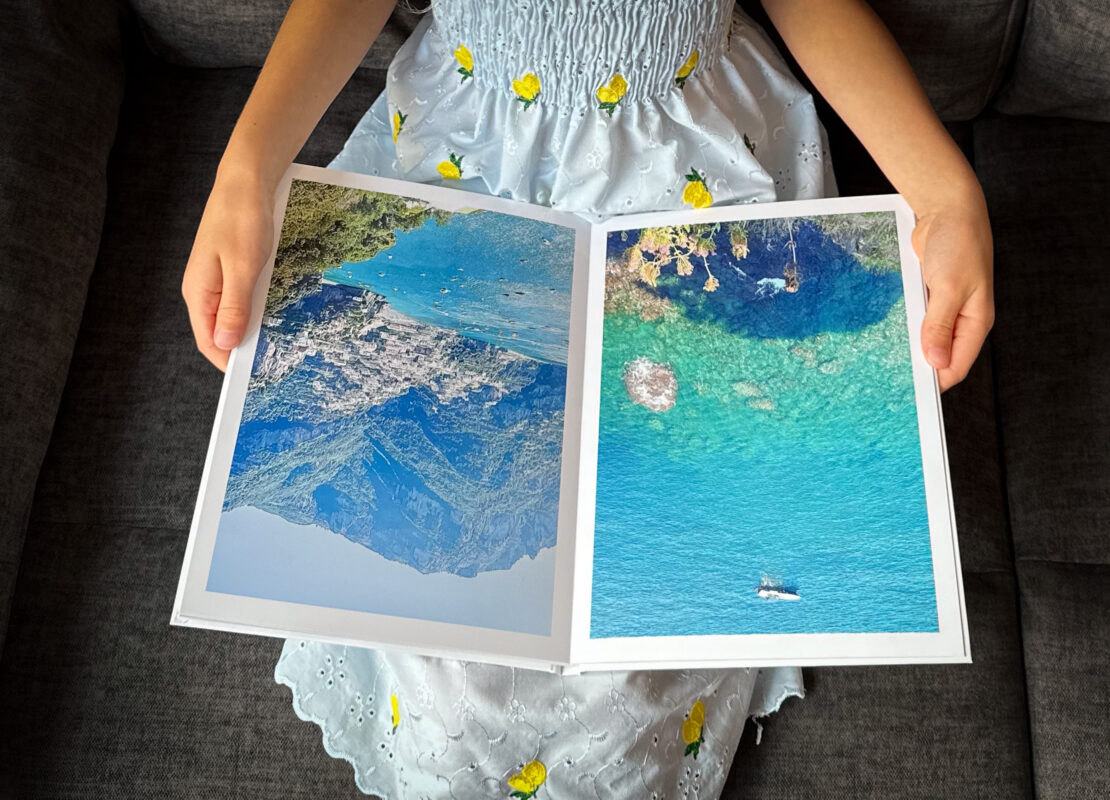
Layflat pages solve the gutter problem – that sweeping shot across Tuscany’s Val d’Orcia, Sagrada Família’s interior, or Kyoto’s Philosopher’s Path – these need to breathe across two pages without interruption.
Premium quality paper combined with water-based inks works better for eco-conscious recipients, too.
How to Choose the Perfect Travel Photo Book
From photo book size to materials, quality, and customisation options, here’s what you need to know when you’re exploring photo book makers.
Cover Types and Book Types
These days, so many options are available. You can order a hardcover book in navy linen or a softcover book in minimal white. Some places offer leather or textured fabrics with a gloss or matte finish.
Then there’s the shape. Compact square formats or coffee table centrepieces. You can get really creative – and that applies to the packaging, too, as some come in keepsake boxes.
Customisation Options
Full-page layouts showcase dramatic landscapes without competition. Grid layouts work for street photography, where patterns tell their own story. For complete control, you can choose your own design. And for comprehensive multi-week trips genuinely needing a 120-page travel photo book, you can add additional pages.
Modern photo books have moved beyond traditional photo albums. Now, you can embed QR code links that take people to videos, audio recordings of city sounds, and interactive location details. These are great fun for tech-savvy travellers.
Obviously, the more you customise, the more it costs. Softcover travel photo books are usually the cheapest, with higher priced options approaching professional production quality.
Quality Considerations
Look for archival-quality paper and vivid colour reproduction. Seek out layflat pages for panoramic shots, which work well for landscapes and architectural interiors. Look for premium quality paper combined with water-based inks for eco-conscious recipients.
It’s usually worth paying for the best-in-class printing to make sure the images look right when you see them.
The Real Reason Why Travel Photo Books Make Great Gifts
Why do travel books work when so many gifts fail?
It’s a philosophical question.
But at the moment, we’re living through a period of infinite digital storage, which can lead to everything feeling disposable and a landscape where nothing is prized.
The best travel photo books are the antidote to scroll culture – you don’t need to risk falling down the rabbit hole of your phone if you want to relive or share your memories.
A well-made album filled with beautiful keepsakes and favourite memories is something you can hold in your hands and take your time with. It becomes evidence you were there, that those things happened. That life wasn’t just a series of washing up, laundry and emptying the bins.
Worth considering for the travel lover in your life, don’t you think?