Treat your tastebuds as well as your eyes with this inside guide on what to eat in Venice
Your Guide to Food in Venice
Venice carries one of the most famous travel images in the minds of the world: the sleek, inky-black gondola sliding through the deep, framed by architectural beauty, decaying in an atmospheric and somehow stylish manner.
But while the visual delights of Venice feature in children’s story books, her flavours sometimes feel like the city’s last secret, hidden beneath the water.
And as with many things in Venice, her cuisine stands both inside and apart from the rest of Italy. Of course, you can find plenty of pizza and pasta. But there’s something about being at the heart of a lagoon and a powerful trading aristocracy that does tend to change things.
~ Book this tried and tested authentic and educational food tour in Venice here.
Venice Through the Seasons
In my visits, through summer, autumn and winter over the years, I’ve tasted Venetian food throughout the seasons and heard the stories over time. From sardines preserved for fishermen at sea to spices once hauled across continents by Venetian merchants, it still gives me a little thrill to know that you can taste history in every bite.
But perhaps one of the biggest surprises is how down-to-earth the culinary scene is. For all the luxury restaurants, the hallmark of Venetian cuisine is cicchetti: small bites eaten while standing in crowded bars, accompanied by a small glass of wine.
Let me take you through my years of Venetian dining, explore the stories behind the bites and show you how you can find the best food to eat in Venice as well.
Before You Go: to make the most of your time, book onto this excellent food tour here.
What Makes Venetian Food Different?
Venetian food sits apart from much of northern Italian cuisine. You will find less butter and cream than in Milan, fewer heavy meat dishes than in Bologna and far more seafood than almost anywhere else in the country. Almost.
For centuries, Venetians relied on fish, shellfish and preserved ingredients that could survive long sea voyages.
Trade brought black pepper, cinnamon and dried fruit from the East, while the marshy islands surrounding the city produced artichokes, tiny soft-shell crabs and delicate seafood that you can still find today.
Similar influences shaped other northern Italian ports, and you’ll still find echoes of those trading connections in the flavours of Trieste, where Italian, Central European and Balkan traditions meet.
Unlike the architecture, authentic Venetian cooking often tastes surprisingly subtle. Fish is usually simply cooked. Olive oil replaces rich sauces. A squeeze of lemon is often all that stands between a grilled scallop and the plate.
And yes, there are tourist menus everywhere. If you want to find bubble tea and burgers, you can.
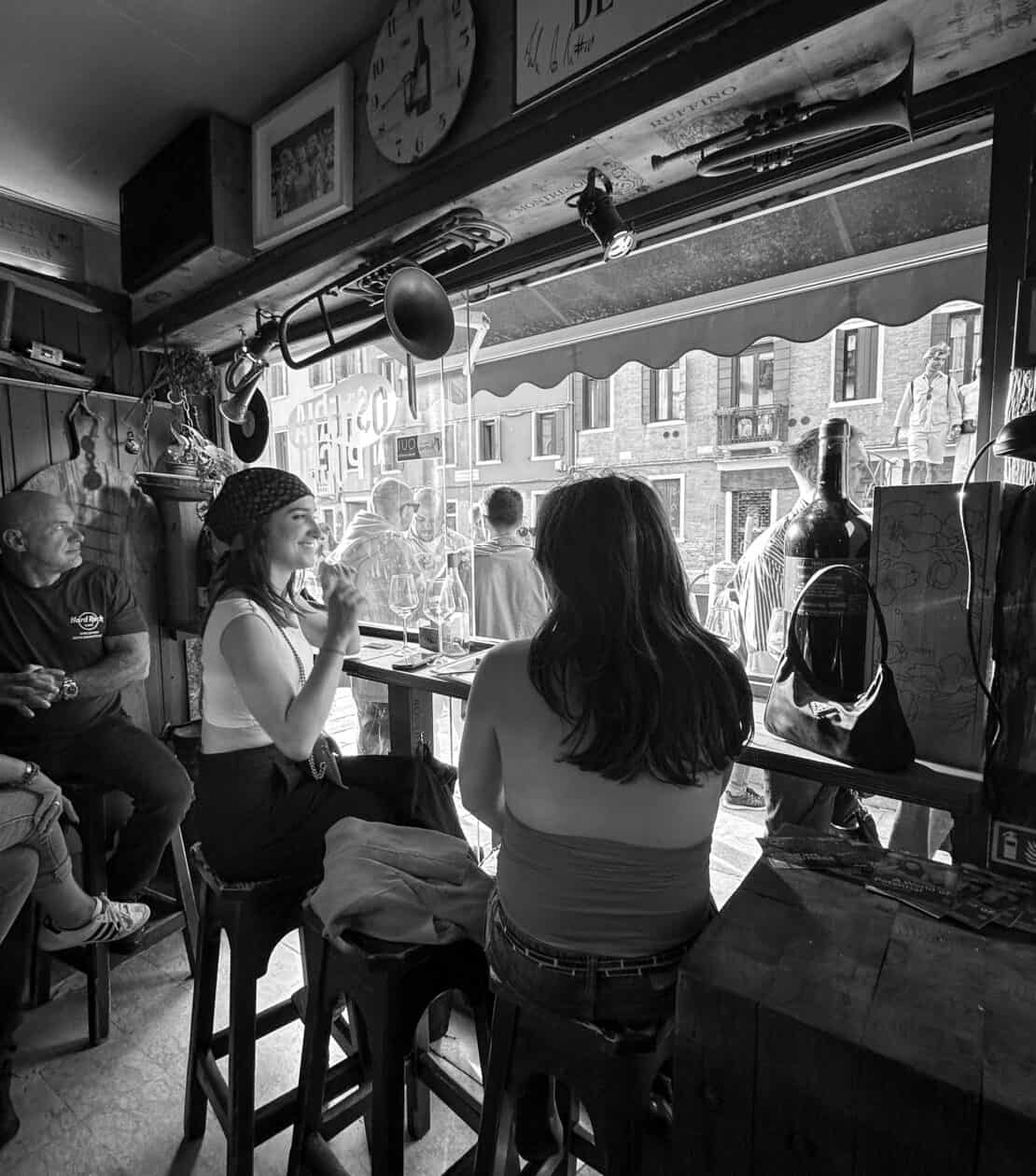
But there are also bacari tucked down quiet fondamenta where locals still gather over glasses of prosecco and wines by the glass.
While you can put together a DIY food tour, I’d highly recommend taking one with a knowledgeable expert. You’ll find plenty, but I particularly loved this sunset food tour from Devour Tours for its breadth of establishments, small group size and sense of quality.
Read more about my Venice food tour experience here.
Cicchetti: The All Important Venetian Ritual
Where Spain has tapas, Venice has cicchetti (although never tell a Venetian I said that.)
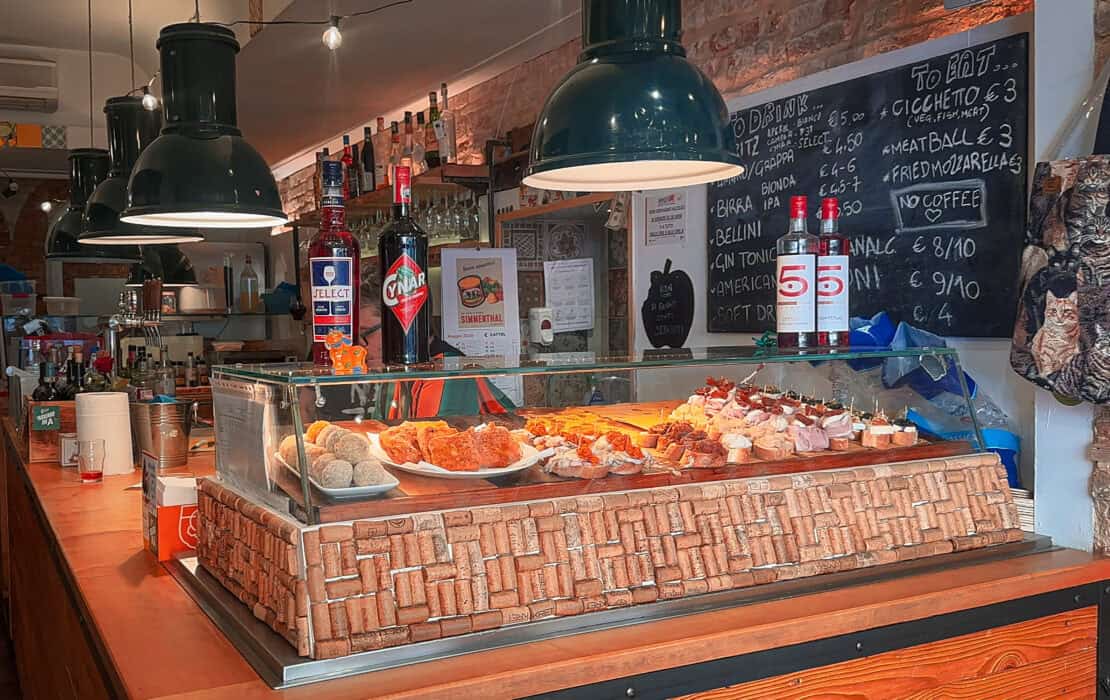
Served in tiny bars known as bacari, these small snacks are designed for working men to eat them standing up, with a glass of house wine, before heading home.
And, just as pintxos in the Basque Country, every Venetian bar seems to have its own speciality.
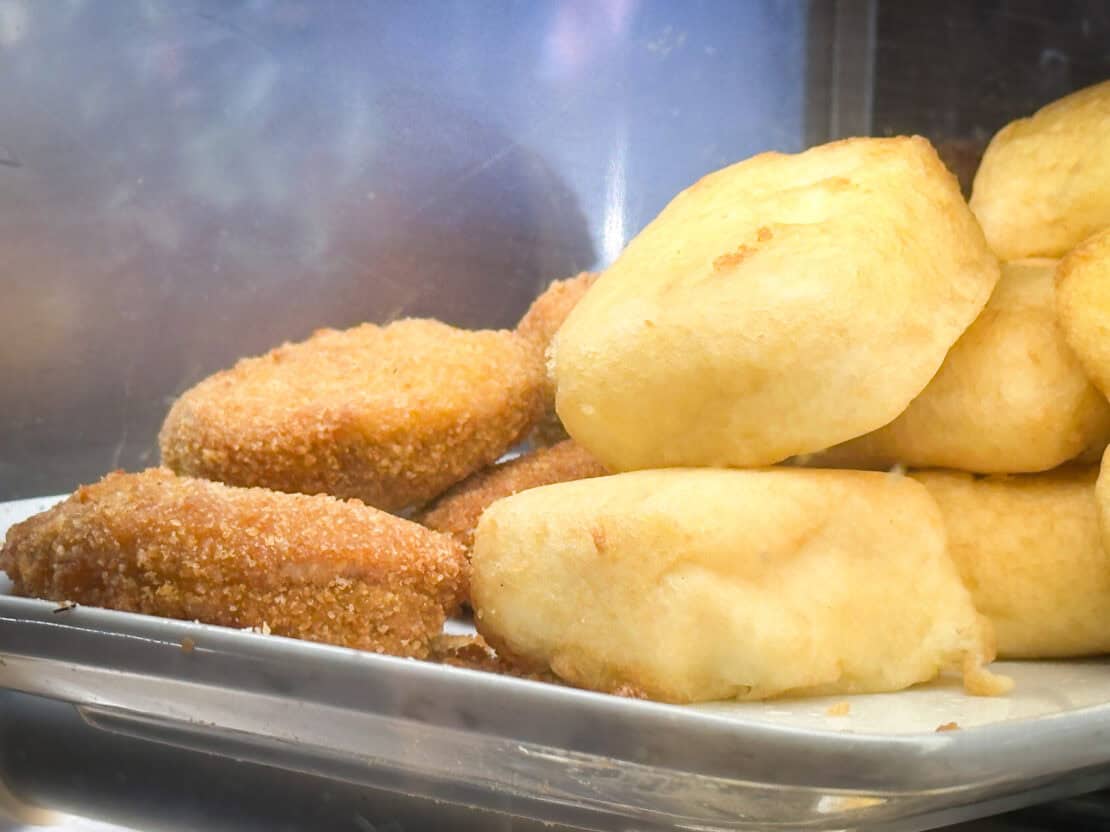
You may find tramezzini stuffed with tuna and artichoke, fried mozzarella in carrozza oozing cheese onto paper napkins or tiny meatball skewers beside cured meats and marinated anchovies.
Some cost as little as €1.50.
The best way to experience them is to move from bacaro to bacaro, ordering a small glass of local white wine or Campari with soda water and sampling whatever looks freshest.
For one of the liveliest atmospheres, head to Fondamenta della Misericordia in Cannaregio.
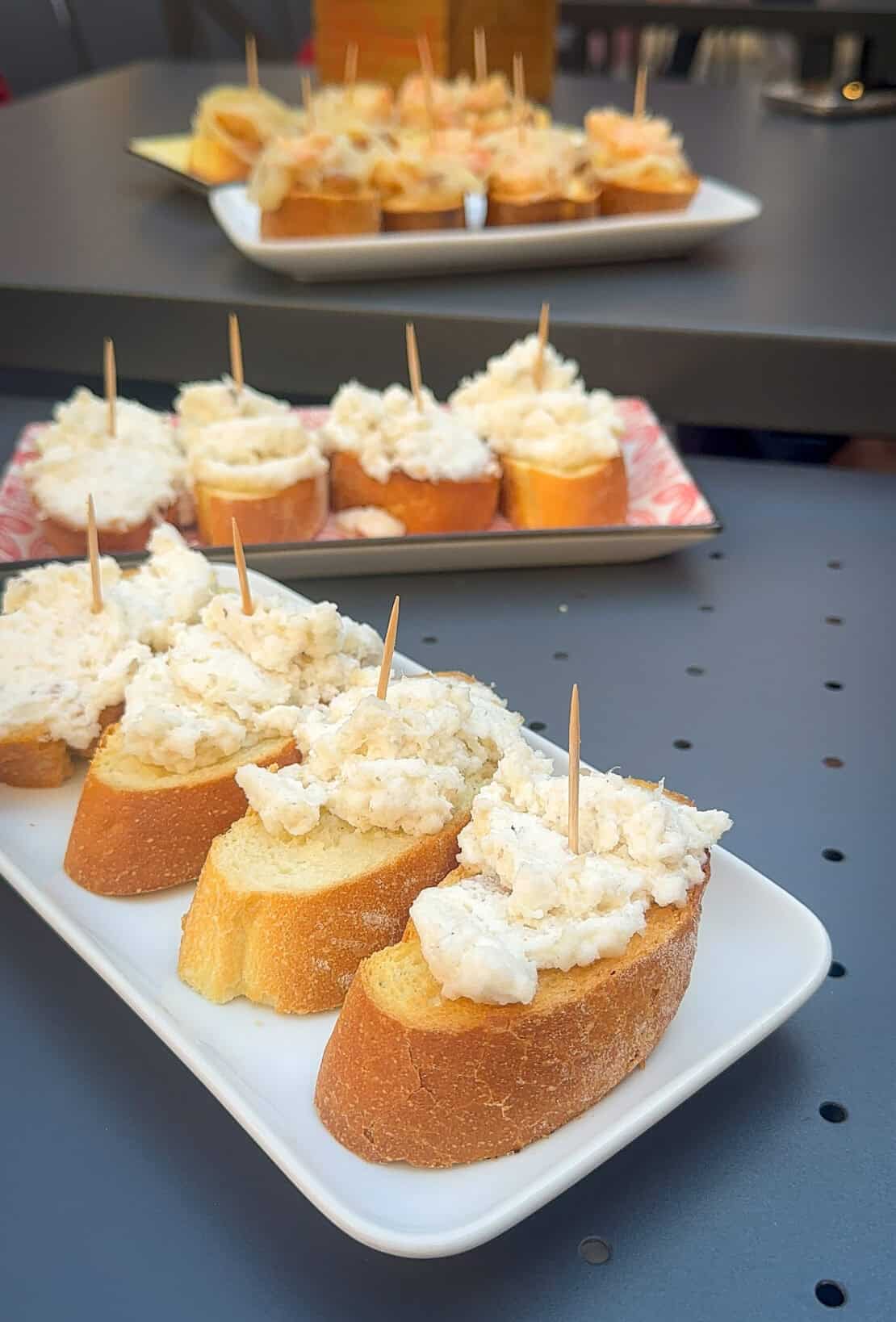
Baccalà Mantecato: Venice’s Favourite Salt Cod
One dish appears in almost every bacaro: baccalà mantecato. And it’s the one I was most wary of.
At first glance, it resembles a mix of tinned tuna and a toddler with a whipped-cream spray can. In reality, it is whipped salt cod blended slowly with olive oil, not cream, until it becomes impossibly smooth, then spread across toasted bread or grilled polenta.
And its story stretches far beyond Venice.
According to local legend, Venetian sailors encountered dried cod in northern Europe during the fifteenth century and brought it home aboard trading ships. When I voyaged along the Norwegian coast, for example, we heard plenty of tales about stockfish, and the salted bacalao in Spain carries the same story. It was valued because it could be preserved. It, like me, I hope, travelled well.
The only snag was that, in those other places, it tasted as you’d imagine. Salty. Dry. Fish. Something one would describe as an acquired taste.
It is Venice which has added the magic touch. As underwhelming as it sounds, that whipping with olive oil has transformed the dish from something to keep you alive to something that actually makes being alive worth it.
Sarde in Saor and Venice’s Trading Past
This sweet-and-sour dish combines sardines with slow-cooked onions, raisins and pine nuts. Again, its popularity developed for its ability to survive long journeys.
The combination sounds unusual until you try it: the sharp vinegar cuts through the oiliness of the fish while the sweetness of the onions softens everything underneath. The raisins and pine nuts provide not only subtle flavour but also some necessary texture.
Again, it’s something of an acquired taste rather than an obvious kids crowd pleaser, but it’s definitely grown on me over the years. And with scientific research extolling the cardiovascular benefits of eating oily fish, I’m always on the lookout for different ways to hit that health recommendation.
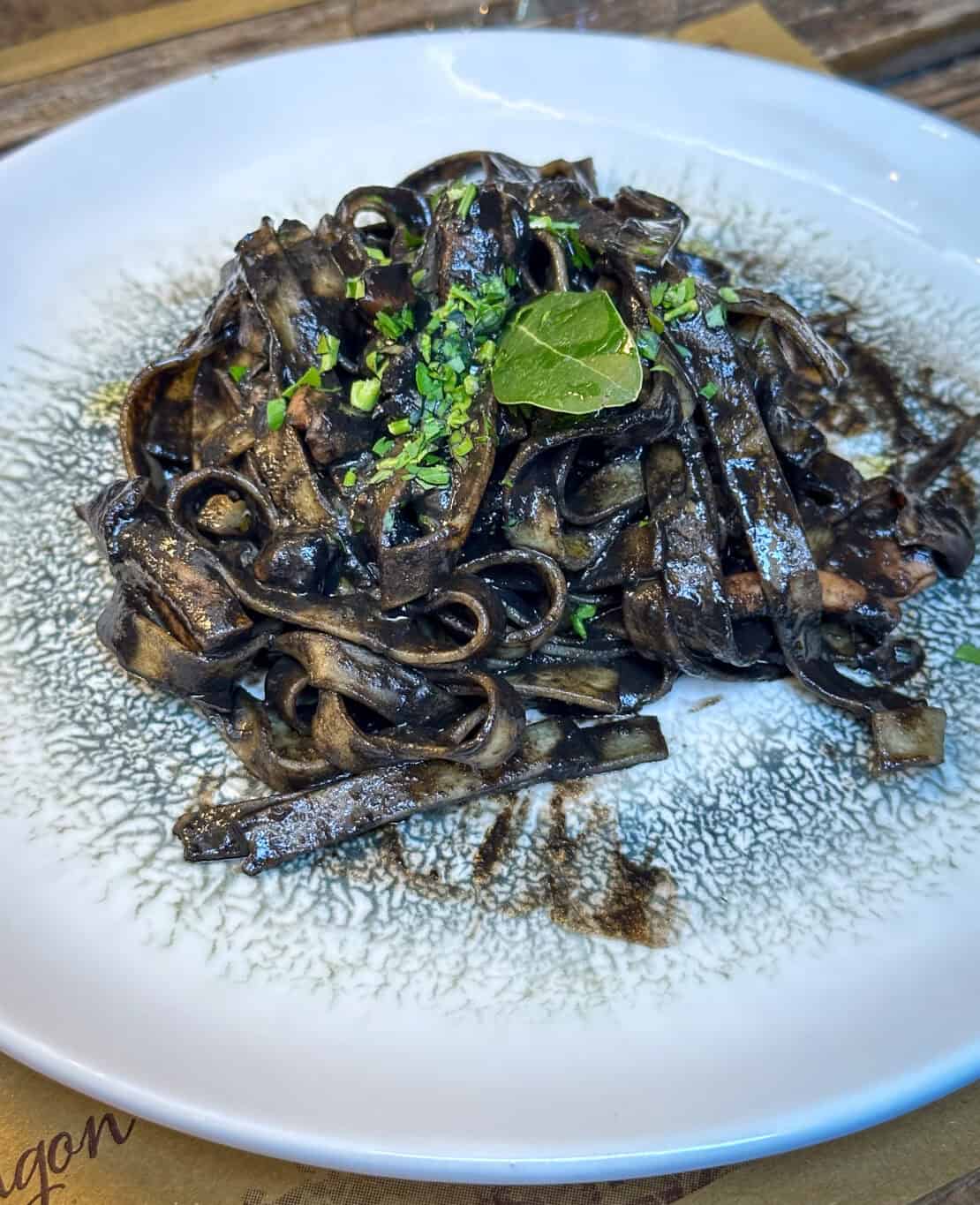
Squid Ink Risotto: The Show Stopper
Few dishes announce themselves more dramatically than risotto made with squid ink.
Known locally as risotto al nero di seppia, this glossy black dish tastes intensely of the lagoon rather than fishiness. The rice absorbs the cuttlefish stock while the ink mellows the seafood taste.
Order with tagliatelle instead of risotto, and it looks even more badass. And you can also find the squid ink in some cichetti, adding a sense of theatre to a humble cheese toastie to go.
Elsewhere, seafood dominates many main courses. Expect grilled scallop, soft-shell crab in season, and fritto misto (fried mixed fish) served with a squeeze of lemon beside the water.
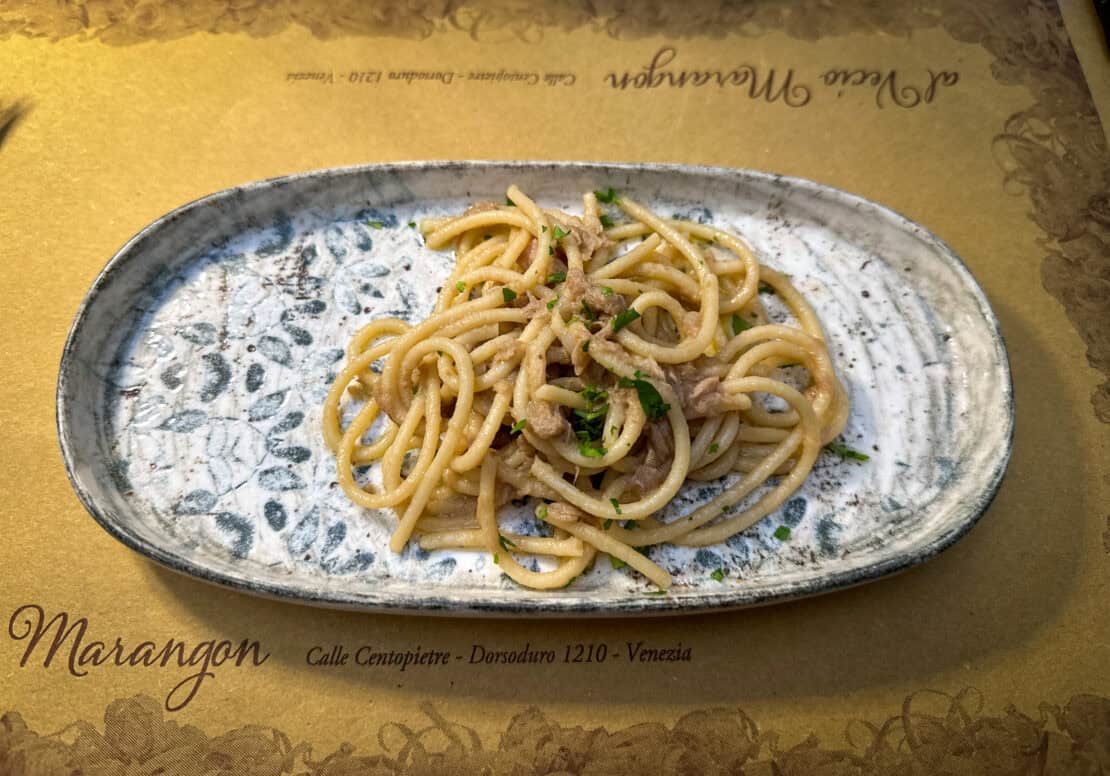
Bigoli in Salsa: Venice’s Humble Pasta Dish
We’re not finished with the seafood yet.
Bigoli in salsa is a surprisingly simple pasta made with thick, whole-wheat spaghetti-like noodles tossed with onions and anchovies.
Historically, it was eaten on Catholic fasting days when meat was forbidden. Today, it survives as one of the city’s most traditional comfort foods, and you can find it in any good osteria.
~ Harry’s Bar and the Bellini ~
No city guide to food in Venice would be complete without mentioning Harry’s Bar.
Opened by Giuseppe Cipriani in 1931, the tiny bar became famous for attracting everyone from Ernest Hemingway to Peggy Guggenheim. It also gave the world two culinary icons: the Bellini and beef carpaccio.
The Bellini combines white peach purée with prosecco, creating a deceptively light cocktail still served throughout the city today.
Beef carpaccio, meanwhile, was reportedly invented for a customer unable to eat cooked meat. Cipriani named the dish after the Renaissance painter Vittore Carpaccio because the colours reminded him of the artist’s work.
A word of warning, though. This place is definitely no longer a Venice hidden gem. Expect crowds, high prices and something of a scrum to get in peak season. But it is one of those places in Venice that you may just feel you have to see.
Part of our World Table Series in the Cultural Compass
Tramezzini and Eating on the Move
Venice does not really have street food in the same way as Palermo or Naples. But it does excel at portable snacks.
Tramezzini are triangular sandwiches filled with everything from tuna and artichoke to egg and cured meats. They appear in cafés across the city and make an inexpensive lunch while vaporetto-stop hopping.
As another quick bite, try cones of fried seafood near the Rialto Market.
Sugar and Spice and All Things Nice
Venice got a head start on sugar, thanks to its trade routes, creating a pastry culture influenced by both Italy and the East. Spices, nuts and dried fruit still appear regularly in traditional Venetian desserts. And, almost all look pretty, too.
One of the foods you must try in Venice is fritole: small fried pastries traditionally eaten during Carnival. Dating back centuries, these little doughnuts were once so important that they had their own guild in the Republic of Venice.
Today, they appear filled with cream, raisins or zabaglione during the weeks leading up to Lent.
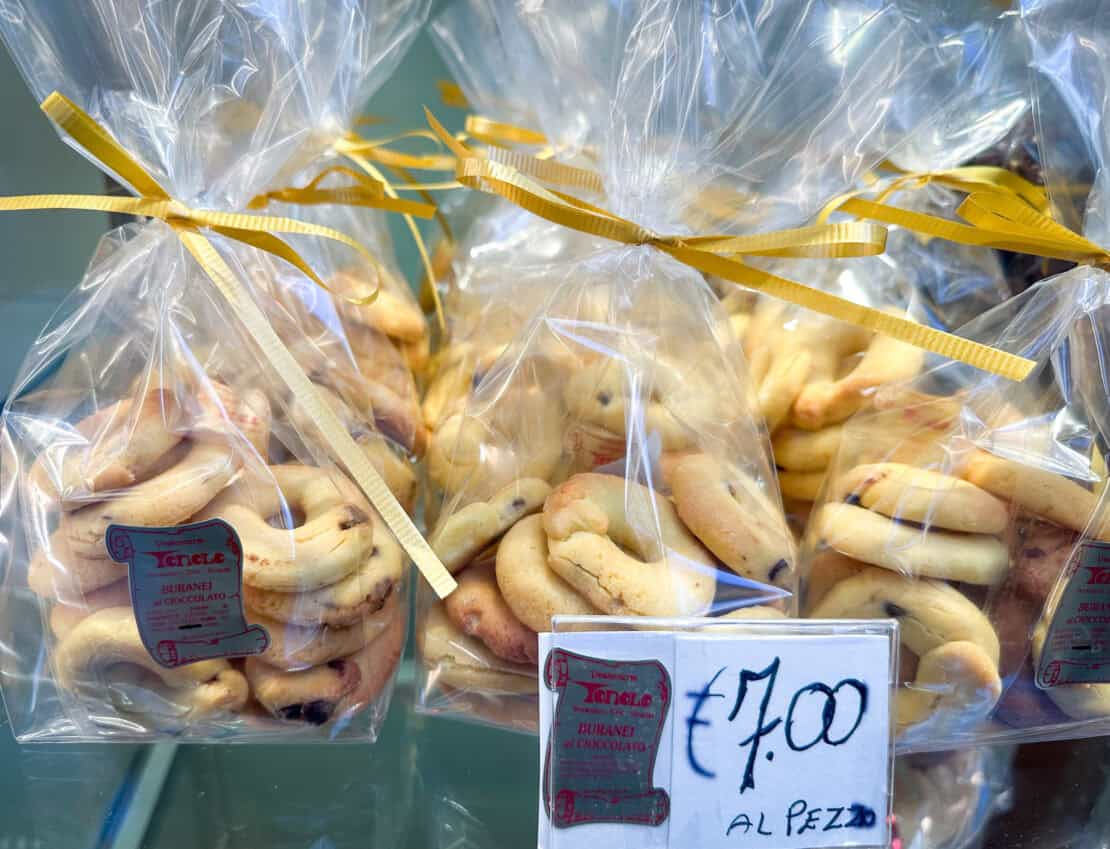
You will also come across bussolà biscuits from nearby Burano: buttery ring-shaped biscuits once baked for fishermen heading out into the lagoon for long periods at sea.
For something simpler, Venetian bakeries excel at tiny pastries designed to accompany your morning coffee.
Stop inside a pasticceria, and you will find custard-filled pastries, flaky sfogliatelle and delicate biscuits lined up behind glass counters.
And while tiramisu is more closely associated with nearby Treviso, it appears on menus across the city, often served surprisingly lightly compared with heavier international versions.
Cheese, Cured Meats and Venetian Aperitivo Culture
While the cuisine of the lagoon focused heavily on fish, the wealth of the Venetian Republic ensured access to ingredients from northern Italian farming regions stretching towards the Dolomites.
Enter the cold-cuts-and-cheese plate aperitivo culture.
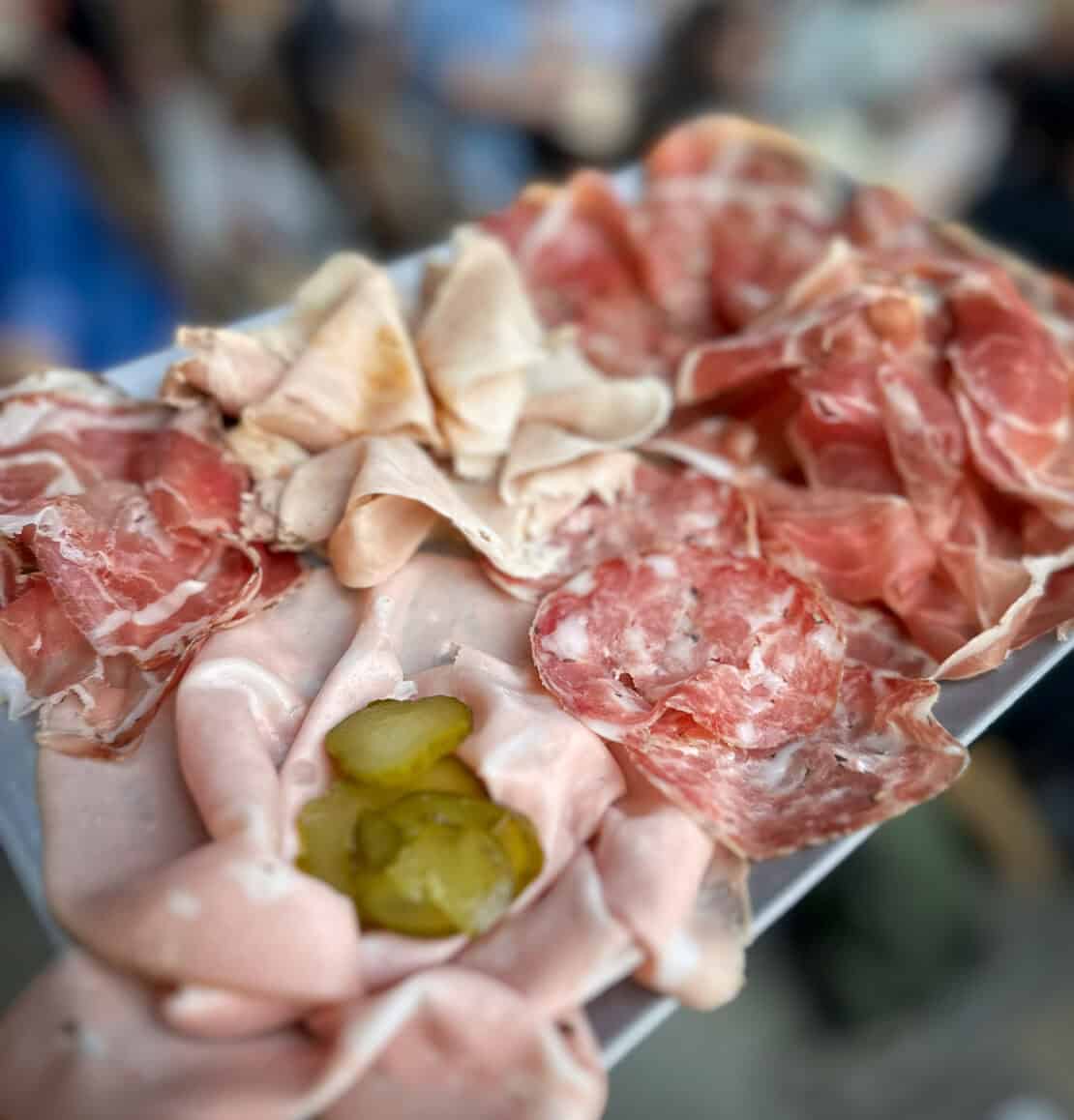
Today, many bacari serve simple wooden boards piled with salami, prosciutto and local cheeses designed for sharing over a glass of prosecco or local white wine.
Among the most common cheeses is Asiago, produced in the Veneto region, alongside creamy robiola and sharper mountain cheeses from the Alps.
The cured meats include soppressa veneta, a garlic-spiced salami traditionally made across the region, along with mortadella, prosciutto, porchetta and pancetta.
The Best Places to Eat in Venice
There are thousands of restaurants in Venice and, let’s be honest here, many disappoint.
But there are still excellent trattorias hidden behind quiet canals.
One longstanding favourite among foodies is Al Covo, known for seasonal lagoon ingredients and refined but authentic Venetian cooking.
In Dorsoduro, smaller bacari offer a more local atmosphere than the heavily touristed areas near St Mark’s Square.
Cannaregio remains one of the best neighbourhoods for casual eating, particularly around Fondamenta della Misericordia, where you can spend an evening grazing between bacari.
And around the Rialto Bridge, early mornings still belong to market traders unloading fish from the lagoon.
To Market, Rialto Market
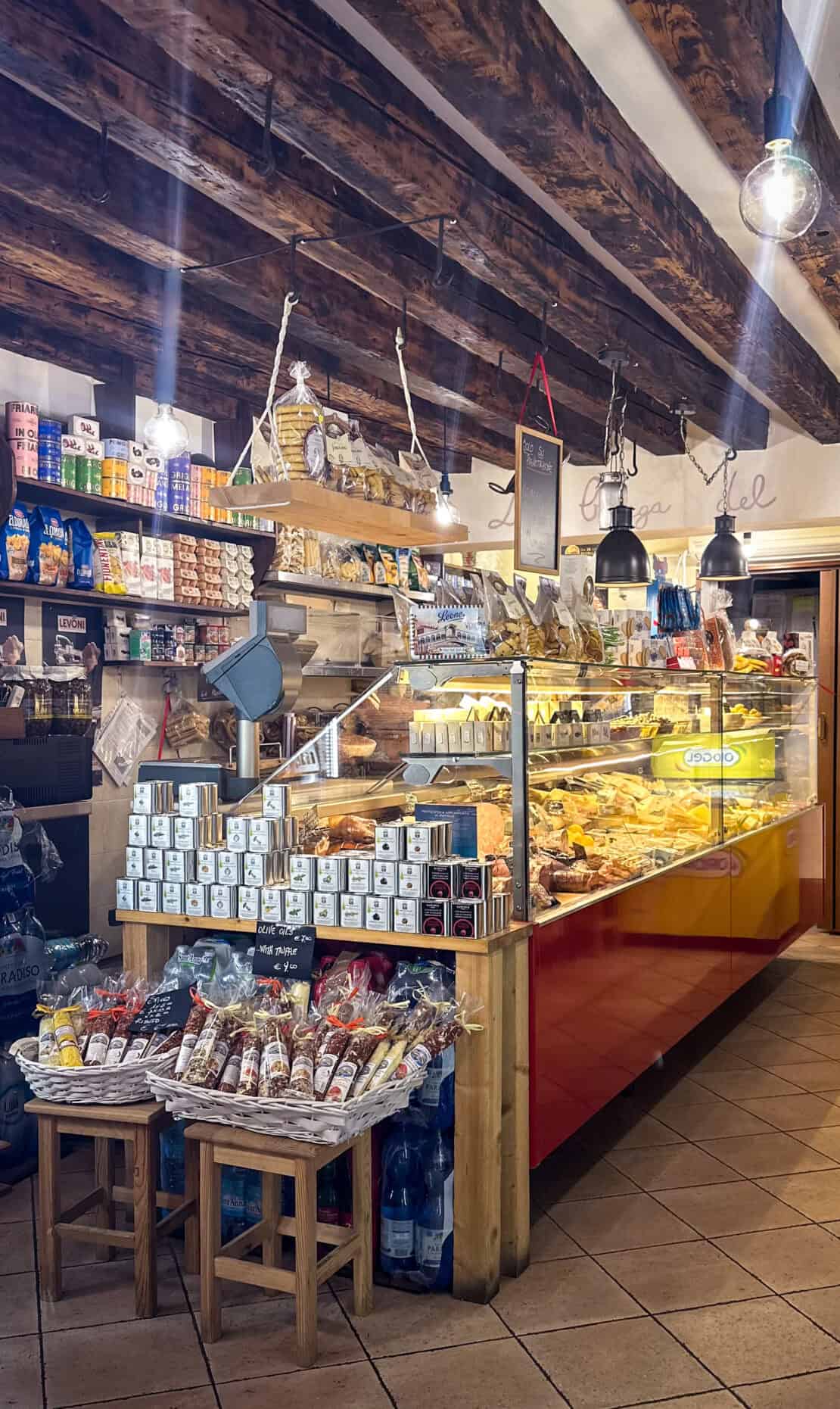
Long before tourists arrived, merchants gathered here to trade seafood, spices and vegetables brought from surrounding islands like Murano and beyond.
Today, chefs still arrive early to choose scallops, sardines, and cuttlefish fresh from the lagoon.
And as is usually the case for decent food markets, the best time to visit is early in the morning before the crowds gather near the Rialto Bridge.
And make sure you don’t get in anyone’s way! It’s a busy, working place with heavy crates and people in a rush.
Is it Worth Taking a Food Tour in Venice?
One of the easiest ways to understand what you are eating is through a food tour.
Venice is absolutely gorgeous, but it can feel overwhelming quite quickly, with the bridges and narrow walkways.
Menus vary wildly in quality, and some of the city’s best bacari hide behind anonymous doorways.
Plus, if you’re in a rush or travelling solo, a food tour really is one of the best ways to kill two birds with one stone.
You have to eat anyway, and this way you get some interesting information and some good company.
The latest tour I tested was with Devour Tours, led by the charismatic and energetic Venetian Alessia. I’ve been on Devour Tours before and love their approach to local, authentic eateries – and the fact that they cap the group sizes at ten.
This tour takes around three hours, with plenty of walking and occasional sightseeing (Alessia encouraged us to duck in to see the ceiling at the Church of San Pantalon, for example, the largest oil painting on canvas in the world).
And the food was plentiful: numerous cichetti, three heady, atmospheric bars populated by locals, a large square, an intimate, softly lit courtyard and a final gelato stop in the fresh open air. There’s also a heady mix of prosecco, aperol spritz and red and white wines, although non-alcoholic options (and vegetarian dishes) are also available.
You can book your place on the tour here.
~ Mozzarella in Carrozza ~
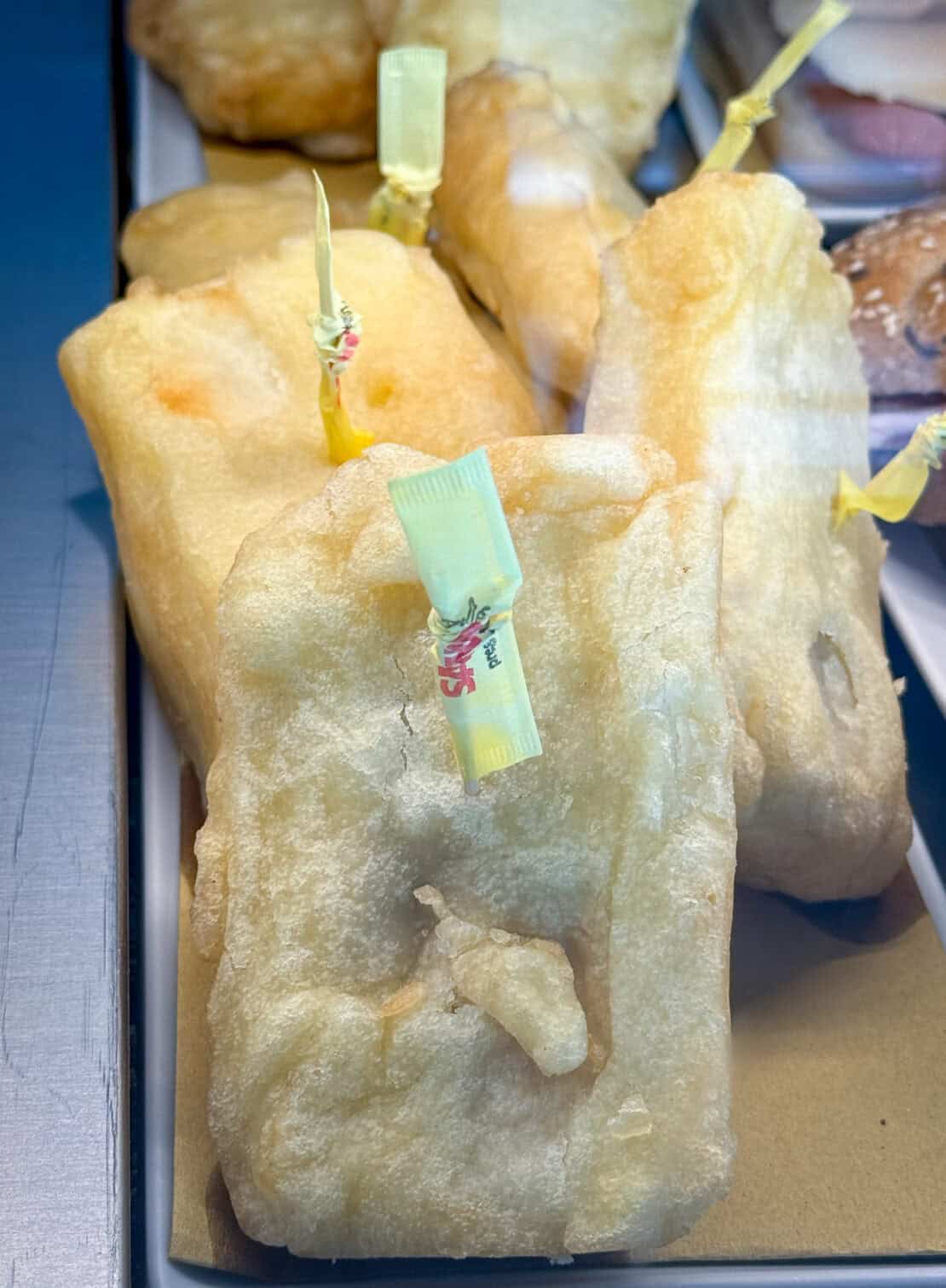
If you ignore your arteries for a moment, then one of the most satisfying bites you’ll find in Venetian bacari is mozzarella in carrozza.
Despite the elegant name, which translates to mozzarella in a carriage, this is not a Bridgerton snack. It’s pure comfort food: mozzarella sandwiched between slices of bread, dipped in egg, and fried until crisp and golden. The result is a contrast of textures: a crunchy exterior giving way to molten cheese inside.
Rumous that we’ll pretend to ignore claim it likely originated in southern Italy, but it has long since become part of the Venetian cicchetti repertoire.
In Venice, people often enjoy it standing at the bar with a small glass of white wine or prosecco, sometimes still hot enough to require a cautious first bite.
Like much of the city’s street food culture, it is designed for immediacy rather than ceremony – something to eat quickly before moving on to the next bacaro, canal or vaporetto stop.
Part of our World Table Series in the Cultural Compass
What to Drink: Life Beyond Aperol Spritz?
Second only to the sight of the sleek gondolier comes the bulbous burning-orange colour of the Aperol spritz. On a summer’s evening, nay any warm evening, you’ll see them everywhere.
But that’s not the only drink in town, and there’s even more than one version of the spritz anyway.
Four Types of Aperol Spritz
The Aperol spritz is the entry-level version: bright orange, lightly bitter and popular with teenagers and first-timers.
Move a step further into Venetian drinking culture, and you reach the Campari spritz, darker, sharper and far more bitter: the choice of the more serious drinker who actually wants to taste the aperitivo beneath the prosecco and soda water.
But the real Venetian option is the Select. Created in Venice in 1920 by the Pilla brothers, Select has a deeper herbal flavour and is still considered by many locals to be the authentic Venetian spritz.
Then there is Cynar, the outsider’s favourite. Made using artichoke leaves, it sounds aggressively savoury but somehow tastes faintly of caramel, herbs and burnt sugar. It is the gourmet choice: slightly eccentric, and surprisingly addictive after the first sip.
Prosecco & Wine
Venice also sits within easy reach of some of Italy’s most important wine regions, which means local wines appear everywhere.
Prosecco dominates aperitivo hour, naturally, since the hills of Valdobbiadene and Conegliano lie just a couple of hours north in the Veneto region.
In Venice itself, prosecco is less a celebration drink and more part of daily life, poured casually into spritzes or served by the glass beside cicchetti.
But there is more to drink than sparkling wine. Ask for local white wine, and you may encounter crisp Soave, mineral Pinot Grigio or wines made from lesser-known Venetian grapes designed to pair with seafood from the lagoon.
Many bacari still serve ombra, which translates to mean “shade” – a small glass of wine traditionally consumed standing at the bar.
Historically, wine merchants near St Mark’s Square would move their stalls to stay within the shade of the campanile, keeping the wine cool and accidentally giving Venice one of its most enduring drinking traditions.
See? You can have your holiday drink and still call it a lesson in culture and history. Salud!
More About Italy
How to get off the beaten path in Italy with 101 hidden gems
What to buy in Italy: your guide to Italian souvenirs
What to pack for Italy: the ultimate guide
How to make a real ragu: the traditional Italian dish you can make at home
What to buy in Italy: your guide to Italian souvenirs
~ What to Do Next ~
~ Flights. Compare routes and book your flights with Skyscanner
~ Transfers. Secure a reliable airport transfer via Get Your Guide to bypass the logistics of public transport and unmetered taxis on arrival.
~ Protection. Secure your trip. We highly recommend arranging comprehensive travel insurance before you depart.
Pooking for more tried-and-tested recommendations? Explore our complete Travel Directory for the exact tools, gear, and resources we use to plan our laboratory dispatches.