With 48 hours in Prague, you can enjoy the city’s history, architecture and food away from the crowds with this carefully planned two-day itinerary.
Why Prague?
Prague is the city of spires and storybook streets. Of cobbled alleyways, brooding sculptures and a much misunderstood astronomical clock. I first arrived in the midst and mist of winter, where the haunting statues on Charles’ Bridge stood alone, watchful and waiting to pounce.
Visiting today, fifteen years on, is a different beast. Instagram and stag parties have changed the ebb and flow of Prague’s energy and it’s pretty easy to become disillusioned if you wander in to the wrong part of town at the wrong time.
But that would be a mistake. Prague still has all the beauty, the mystery and the magic as before. You just need to know where to look.
So, whether you are visiting Prague for the first time or the first time in a long time, let me gather up my experiences and give you the grown up, sophisticated way to see Prague in 48 hours.
Disclosure: I travelled to Prague on this latest trip as part of a project with Falkensteiner Hotels and Visit Czechia. As ever, as always, I kept the right to write what I like, and draw on multiple experiences in the past, too. That’s the advantage of ageing – more and more experience to draw from!
Where to Stay in Prague: a Beautiful Boutique Hotel With a Wellness Focus
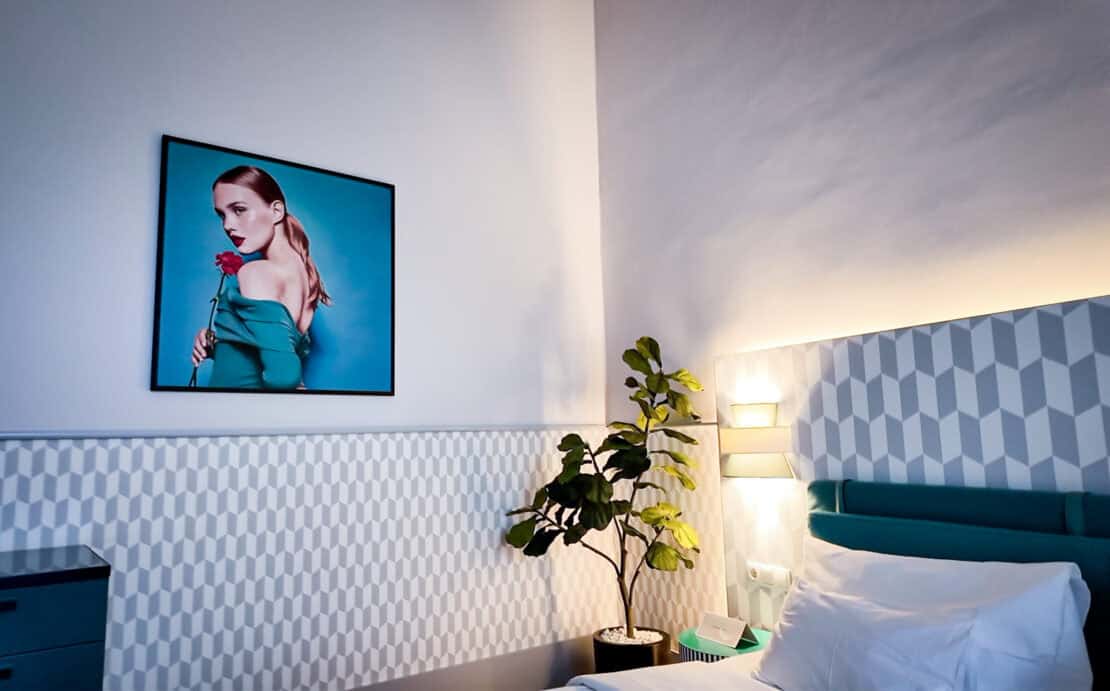
Just a short walk from the main railway station, the Falkensteiner Hotel Prague sits in a restored early twentieth-century building in the New Town. It’s an explosion of dark velvet, lush leaves and striking portraits from Czech photographer Bojan Stanic – and it’s a wonderful combination of design and actual comfort.
The location works in practical terms, too. Wenceslas Square, and the Old Town are all within walking distance. And the Acquapura City Spa in the basement, with compact sauna and treatment rooms, also offers a quiet reset between long days on foot.
The sweet treats in the lobby help to recharge, too.
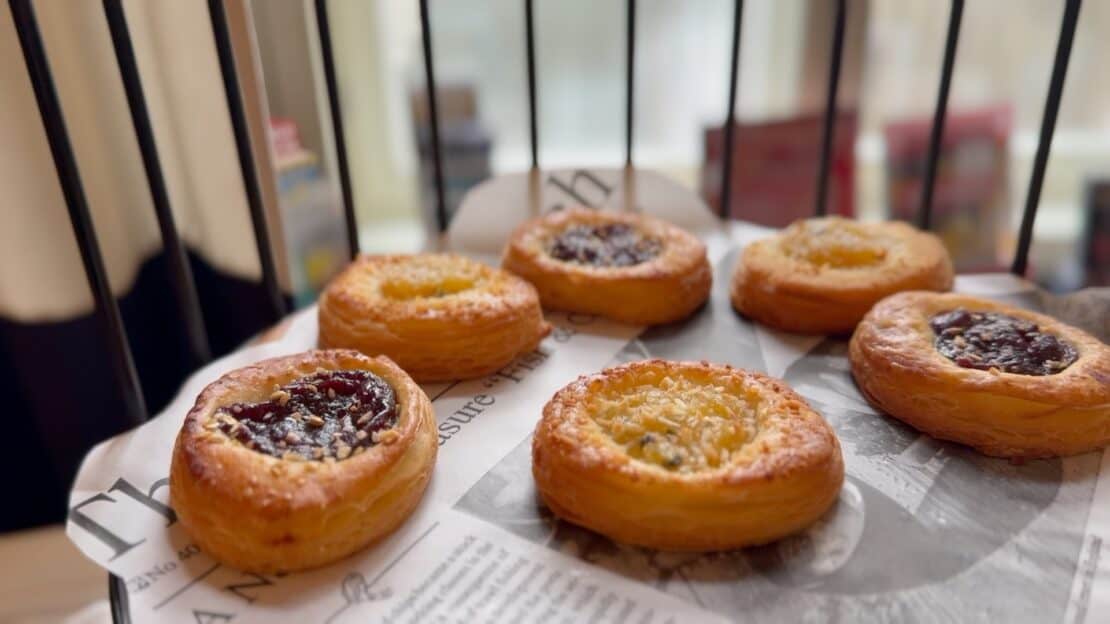
Rooms are gloriously spacious – and quiet, which isn’t a given in such a party city.
Modern bathrooms feature either a walk in shower or bathtub, as well as premium toiletries.
Breakfast is a colourful explosion of international classics, plus homemade pastries, egg shakshukas and a juicing station to rival a smoothie bar at at the wedding of the Balinese goddess of plenty.
How to See Prague Without the Crowds
How to Spend 48 Hours in Prague: Your Step by Step Itinerary
Here’s how to spend two days in the capital of the Czech Republic.
Friday Evening: Štangl and the story of the Green Michelin Star
Take a taxi away from the heavy tourist centre and venture into the quietly confident Karlín district.
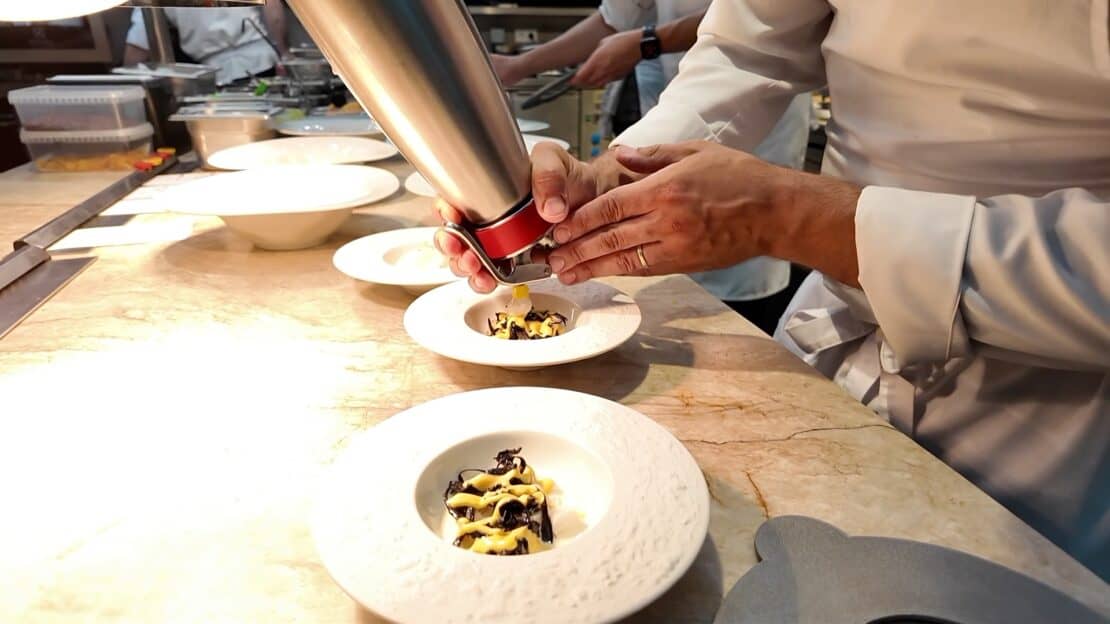
Here, housed on the newly renovated upper floor of a former industrial space, sits Štangl – a striking, airy fine-dining restaurant that looks a little like Dr Hyde’s laboratory with jars of dismembered body parts.
But it’s all part of the plan.
Hyper-Local Cuisine
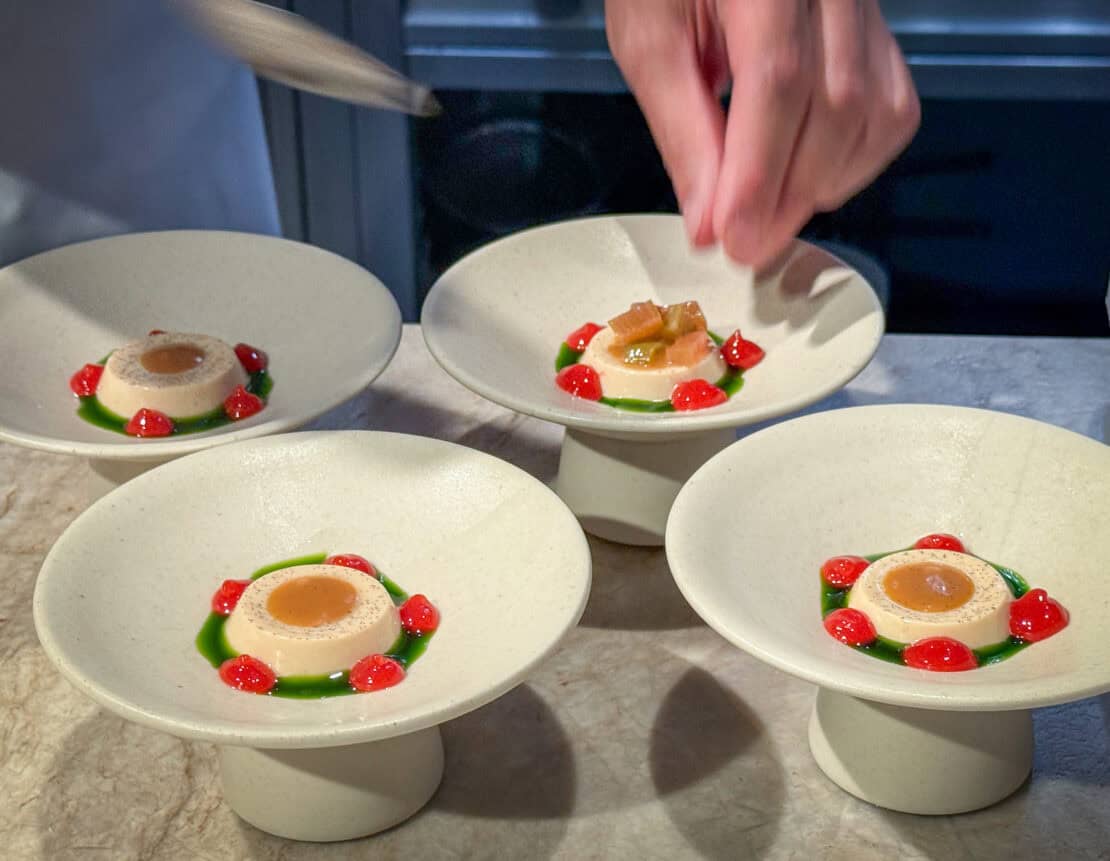
Rather than relying on theatrical fine-dining tricks, the open kitchen operates a zero-compromise, hyper-local process. Štangl’s team works in a rhythm dictated entirely by small Czech farms and wild nature, deploying a cutting-edge arsenal of in-house hydroponic herb systems, specialised meat-maturing chambers, and precision fermentation cabinets.
If this sounds a little, well, clinical, it does feel a little that way at first. But by the time the cucumber sorbet came around, I’d completely relaxed into the fresh, striking flavours. Look out for the full review soon.
Sustainability Note: Michelin are, sadly, retiring the entire green star system. But I’m keeping it here because they are rigorously earned and serve as a great shorthand to let you know the core identity of the place. Roughly 95% of the kitchen’s needs are met by organic suppliers, and the chefs use advanced techniques with fermentation and zero-waste composting to extract incredible depth from ingredients that would otherwise be discarded. You can find out more about why travelling (and eating) responsibly is important here.
Modern Mixology at the Monkey Bar
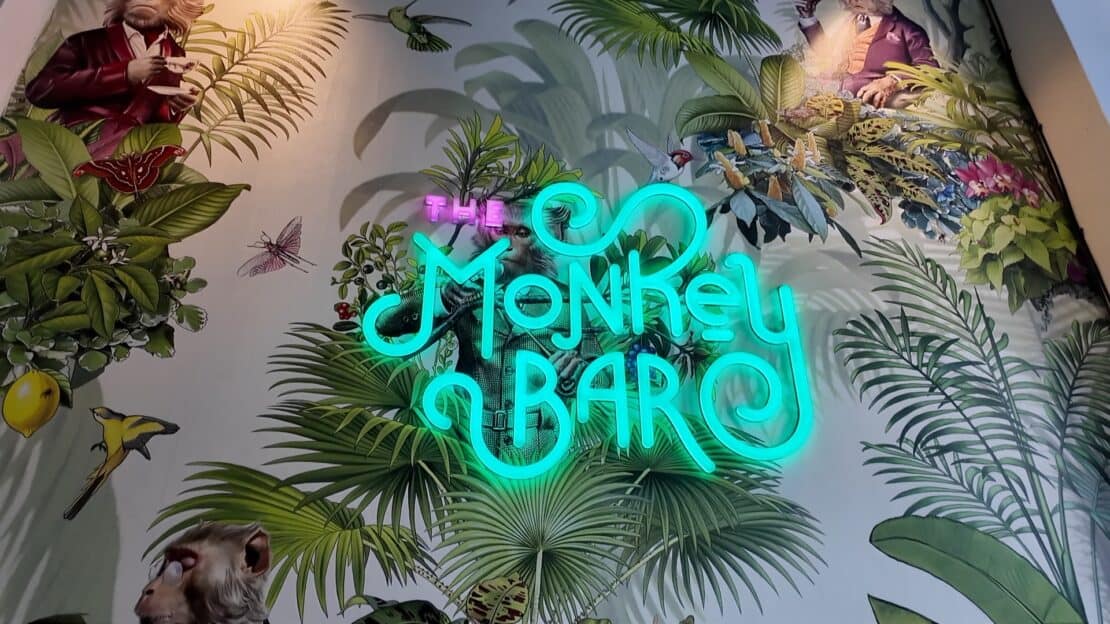
After dinner, head to the Monkey Bar Prague to use some of that alchemy for cocktails.
It’s a world away from a crowded beer hall or brewery, with deep botanical greens and golds and a gorgeous, secluded courtyard garden that’s perfect for summer.
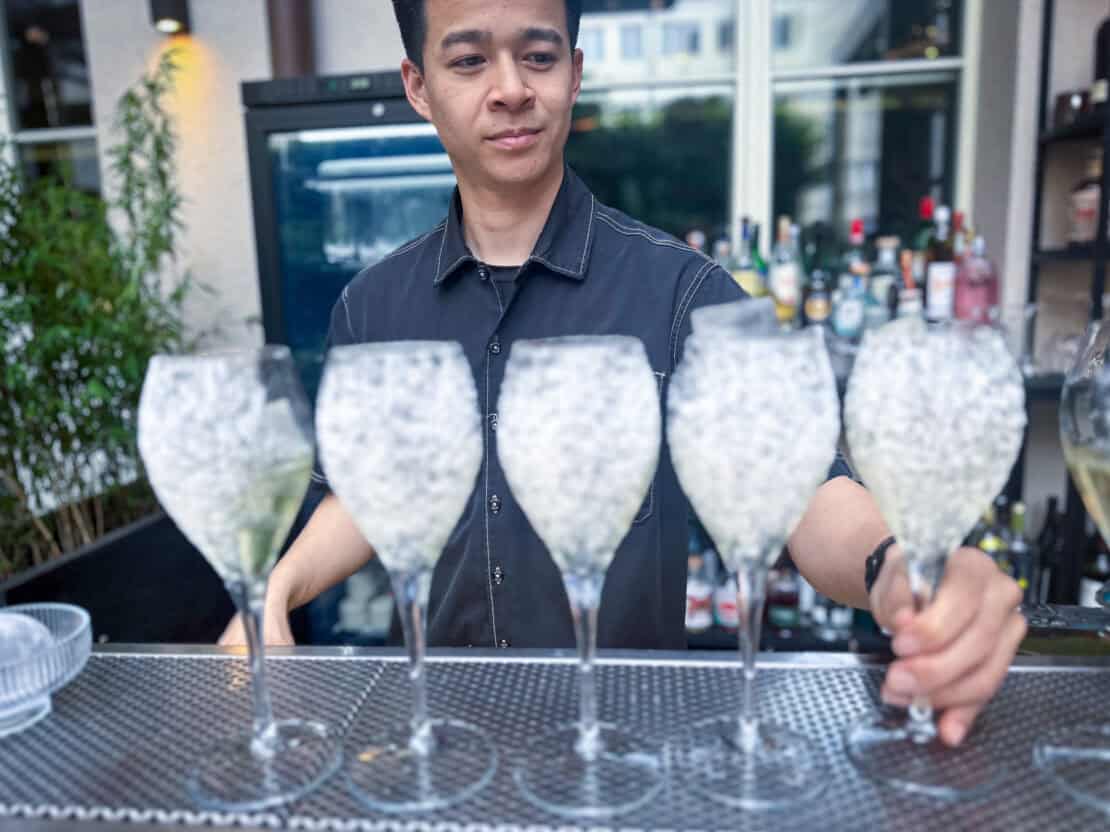
The real draw here, however, is the liquid art. The menu is an ambitious, world-class exploration of rare botanical ingredients sourced from across four continents. Built on a close collaboration with the premium, botanical-rich Monkey 47 gin, the mixology team crafts avant-garde flavour profiles that read like a marriage between an alchemist and a gardner.
Sip on an unexpected pairing like the Yuzu and Fig Leaf, or let yourself be intrigued by the Tiger Nut & Sesame – a rich, bourbon-forward masterpiece laced with cinnamon and oat.
Saturday Morning: Classic Prague, Seen Early
Now, for all I want to show you something new, the best views still involve the classics.
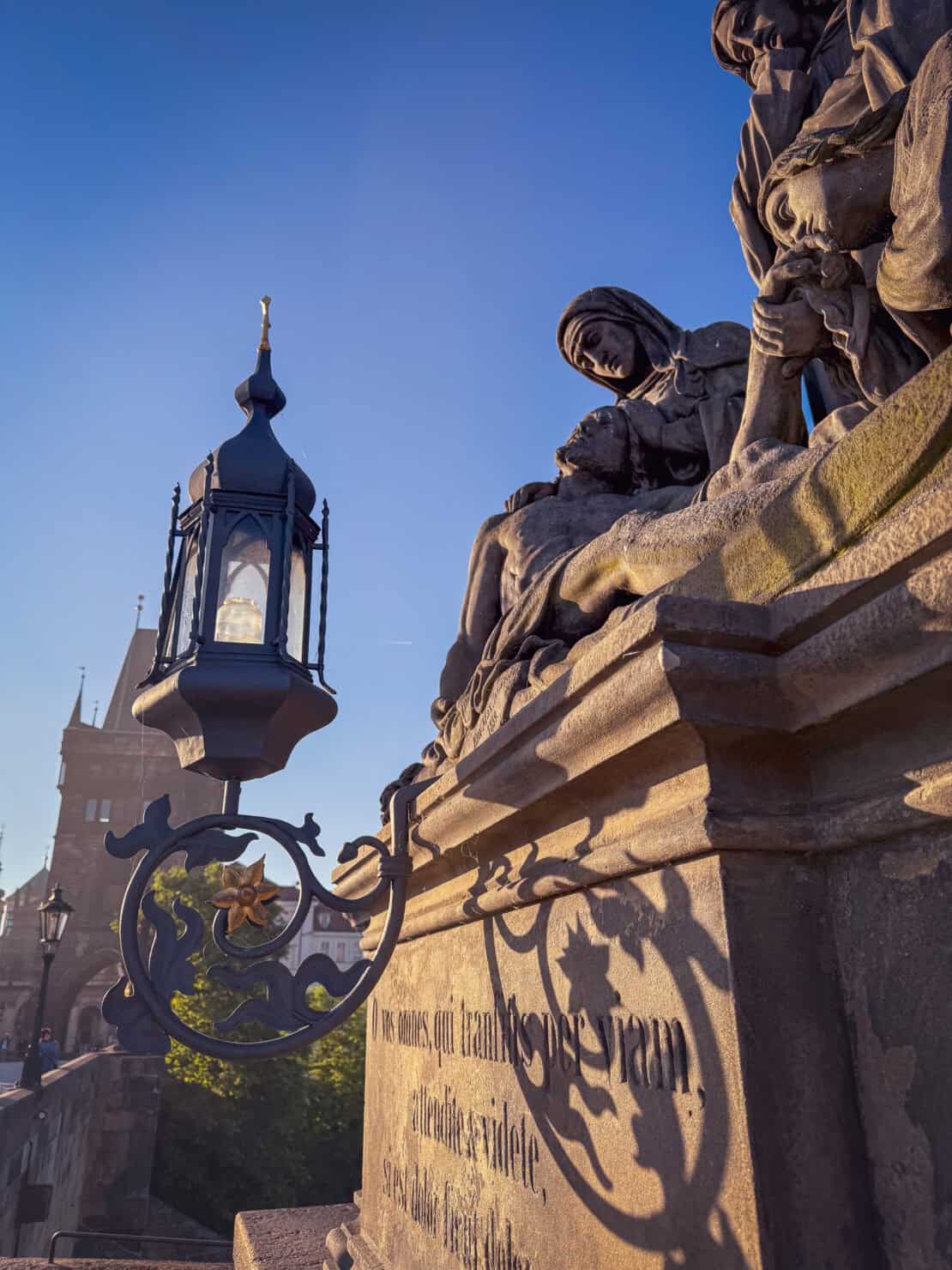
And no self-respecting Prague itinerary could fail to mention the Astronomical Clock in the Old Town Square, the gothic St Vitus Cathedral and the Charles Bridge with its stunning baroque statues.
The key? To start early before the streets fill and to ignore the touristy sweet shops and stag dos.
For photographs, you can head to all the spots within a walkable circuit but for depth, I’d highly recommend taking a walking tour.
Our guided tour took in the highlights but also covered the deeper, more scientific side of Prague.
Need more inspiration?
Head to the Visit Czechia website for more ideas on where to go, what to do and things to see!
Science in Prague
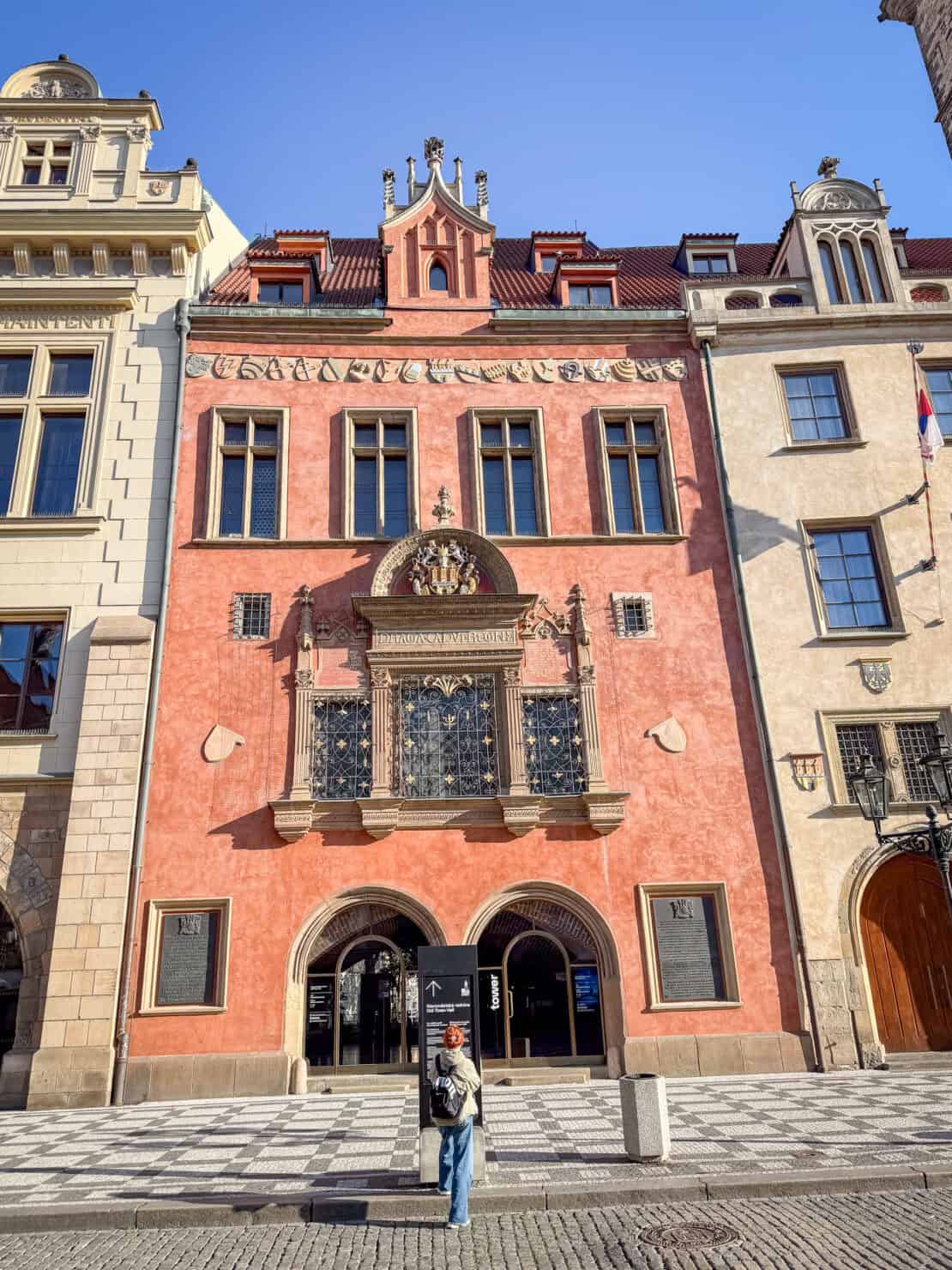
During the late 16th and early 17th centuries, the eccentric Holy Roman Emperor Rudolf II transformed the city into a magnet for Europe’s greatest minds, creating an era where the lines between early astronomy, mathematics, and occult alchemy became completely blurred.
Jesuits began taking daily meteorological records in 1775 from the 68 metre tall Astronomical Tower. At the top sits the Meridian Hall, a dark chamber transformed into a giant camera obscura with a tiny slit in the wall to perfectly mark the exact moment of midday for the entire city.
The quickest sign to find is the memorial plaque to Einstein in the Old Town Square at the Fanta salon, where the man himself would debate philosophy, discuss physics and play the violin alongside Franz Kafka and Max Brod.
What’s Really Special about the Astronomical Clock
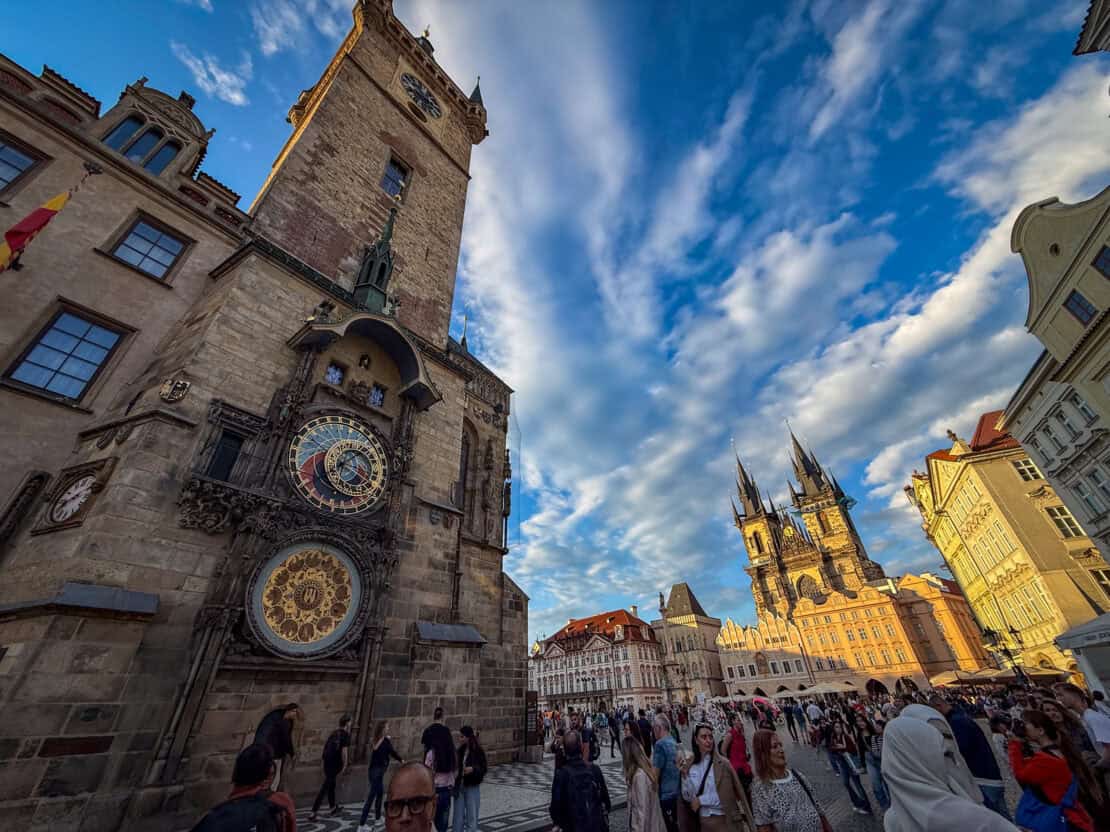
Then there’s the famous Astronomical Clock or Orloj. Crowds gather each hour for the mechanical display of the apostles, death and a rooster which, despite the intriguing line up of characters, can feel rather underwhelming.
But the story behind it isn’t. This clock was desigend and built in 1410, and the multilayered dials not only tell the time but also track the movement of the sun and moon through the zodiac, the phases of the lunar cycle, and the ancient Babylonian hours. It was honestly ahead of its time (sorry!) in terms of political and religious acceptance – and engineering.
- Note – if you have time (it’s a push but just possible to) visit the Alchemical Museum, which sits directly above a hidden network of underground workshops discovered after the 2002 floods. You’ll descend into original 16th-century subterranean laboratories, complete with authentic blast furnaces and glass alembics, where Rudolf II’s court physicians and mystics desperately tried to transmute lead into gold and discover the Elixir of Life.
Saturday Afternoon: Beer, Thoughtfully Done
You don’t need me to tell you that Prague is famous for beer. But I can, perhaps, show you a different way to enjoy the experience. Even if you don’t think that you like beer. Or if, like me, you’ve worked as a barmaid in your past and wonder what else there is to know about the hops based beverage.
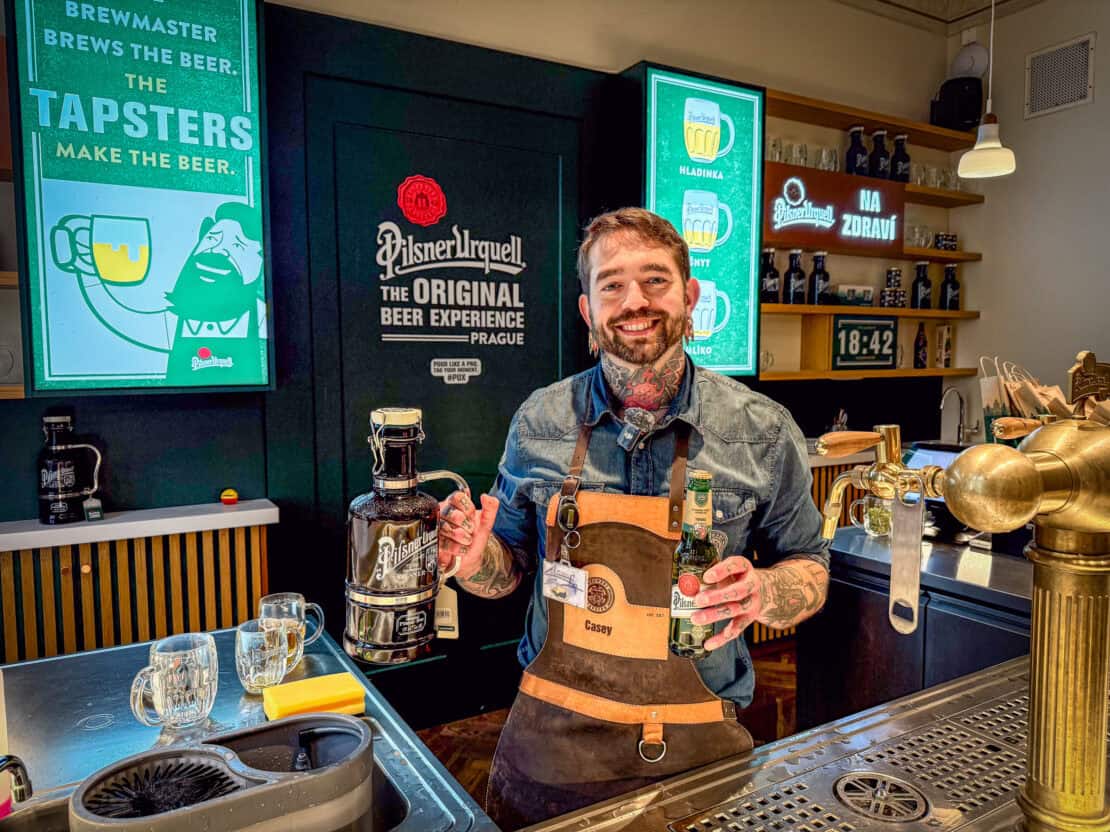
Head to Pilsner Urquell: The Original Beer Experience, where exhibits take you through the story of beer in the Czech capital, including the story of how King Wenceslas reversed the papal decree that only allowed monks to brew.
But the real treat is to sign up for The Tapster Academy.
This hands-on, 60-minute masterclass takes you behind the heavy brass taps of a private taproom to learn the exact science, temperature controls, and glass-prep rituals required to pour a flawless golden lager.
Led by an expert master tapster, you’ll quickly learn that a dry glass is a cardinal sin (they must always be pre-chilled and wet) before mastering the three iconic, traditional Czech pours that radically alter the beer’s flavour profile.
The Three Czech Drinks You Need to Know
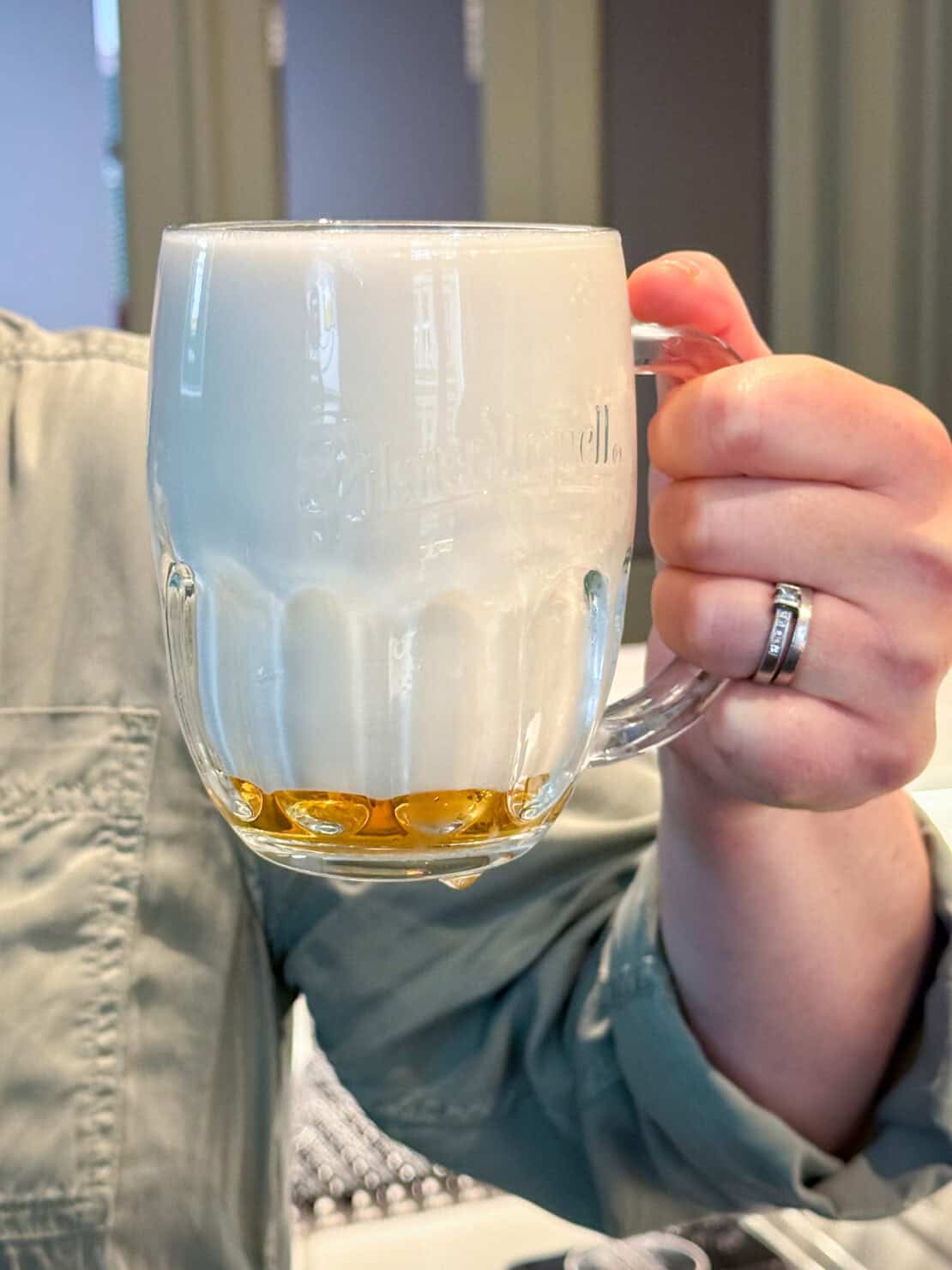
First is the Hladinka, the classic pub pour featuring a smooth, three-finger crown of dense, “wet” foam that seals in the carbonation.
Next, you’ll tackle the Šnyt (pronounced shnit)- two parts beer, three parts foam, and one part empty space.
Finally, you’ll pour the Mlíko (The Milk), a glass filled entirely with thick, creamy, sweet micro-foam that mimics the velvety texture of a dessert. It may look like a con but it turned out to be my favourite of the three.
The foam is the point in Prague, rather than a rip off.
It is a gloriously interactive, wonderfully social hour where you drink exactly what you pour, while snacking on traditional eats, before walking back out into the Prague streets armed with a graduation certificate, a personalised bottle of Pilsner Urquell, and an entirely new respect for the craft.
And not a stag do in sight. Well, unless you want to find them…
Saturday Dinner: Belle Époque at Cafe Savoy
While Café Savoy is best known for being an Instagrammable breakfast institution, returning beneath its grand arches for dinner unlocks a completely different tier of old-world romance.
Situated in Malá Strana just a few steps from the Vltava River, this historic jewel has been the heart of Prague’s intellectual café culture since 1893. It’s just oozing that Fin de Siècle vibe: the room glows under grand chandeliers, the light reflecting off polished wood and marble, all beneath a soaring, seven-meter-high Neo-Renaissance ceiling that is a protected architectural monument.
And the food’s pretty good too.
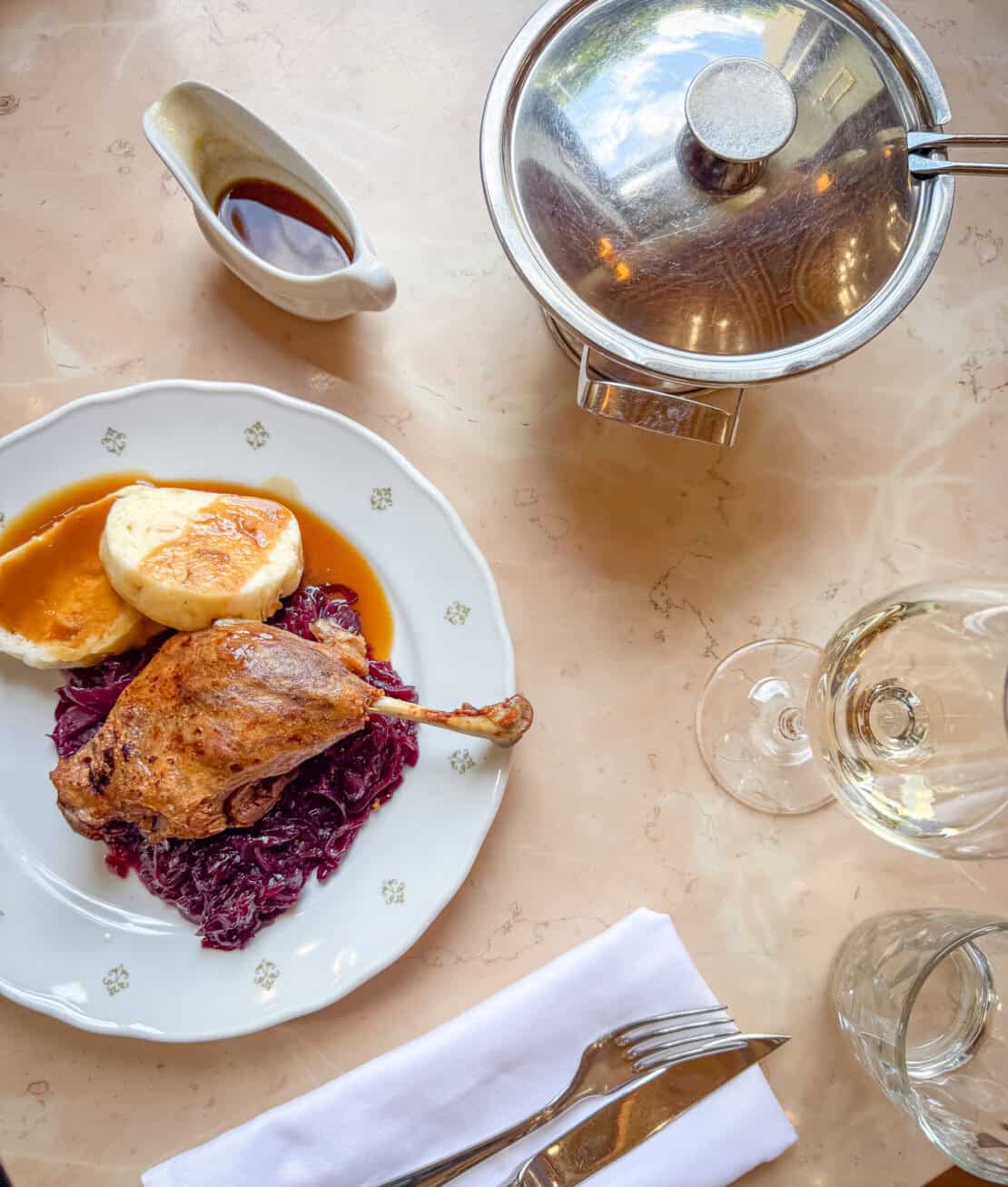
For the main event, the confit duck leg has crispy skin and tender meat that falls away from the bone, served alongside sweet-and-sour red cabbage and traditional, Czech bread dumplings designed to soak up every drop.
Insider Tip: Book ahead! It’s easy enough to book online here. Then, walk off dinner with a quick side trip to the John Lennon wall and a wander along the quiet streets and the mill of Kampa.
- Recommended reading: traditional dishes in Austria that you need to try

Saturday Evening: A Beer Spa (Yes, Really)
Let’s be honest, a “beer spa” sounds like a gimmicky tourist trap. But not only did I love my time at the Beer Spa Bernard – once I’d gotten over myself – but I was reliably informed by various Czech people that this is, indeed, something that people do as a serious wellness treatment. (People’s mothers, that is – it seems it’s possibly going out of fashion.)
Leaving the crowded cobblestones of the medieval Ungelt courtyard behind, steep stairs led to a sanctuary of vaulted brick arches, the air thick with earthy Saaz hops, roasted malt and ancient stone.
Luckily, the entire experience is completely private, which is just as well as you need to be naked when you climb into the massive oak whirlpool tub for two.
The Beer Bath
It turns out that bathing in actual drinkable lager is actually rather bad for you, or local heresy, so instead the tub is filled with active brewer’s yeast, hop oils, and natural malt – a remedy dating back to the Middle Ages and said to leave your skin remarkably soft.
The beer itself, comes from the taps at the side of your wooden tub. Throughout the session, you are free to pour yourself unlimited, perfectly chilled glasses of unpasteurised Bernard lager as you soak.
The contrast of hot and cold, bubbles and crisp is surprisingly good fun.
Cheers!
Late Saturday: The American Bar and A Time Capsule
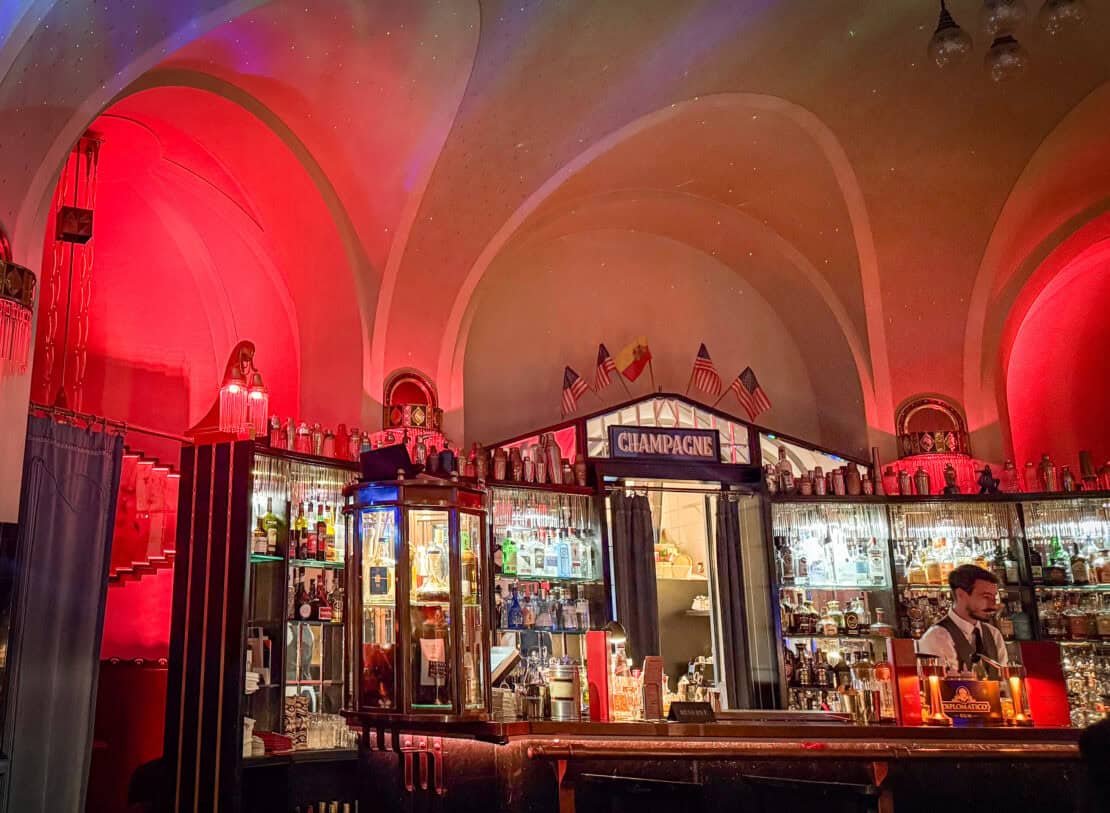
For a final nightcap, head to the edge of the Old Town and step inside the basement of the Municipal House (Obecní dům), Prague’s absolute pinnacle of Art Nouveau architecture.
Hidden away beneath the grand concert halls is the American Bar – the oldest cocktail bar in Prague and the second oldest in all of Europe.
First opened in 1912 to reflect the glitz and progressive social ideals of the “New World,” it’s like slipping into a cinematic period piece.
The entire space is illuminated by a magnificent, original Art Nouveau chandelier designed by František Křižík, featuring a striking heron motif that casts a warm, amber glow over the black marble bar counter and plush leather armchairs.
And it’s only a short walk back to your hotel after last orders.
Sunday Morning: Souvenir Shopping & Art Nouveau
Now is a good time to visit the Prague castle complex, built on a hill overlooking the Vltava River. The castle grounds have great views, plus there’s the the iconic Golden Lane – but I have an alternative for you if you’re not in the mood for standard sightseeing.
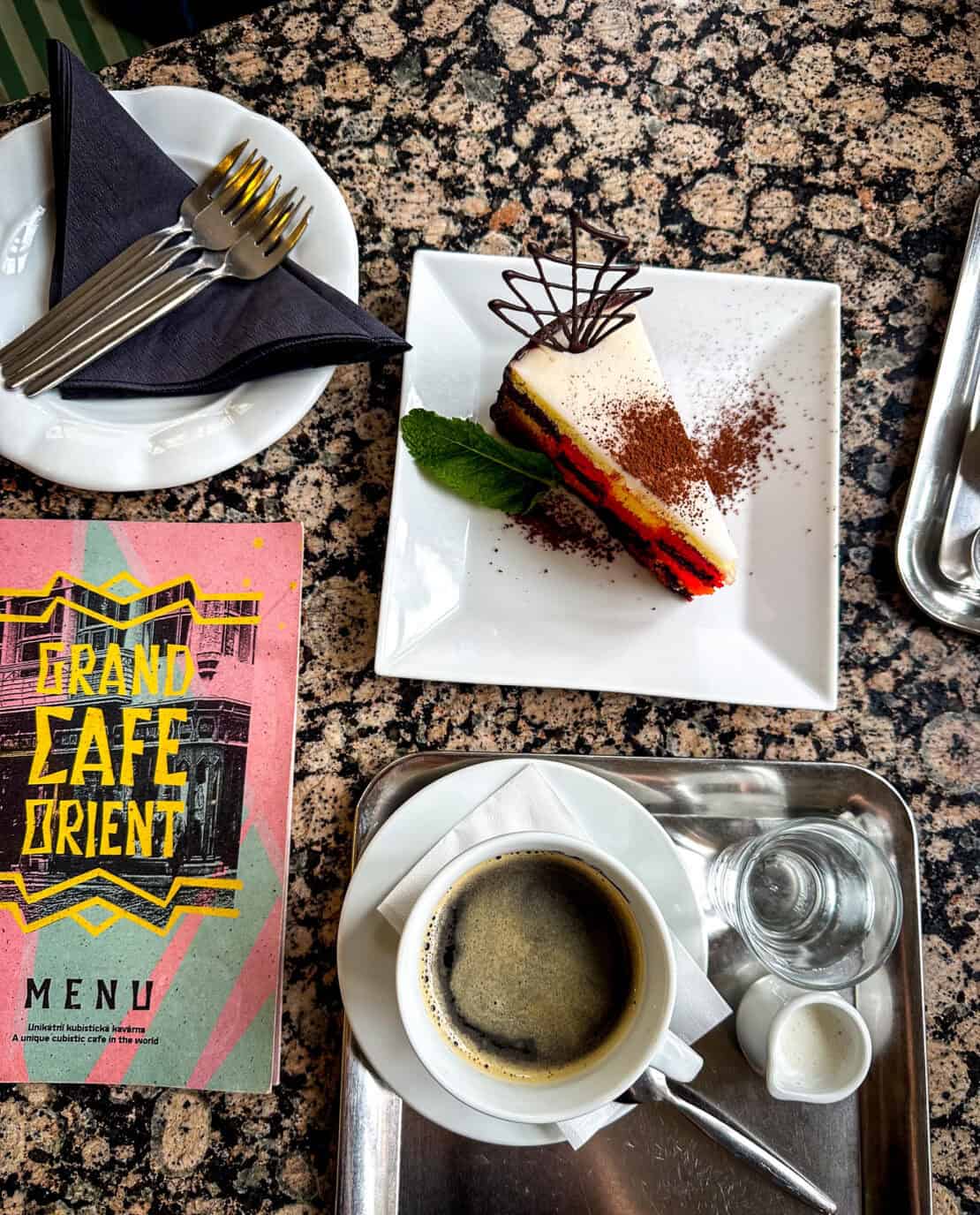
“The best cafes in Prague are found upstairs,” whispered our guide, and so that’s how we found The Grand Cafe Orient.
Perched on the first floor of the iconic House of the Black Madonna, it’s apparently the only purely Cubist café in the world.
Designed in 1912 by the visionary 31-year-old Czech architect Josef Gočár, the building itself was a radical avant-garde statement that rejected traditional curves in favor of bold, geometric lines. Before you even order, make sure to stand at the bottom of the central stairwell and look up: the entire structure was brilliantly engineered to form the silhouette of a giant, glowing light bulb.
Every detail, from the massive brass chandeliers and silk-shaded lanterns down to the coat hooks, wooden benches, and patterned porcelain cups, was custom-designed to adhere to the strict, angular laws of Cubism.
Even the cake.
It’s a perfect break between a lazy Sunday morning shopping in the cubism shop below or looking for wooden figures or Becherovka in the shops nearby.
Watch out for a full guide on what to buy in Prague coming soon.
Sunday Lunch: Traditional Czech Cooking
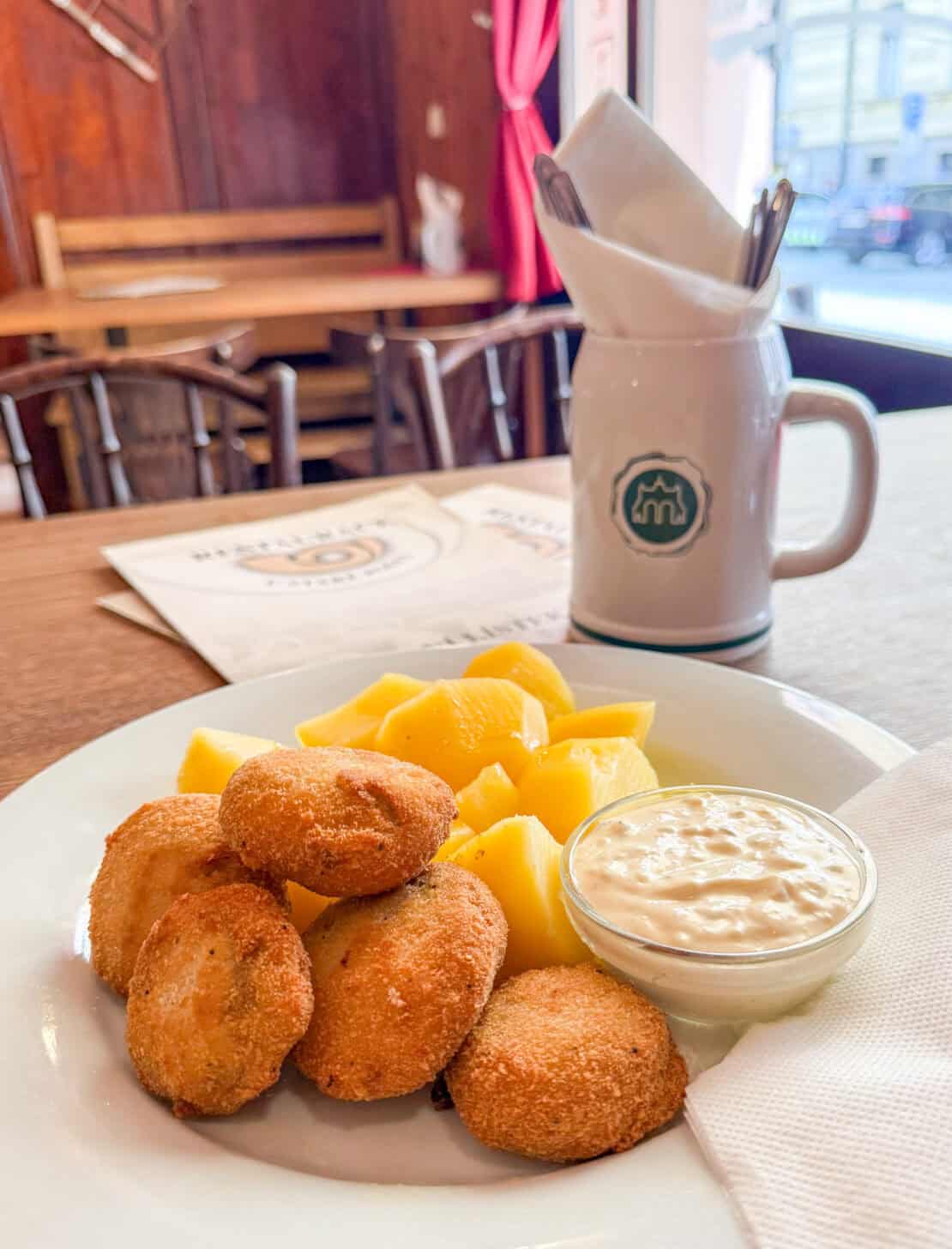
Finish off your 48 hours in Prague with a slice of unpretentious neighbourhood life, at Restaurace Modrá Lavička (The Blue Bench).
Just a short stroll from the bustle of the main thoroughfares, the place strikes a lovely balance between a traditional Czech tavern and a relaxed, neighbourhood bistro.
Think perfectly simmered, rich goulash, flawlessly crisp schnitzels, and comforting traditional potato soups, all served in generous enough portions to last you from now until Christmas, or at least the flight home.
Lab Notes & Prague Travel Tips
How to Get Around Prague
Much of this itinerary is walkable with sensible pacing – although you will need to take a taxi to visit Štangl.
When to Book Ahead
Reserve Štangl well in advance, particularly for weekend evenings. It’s also wise to book the historic tour, Tapster Academy and Beer Spa, too, but not essential.
The Best Time to Visit
Late spring and early autumn offer the best balance of weather and crowds. Winter brings quieter streets and a more subdued atmosphere, especially in February. In December, the harsh winter is lifted by the sparkling Christmas markets.
Timing it Right
Charles Bridge is at its most atmospheric before 8am. Even at 5.45 am, it had around fifty people trying to take photos (and, yes, I was one of them!)
Try Moravian Wine
Beer may dominate Prague’s reputation, but Moravian whites aren’t too bad either. Give them a try!
See a Different Side of Prague
You Might Also Like
- How to spend two days in Budapest
- A new form of slow travel in Austria
- Traditional dishes in Austria: the 15 dishes you need to try
- Forest Bathing in Czechia – more to it than you think