
Find unusual things to do in Tuscany and leave the crowds behind. Find secret spots, alternative places and get off the beaten path in Tuscany with this inside guide.
Find Unusual Things to Do in Tuscany with These Hidden Gems
Tuscany has plenty upon plenty of things to do, that’s for sure. With no fewer than seven UNESCO World Heritage Sites, the claim as the birthplace of the Italian Renaissance, the Leaning Tower of Pisa and more, it’s no surprise that Tuscany remains one of the most popular places to visit in Italy, if not the world.
And yet. Stunning though these places are, it does mean that some of the off the beaten track things do get overlooked. Experiences that would top the list in lesser-endowed places fall through the travel guidebook cracks in luscious Toscana.
Well, not any more!
Behold, dear readers, let me clue you in to off the beaten path things to do in this part of Italy with these hidden gems in Tuscany.
I love travel to this part of the world and through my job as a professional travel writer have had the privilege of meeting many of the people behind these projects.
Let’s go.
Recommended reading: unusual things to do in Italy
Disclosure: if you book or buy through any of the links on this page, we may earn a small commission at no extra cost to you. Cheers!
Recommended
I love sharing the best travel resources I can find.
- I never book a flight without looking on Skyscanner first
- My favourite one stop shop for airport transfers, food tours & excursions is Get Your Guide
- Out of the big accommodation machines, I use Expedia and Booking.com the most
- I’ve hand-picked useful travel gear and tools for you in my Amazon shop. Never leave home without a travel adapter or collapsible water bottle. I’d also recommend these soft ear plugs and a sleep mask.
- Access all our planners and budget spreadsheets in the Travel Toolbox ©
- Plan the perfect road trip with our Road Trip Planner & Toolkit ©
- Use these packing cubes to make life so much easier on the road.
- Save on mobile phone roaming charges with an eSIM from Airalo.
Tuscany Off the Beaten Path
Visit the Vespa Museum
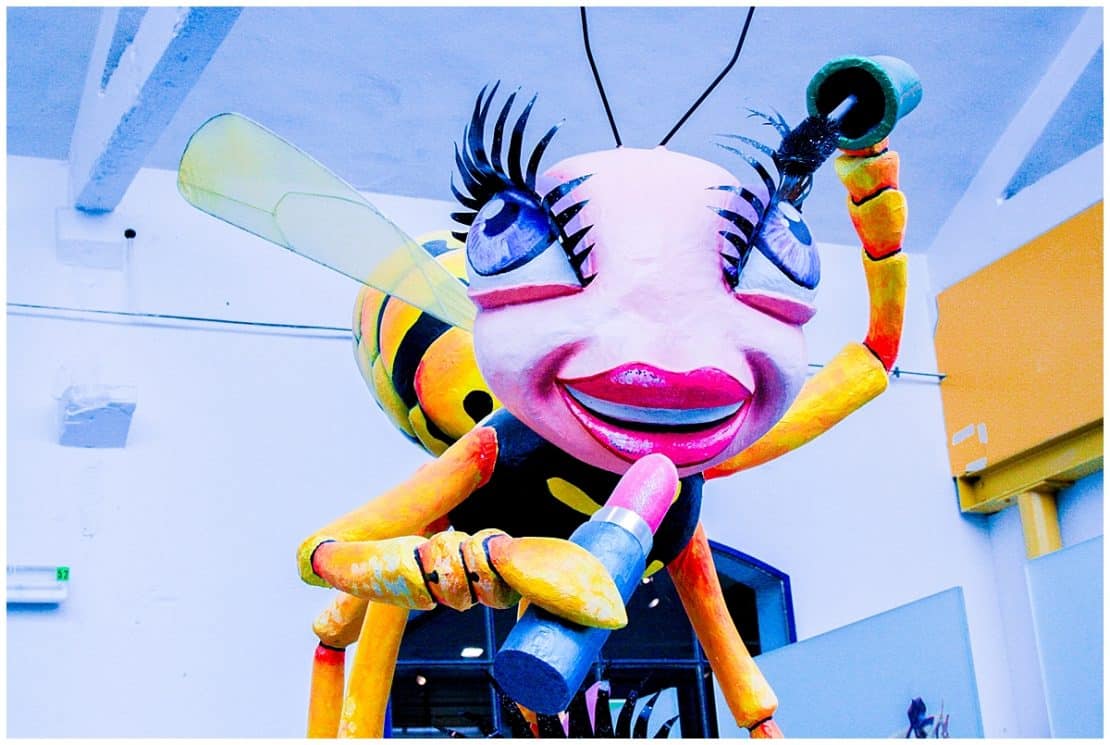
The Vespa museum in Pontedera, Tuscany, welcomes you not with racy Vespas and photos of celebrities, nor dashing ad campaigns. Those wait inside. Instead there’s a memorial and a polished aerobatic trainer plane, monuments to the man who began his career in aeronautical engineering but who achieved fame with a much smaller machine: the Vespa.
It’s one of the best hidden gems in Tuscany.
Vespa: The Icon
On the one hand there’s the breathless icon, the vision of beautiful Italian limbs perched upon beautiful Italian design, zipping past fountains, ochre walls and cafes practically swaying with romantic intrigue. On the other, there’s a bald man in a shirt and tie. The man who designed the thing.
That man was Corradino d’Ascanio.
Vespa: The Engineer
Piaggio hired d’Ascanio, they both got to work and after a few shiny prototypes, the Vespa was born. Its unique design had gears on the handlebars, a single metal chassis and an easy way for riders to rest their feet on the platform instead of straddling an unwieldy mechanical beast.
Splash guards even protected those tailored Italian suits.
Either from the Vespa’s narrow waist or from the buzzing of the engine, the motorbike reminded both men of a wasp. This was handy, since Vespa in English means wasp.
Fame and Hollywood followed, surpassed only by a visit from the British Blue Peter team.* The Vespa became both a legend and an art form and the museum in Pontedera celebrates it well.
Vespa: The Legacy
Yet the words on the plaque by the exit are the ones that stay with me still:
“Corradino d’Ascanio, 1891 – 1981
A man of science and extraordinary imagination and creativity.
The book of his life tells the story of aviation, the helicopter and the Vespa.”
The museum also shows glamorous photos of a woman with long hair clasping the man of her dreams as they speed through the Tuscan countryside.
Behind every sexy invention, you’ll find an engineer.
How to Do It
Location: Pontedera, about halfway between Pisa and Florence (roughly 30 minutes by train or car from either city).
Access: The museum sits next to the Piaggio factory. Trains from Pisa or Florence stop at Pontedera-Casciana Terme station, just a short walk away.
Opening hours: Typically open Tuesday to Saturday, with mornings and afternoons divided by a lunch break. Closed Sundays and Mondays.
Good to know: Entry is free, and the collection spans historic Vespas, prototypes, and quirky models from films and special events. Guided tours can be booked in advance.
Take An Authentic Cooking Lesson in Tuscany
It’s no secret that Italians like their food. And one of the best hidden gems in Tuscany is having a secret cooking lesson so that you can bring the flavours of the region back home.
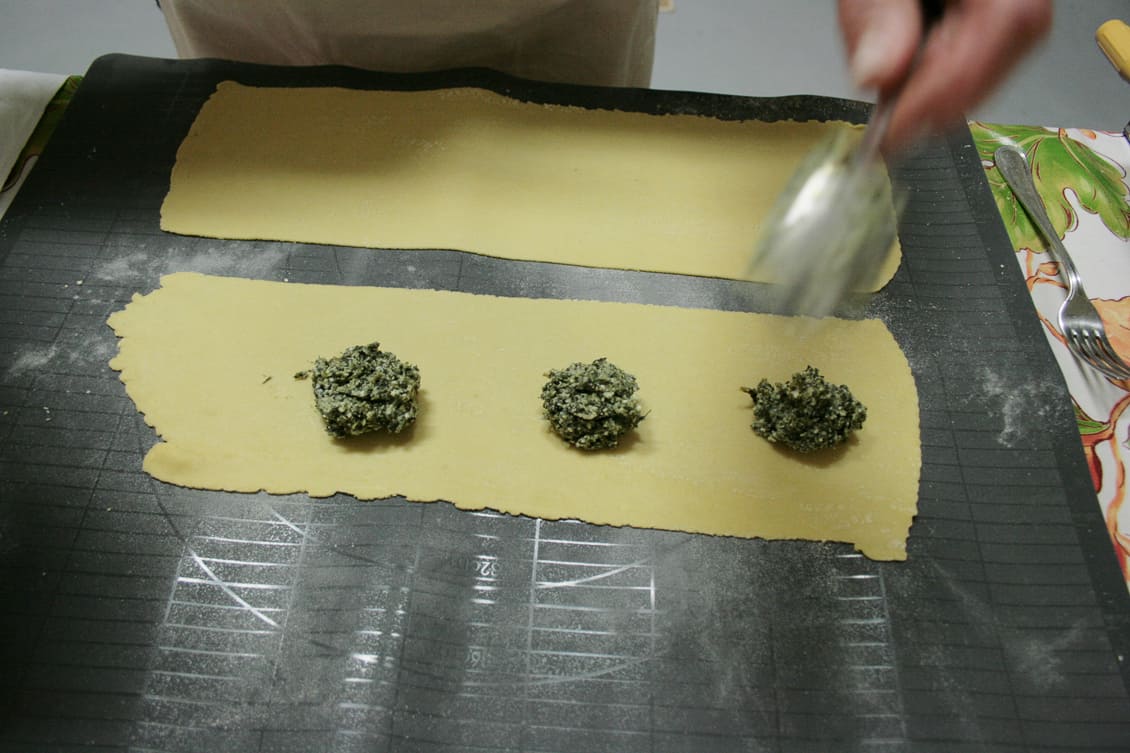
I loved the in house cooking course with Cuoche in Vacanza. They come to your self catered accommodation or villa and teach you all the tricks of the trade.
“This is the classic ragù that my grandmother taught me: a delicious, versatile sauce that can be used in many ways. Added to lasagne, any type of pasta, served with meatballs…” Lella from Cuoche in Vacanza
Find the full review of our time with Cuoche in Vacanza here, along with a recipe for a real ragu.
How to Do It
Location: They come to you—whether you’re staying in a villa, agriturismo, or apartment anywhere in Tuscany.
What’s included: Hands-on lessons in Tuscan cooking, from fresh pasta and gnocchi to traditional sauces and desserts, followed by a full meal enjoyed at your table. They bring all the ingredients and equipment with them.
How to book: Reserve directly through their website (cuocheinvacanza.it) or by email. It’s best to book in advance, especially in summer.
Good to know: Classes can be tailored for families, groups, or special diets. They’re relaxed, informal, and perfect if you want an authentic food experience without leaving your accommodation.
But if those dates, times and prices don’t work out, here are some other recommendations:
- Pizza/pasta making class at a traditional Tuscan farm: Learn how to make mouth-watering pizza or pasta and gelato with a professional Italian chef at a farm just outside of Florence.
- Private pasta-making class in Pisa: Escape the city for a hands-on pasta cooking class where you’ll learn to craft fresh pasta from scratch in a traditional farmhouse, located just 15 minutes from Pisa in the Tuscan hills.
- Master pasta and tiramisu in Siena: Learn how to make pasta and tiramisu in a popular Siena restaurant. Enjoy a glass of Prosecco upon arrival, and a glass of wine with your meal.
Wander the Charterhouse of Calci
In unmarked graves, the Charterhouse monks of Calci used death to extend their earthly vows of silence into eternity.
While the brothers ran the pharmacy, the fathers lived reclusive lives, speaking only once a year and passing food between walled tunnels to avoid the temptation for a chat.
Yet despite this severity, austerity never really caught on.
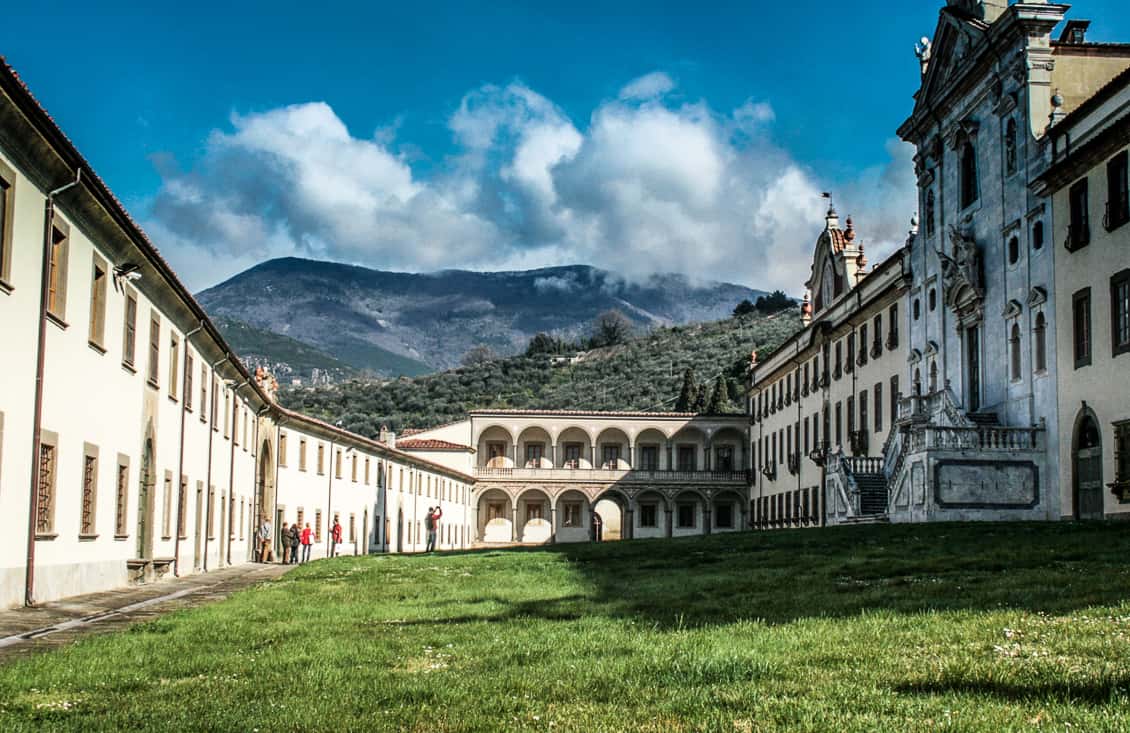
The Charterhouse notches up an impressive 1500 rooms, plus a view of the leaning tower of Pisa on that infamous clear day. Living quarters come with private orchards, while cloisters overlook fountains and a gated panorama of Tuscany at its best.
In fact, it’s this very richness that’s the real curse in this part of Tuscany. With the splendours of Florence and Pisa nearby, little attention remains for buildings that would otherwise be protected, promoted and thriving.
Like the others, the Charterhouse is struggling. The last monks left in the 1970s, leaving the cloisters crumbling behind them.
Part of me wonders whether this is how things need to be. That it’s impossible to restore and remember everything and that in trying to do so we risk losing today’s resources.
But then another part recognises this as one of Tuscany’s hidden gems. And hopes that it survives.
How to Do It
Location: Calci, around 10 km from Pisa, in the Monte Pisano foothills.
Access: Best reached by car or taxi (20 minutes from Pisa). Limited public buses run from Pisa to Calci.
Opening hours: Usually open daily except Mondays, with guided tours required to access the interiors. Tours are available in Italian, with some English-language options.
Tickets: Entry tickets can be bought on-site or reserved online via the Polo Museale della Toscana website.
Good to know: The monastery is vast, with Baroque chapels, frescoed cloisters, and monk’s cells. Allow at least 90 minutes for a visit. It’s next door to the Natural History Museum, which can be combined on the same trip.
- Find all the details on how to visit the Carthusian Monastery where the monks used to live here. It’s around 30 minutes from Pisa.
- Recommended reading: Rome or Naples for your next trip?
Find a Laughing Ghost
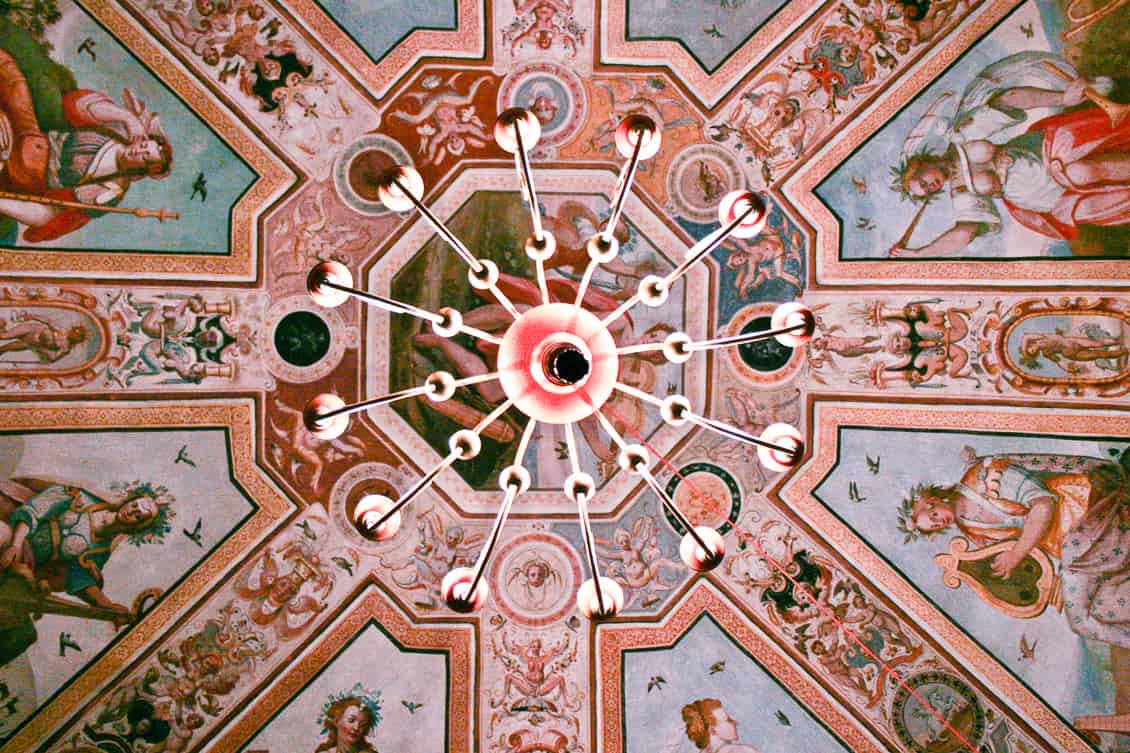
Agustino Agustini greets guestsin the hallway of Villa di Corliano, a house, no make that a mansion, complete with a driveway that sweeps through the grounds like a flourish from a period drama.
Florentine eagles flit across the vault, while whispers of ghosts hide behind chandeliers.
Its façade bristles with decadent Mannerist motifs: harpies, fruit garlands, and various symbols of virtue. Inside, Andrea Boscoli’s dramatic “Feast of the Gods” fresco and myth-laden vaults transport you back to Italy’s Golden Age.
Wander into the vast, century-old gardens, stables, oil mill, and the elegant kaffeehaus, and you’ve stumbled upon the landscape of another era.
You can stay here, in this lovingly restored unusual piece of history. But you have to be able to handle the lack of air conditioning in summer. And, of course, the ghost.
How to Do It
Location: San Giuliano Terme, between Pisa and Lucca. About 15 minutes’ drive from Pisa Airport.
Access: Best reached by car. Free on-site parking is available.
How to book: Reservations can be made directly via the villa’s website or through major booking platforms.
Good to know: Breakfast is served in the gardens in warmer months. The villa also has an on-site restaurant specialising in Tuscan cuisine.
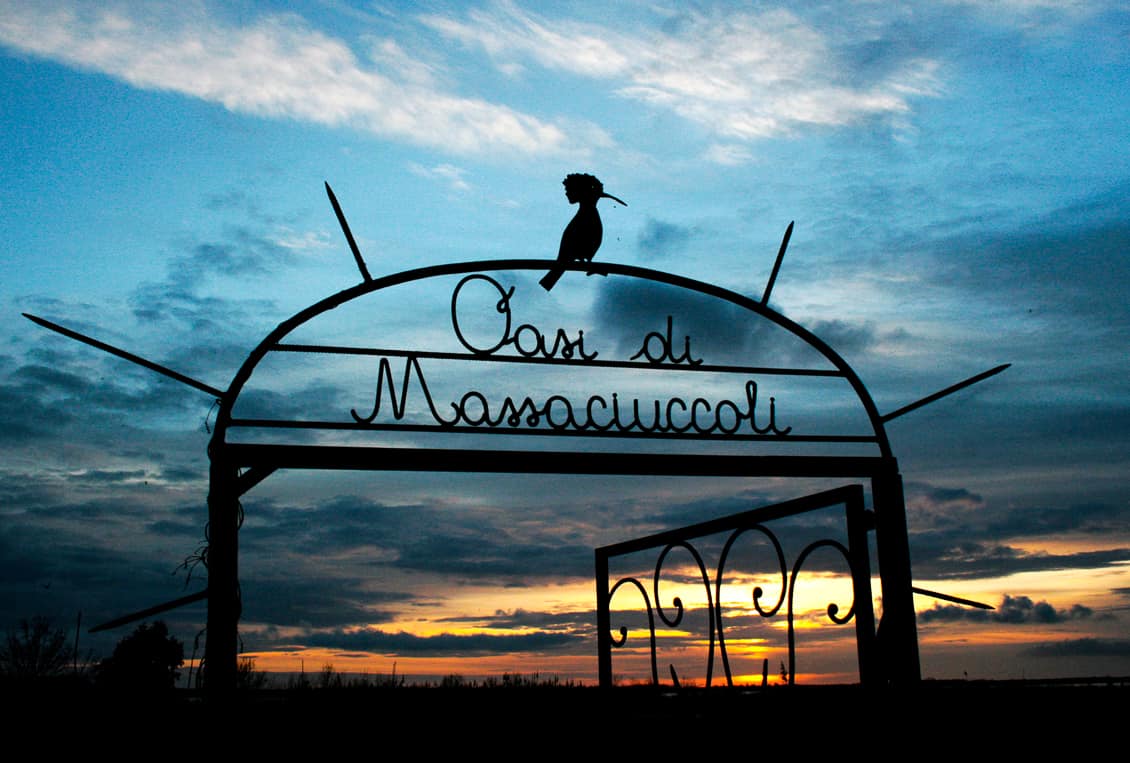
Go Bird-Watching at Massaciuccoli
Bring your binoculars and drink in the soothing silence of sunset.
Lake Massaciuccoli may not have the fame of Florence or Pisa, but if you love slipping into the quieter side of Tuscany, it’s a gem worth seeking out.
Boardwalks stretch across the reed beds, where dragonflies buzz and the air hums with the chorus of hidden life. This is one of the best bird-watching spots in the region, with herons, marsh harriers and even the occasional flamingo sweeping through the skies.
You don’t need to be a binocular-wielding expert to enjoy it. There’s something soothing about following the wooden walkways, pausing in hides, and watching flashes of colour dart across the water.
The whole place feels suspended between land and sea: part wetland, part lake, part open horizon.
It’s a reminder that Tuscany isn’t all hilltop towns and Renaissance frescoes; it’s also wild, alive, and constantly surprising.
Look out for kingfishers and ducks amid the swaying reeds above and crayfish and eels below.
How to Do It
Location: Lake Massaciuccoli, near Torre del Lago Puccini, about 20 km from Pisa.
Access: Accessible by car; free parking near the visitor centre. Wooden walkways and hides are open to the public.
Best time to visit: Spring and autumn migrations bring the widest variety of birdlife. Early mornings are best for spotting herons, marsh harriers and (sometimes) flamingos.
Good to know: The Lipu Oasis visitor centre offers binocular hire, guided walks, and information about the lake’s wildlife.
Find out more about walking in Massaciuccoli here.
Take a Road Trip Through Tuscany
Embrace the freedom of the wide open road and those lines and lines of cypress trees by finding your own way through Tuscany. That way, you can hit the main sights of Florence or Pisa and then take in these unusual spots plus discover a few more surprises of your own.
Tuscany rewards those who take the wheel.
The Via Chiantigiana (SR222) snakes through the heart of the Chianti wine region, linking Florence to Siena with a trail of vineyards, olive groves and villages like Greve and Castellina, where you can stop for a glass of red or a plate of wild boar pappardelle.
Further south, the rolling hills of the Val d’Orcia open up around Pienza, Montepulciano and Montalcino: UNESCO-listed landscapes that look almost too perfectly arranged to be real.
For something more offbeat, steer west towards the Etruscan coast, where winding roads lead to Bolgheri, a town famous for its cypress-lined avenue and world-class Super Tuscan wines. Or drive north into Garfagnana, where chestnut forests and medieval bridges stretch between rugged mountains.
Each route offers a different side of Tuscany: the postcard-ready, the lesser-known, and the quietly wild.
How to Do iI
Routes to try:
- Via Chiantigiana (SR222): Florence to Siena through the Chianti hills (stop at Greve, Castellina, Radda).
- Val d’Orcia: Explore Pienza, Montepulciano, and Montalcino for UNESCO-listed landscapes and wine.
- Etruscan Coast: Head west to Bolgheri and its cypress-lined avenue, then on to the sea.
Driving tips: Avoid driving in historic city centres (ZTL zones) where fines are common. Park outside and walk in.
Car hire: Widely available in Florence, Pisa and Siena. Smaller cars are easier to handle on country roads and in villages.
Recommended – Road Trip Essentials: How to plan the perfect road trip anywhere in the world.
Visit an Agroturismo Farm
Indulge in homemade jams, honey, extra virgin olive oil and a meal made from vegetables grown in the very same garden. All while taking in views of the Serchio River.
Spazzamento calls this agriturismo. I call it simple pleasure.
Set on a hillside near Vinci, the birthplace of Leonardo, Agriturismo Spazzavento offers that classic Tuscan mix of vineyards, olive groves and big skies – but without the crowds. The restored farmhouse has simple, spacious rooms and apartments, some with kitchenettes and fireplaces, and there’s a pool with a view that looks as though it belongs in an oil painting.
What sets it apart is the atmosphere. Daniele and his family welcome guests as though they’re old friends, sharing local tips, arranging wine tastings, and sending people home with bottles of their own olive oil.
Mornings can begin with breakfast on the terrace, evenings with a glass of Chianti as the sun dips behind the hills. And while Florence and Siena are within easy reach, it’s the calm and generosity of Spazzavento that tend to linger longest in memory.
How to Do It
Location: Just outside Vinci, about 45 minutes by car from Florence.
Access: Easiest with a car; parking is free on-site.
How to book: Direct via the agriturismo’s website or through booking platforms.
Good to know: Apartments come with kitchenettes, but breakfast can also be arranged. The owners sell their own olive oil and sometimes host tastings.
Find out more about the Agriturismo Spazzamento here.
Meet the Gloom of the Nicosia Monastery
Beneath the arches, a cloaked man walks through the shadows, his head bent, his hands supporting an open book. I can hear my footsteps, distorted through the darkness by the basement’s wet gravel, a hesitant chord to the beat of dripping water.
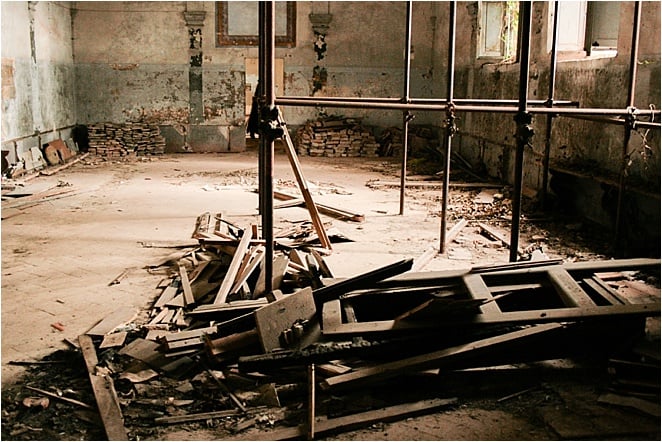
Upstairs, in the clouded daylight, it’s easier to see the wooden planks covering the windows and the words that scream “take my blood.” It’s also easier to see the table decked with homemade olive oil, bread and wine.
This is the Nicosia Monastery, a place that chalked up nearly 800 years of active service before the last few monks hung up their cassocks in the 1970s and the vandals moved in. Among the ripped plaster and violent graffiti, a neatened orange grove provides fragrance and a sense of peace.
It’s being painstakingly restored by the Nicosia Nostra, a volunteer organisation founded in 2004 from people in the neighbourhood who wante to save the place. They host outdoor concerts in summer, construct nativities in winter, and spend the rest of the year lurking in basements to scare the bejesus out of visiting writers.
Talk about Tuscany’s hidden gems.
How to Do It
Location: Calci, around 10 km from Pisa. The monastery sits on the slopes of Monte Pisano, close to the more famous Certosa di Pisa.
Access: The site is usually closed, but local cultural associations (such as Nicosia Nostra) organise open days, guided tours and occasional events.
How to visit: Check the Nicosia Nostra Facebook page or the Comune di Calci website for upcoming openings and booking details. Visits are often tied to cultural festivals, art shows or heritage weekends.
Transport: Calci can be reached by car from Pisa in about 20 minutes. Public transport is limited, so driving or arranging a taxi is easiest.
FAQs About Tuscany Hidden Gems
You asked, I answered! Here’s more about Tuscany off the beaten track.
What is Tuscany known for?
Tuscany is known for rolling hills, olive groves, medieval towns and great food. The region has a huge artistic and historic legacy, as both the birthplace of the Renaissance and the home of the modern Italian language. It’s also a popular holiday spot, with cities like Florence, Siena, Lucca, Pisa, San Gimignano, Montepulciano and more.
What are some non-touristy things to do in Tuscany?
Beyond the secret spots in Tuscany mentioned higher up, some non touristy things to do in Tuscany include the following:
- Catching the sunset views at Pitigliano.
- The Saturnia Hot Springs.
- The natural thermal baths at Bagni San Filippo.
- Porto Santo Stefano – a beautiful coastal town.
- Giglio Island – a gorgeous spot within the Toscano National Park.
- Lajatico – the hometown of one Andrea Bocelli.
- Val D’Orcia for those iconic countryside views.
- San Gimignano – popular hill town with towers to climb.
Where in Tuscany has the most beautiful rolling hills?
The region of Val D’Orcia is probably the most famous part of Tuscany, with those rolling hills and upright trees.
Where to stay in Tuscany off the beaten path?
You will find so many gorgeous places to stay in Tuscany off the beaten path. I’d highly recommend the places recommended in this article on hidden gems in Tuscany. Namely: Villa Corliano.
What is the most beautiful part of Tuscany?
Well, beauty is in the eye of the beholder, of course. But it’s hard to beat the rolling hills of Val D’Orcia.
Read More About Italy with These Travel Tips
- 21 Unusual Things to do in Rome That Aren’t Just Weird
- Your Perfect Amalfi Coast Itinerary
- Chiavenna: The Place That Makes Caves Glamorous
- Yes, You Can Still Find Secret Spots in Venice
- 7 Unusual Things to do in Italy to Fall in Love All Over Again
- With These Italian Souvenirs, You’ll Always Remember Italy
- The Best Things to do in Umbria, Tuscany’s Neighbour
- Trieste Food Stands Out From the Rest of Italy
- Capri’s most scenic cocktail spots
- A first-timer’s guide to the Amalfi Coast


Ohh I love this post! I love how you don’t travel in the typical touristy way. I recently moved to Tuscany, so this blog post is perfect for my sunday adventure inspiration. Thank you xx
https://shannicealice.wordpress.com
Ah, what a beautiful part of the world to move to! So many adventures await! Glad you found this helpful – and wishing you all the best in your new home!