
Sidestep the nightmares with this article on how to plan the perfect Golden Triangle India itinerary through Delhi, Jaipur and the Taj Mahal.
The Truth About the Golden Triangle
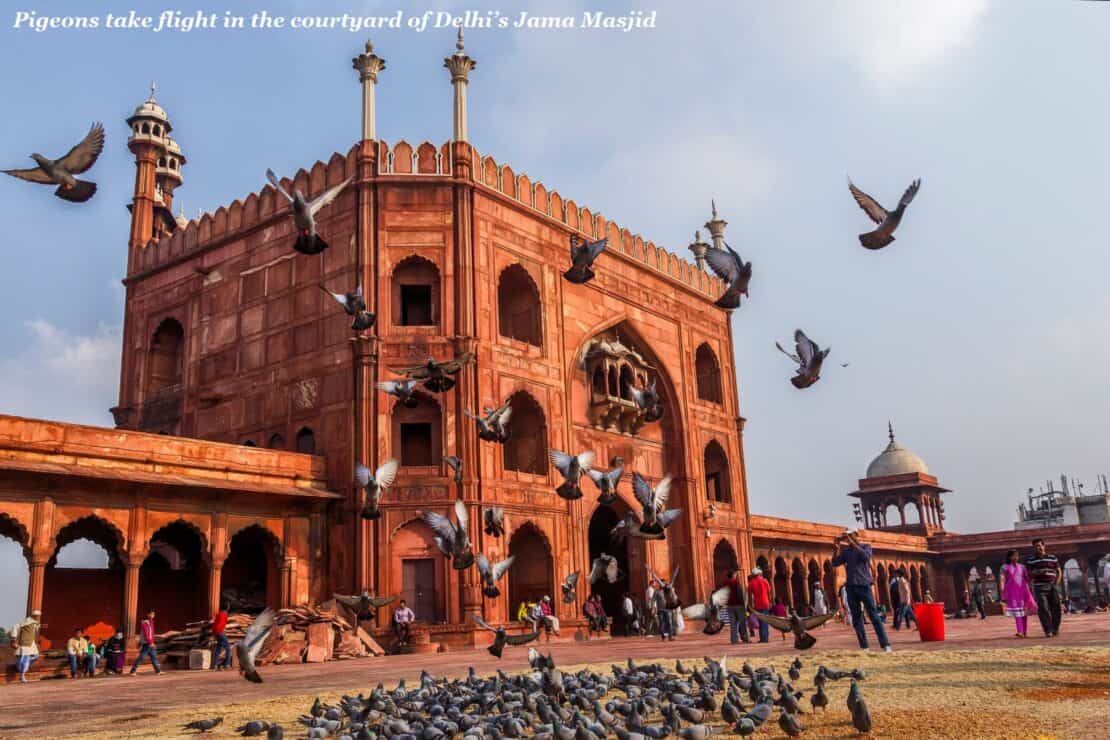
On a rooftop near the Jama Masjid, a pigeon keeper whistles and claps. A hundred birds lift off, wheel over the domes and the bazaar and then, on cue, drop back into their kaabuk, or coop.
It’s called kabootarbaazi. The Mughal emperors patronised it, and it has outlived their empire. The birds fly out, circle the neighbourhood and come home. India’s famous Golden Triangle works the same way, only with luggage.
Delhi, Agra and Jaipur form a loop of about 720km, and most trips start and finish in the capital. It’s one of the most visited corners of India, and in places it shows. But the people who keep the old crafts alive are still there, a street or a rooftop away from the queues.
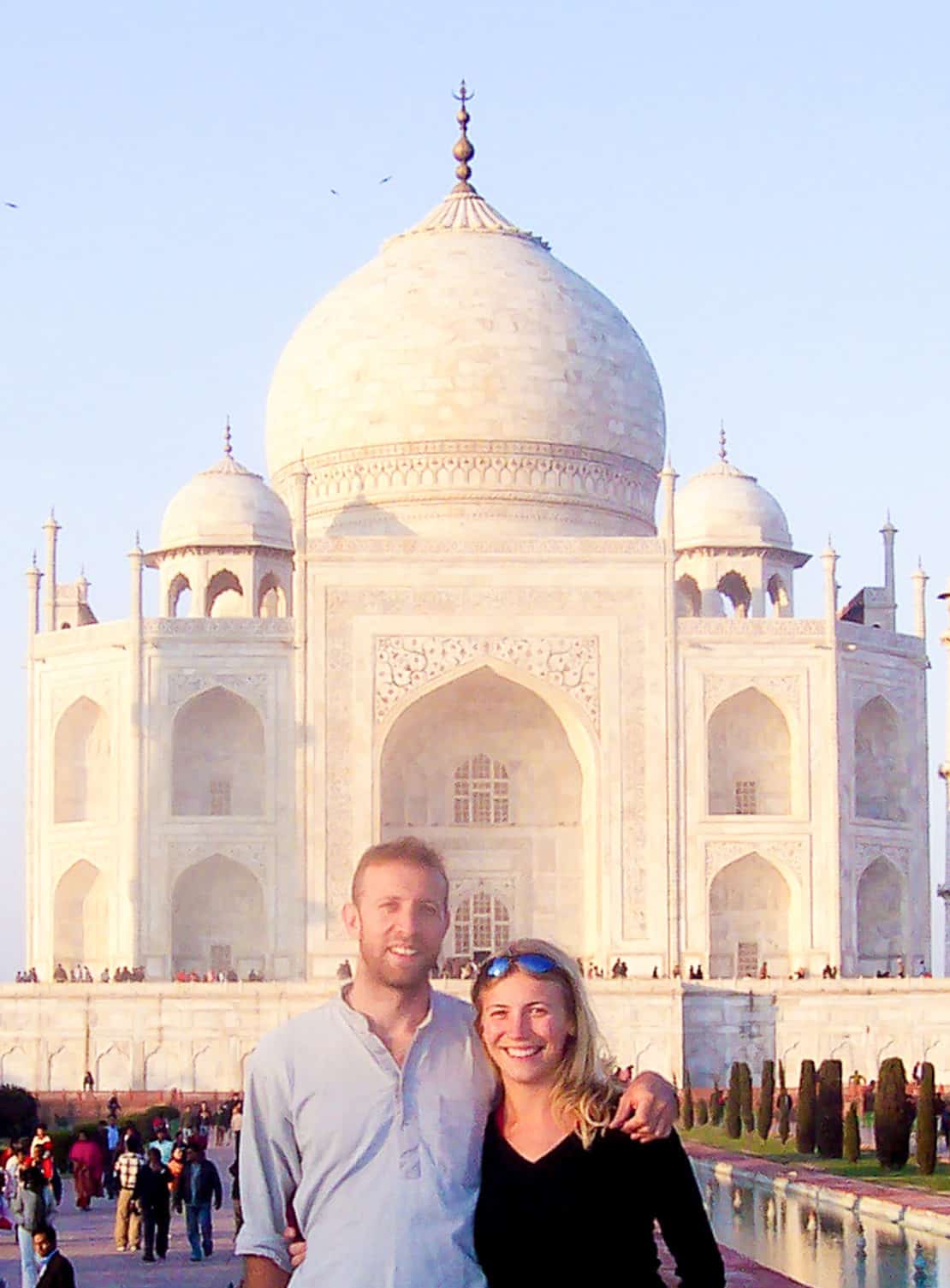
My First Visit…
The Taj Mahal was part of my first trip to India, over twenty years ago, and the country has drawn me back several times since.
It isn’t often that I look back on my travels and think, “well, that was a mistake.” But when I reflect on that first time in Delhi, it’s probably the closest I’ve come.
Pickpockets, overflowing sewage, a hotel room break-in while we slept, and the raw, haunting poverty of children living in literal garbage. That trip left me with experiences that I expect I will reflect upon until the end of my days.
But that’s no reason to stay away. It’s just worth knowing that here, in particular, I’d recommend taking some expert advice, so that you can sidestep the pitfalls and connect more deeply. It’s a route where, if I went back, I’d consider booking a bespoke Golden Triangle tour like this one.
This article is one I promised I’d write many times over. It’s a Golden Triangle itinerary for thoughtful travellers, with as much room for the people as for the places. It cuts out the mistakes I made and takes inspiration from some of the wonderful new experiences on offer.
But first, a little geometry.
What Is the Golden Triangle?
Join the three cities on a map and you’ll draw a rough triangle.
India’s capital sits at the top, rebuilt by one dynasty after another. Its 30 million people make it the fourth-largest of all the cities in the world, by the UN’s count.
A few hours to the south-east, on the Yamuna, stand the Taj and the ramparts of Agra Fort. Jaipur, the Pink City, lies about as far again to the west, in Rajasthan. Expect hilltop citadels, royal palaces and bazaars full of string puppets.
Their histories overlap, so each city explains a little of the next.
Why Visit the Golden Triangle?
Few routes pack so much history, food and culture into a week. In this part of India, one street can hold a Sikh gurdwara, a Jain temple and a Hindu shrine. A day’s drive takes you from marble mausoleums to Rajput forts, and lunch changes with the scenery.
If you’ve always meant to visit India someday, and you want to see the Taj Mahal with your own eyes, then the Golden Triangle route is for you.
(If you’d rather have a slower pace, with time spent soaking up the atmosphere, I’d recommend starting in the south or across the border in Nepal.)
Can You Travel Around the Golden Triangle Independently?
Absolutely, yes. You can book hotels, transport and guides yourself. The Gatimaan Express links Delhi and Agra in 100 minutes, and drivers are easy to hire.
But if it’s your first time in India, the logistics can swallow the holiday. And the culture shock can be huge. Of all the places I’ve travelled independently in the world, Delhi hit hardest in terms of the street smarts and elbows you need to be able to complete something simple like buying a train ticket in a crowd.
But you don’t need to choose between white-knuckling the DIY option or joining a huge group.
A private India Golden Triangle tour goes further, and it doesn’t have to mean a coach. Your own driver stops when you ask them to, whether for a roadside snack or a photo. The best Golden Triangle tour India can offer also has local guides who handle the queues and know whose door to knock on.
Specialists such as Red Dot Tours build trips around relationships years in the making, and tailor each one to you. They don’t do groups, fixed itineraries or set departure dates.
In other words, heaven.
How Many Days Do You Need?
Five will do it at a sprint, and many Golden Triangle tour itineraries do just that. A week covers the essentials, and nine days add a river and a few long lunches.
A Nine-Day Golden Triangle Itinerary (Seven at a Push)
This route begins in Delhi, where most flights land. Jet lag and rush hour make poor company, so the first evening is for room service and a lie down in a darkened room. Day one starts the morning after arriving in Delhi. (For a 7-day Golden Triangle trip, skip the river and trim time in the capital down by one day.)
Days 1 to 3: Delhi, A City Built in Layers
Tradition counts seven cities of Delhi. Shah Jahan’s walled Shahjahanabad is the last, and still the liveliest.
Day 1: Pens and Pigeons
Spend your first full day in Delhi on foot. Take the Metro to Chandni Chowk, then explore old alleys, past chai sellers and wedding-card printers. From the steps of the Jama Masjid, look across to the walls of the Red Fort, a UNESCO World Heritage Site.
In the afternoon, let a local guide open a few doors. One leads to an Urdu calligrapher bent over the page, another to the custodian of a library in that language. Behind a third, stairs climb to a rooftop, where the pigeon keepers explain the rules.
Day 2: Saints and Song
Head south across Delhi to Mehrauli and its thousand years of history. A guided walk introduces you to the families who live among the ruins now. Mehrauli Archaeological Park leads past the Jamali Kamali mosque to the 73m Qutub Minar.
Later, stop at Humayun’s Tomb, a forerunner of the Taj, then cross the road to explore Nizamuddin Basti with a community NGO. The lanes thread between Mughal monuments most visitors miss. At their heart sits the shrine of the Sufi saint Nizamuddin Auliya, and his disciple, the poet Amir Khusrau, rests at the entrance.
Stay for the qawwali, sung every evening after sunset prayers, when rose petals and harmonium notes fill the courtyard.
Day 3: Memorials and Gardens
Swap alleys for avenues in New Delhi. Pass India Gate on the way to Gandhi Smriti, the house where the Mahatma spent his last 144 days.
Photographs and paintings trace his life and his fight for independence, and a guide can explain his eleven vows. A path of footprints marks his final walk to the spot where he was assassinated on 30 January 1948.
The museum closes on Mondays.
No three days can cover all there is to see in Delhi, so don’t try. A morning sketching in Lodhi Gardens with a local artist beats a fourth monument.
Stay: Choose between Old and New Delhi. The Imperial is a 1930s landmark on Janpath. Haveli Dharampura, an 1887 mansion near the Jama Masjid, leaves your wake-up call to the muezzin.

Days 4 and 5: Agra and the Chambal, Marble and Mugger Crocodiles
The city’s craftspeople get a day, the river gets two nights, and the Taj waits for dawn.
Day 4: Fort and Workshops
Head to Agra on the morning Gatimaan Express, which doesn’t run on Fridays. The Taj Mahal takes the same day off, so at least the timetable is consistent.
Start at the riverside fort, a seat of the Mughal Empire. Shah Jahan spent his last years here as his son’s prisoner, and legend says he died gazing at his wife’s tomb.
Across town, meet the pacchikari (stone inlay) artisans said to descend from the families who decorated the Taj. They set slivers of carnelian and lapis into chiselled marble, sometimes dozens to a single flower, and they’ll share the stories behind each design.
In other workshops, zardozi embroiderers stitch with gold and silver thread, and weavers knot carpets from silk and wool. If you buy, here’s how to find souvenirs worth carrying home.
Wondering how much time to spend in Agra? Well, the gorgeous Oberoi Amarvilas have every room facing the Taj Mahal – but apart from that, Agra is not a place to hang around. I far prefer the idea of escaping to the wilderness and then returning at sunrise to see the Taj at its best. Here’s how to do it.
Day 5: On the River
The National Chambal Sanctuary is one of the best places on earth to see gharials, slender-snouted crocodilians. From a boat, look for muggers and basking turtles, though the boatman will spot them first. Rare Gangetic dolphins surface too, but they keep their own hours. It’s a soothing antidote to the frenzy of city life.
Days 6 to 9: Jaipur, The Pink City at Walking Pace
Rajasthan’s capital gets the slowest stretch, with time for kites, kitchens and conversation.
Day 6: Dawn and Sandstone
Leave the river at 5 am and catch the Taj Mahal in Agra at sunrise, on the way west. First light warms the marble from grey to rose, and the queues are still short.
Primary schoolchildren know of it as “the greatest monument to love” and it’s normal to wonder whether or not it’s overrated.
It isn’t. It’s every bit as magnificent as you’ll have dreamed it could be.
Check the opening times and prices before you go.
After the Taj Mahal, the drive to Jaipur takes about six hours from the river, so break it at Fatehpur Sikri, the red sandstone capital Akbar built and soon abandoned.
Day 7: Windows and Bazaars
Step inside the ancient terracotta walls of Jaipur’s Old City and some of my favourite parts of India.
Start at the City Palace, the home of the Jaipur royal family. Look up at the central tower: when the Maharaja is in residence, two flags fly overhead – one full-sized and another a quarter its size. It’s a whimsical nod to the title Sawai (meaning “one and a quarter”), bestowed upon an ancestor deemed one and a quarter times more capable than any ordinary ruler.
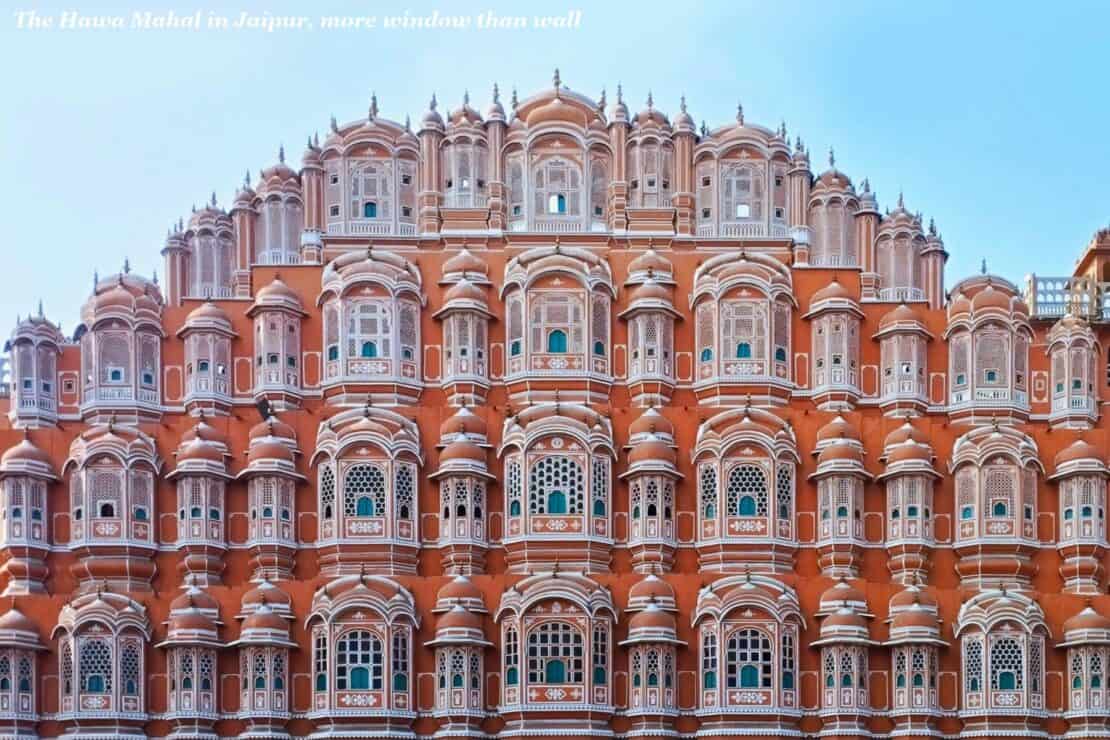
Just around the corner, the Hawa Mahal (Palace of Winds) rises like a blush-pink honeycomb. Its 953 delicate, latticed windows allowed royal women to secretly observe the bustling street life below while abiding by strict purdah customs.
A short stroll away lies Jantar Mantar, an otherworldly 18th-century observatory whose 27-metre-tall stone sundial measures local time with astonishing precision – accurate to within two seconds.
If you have the energy, head to the bazaars in the afternoon. You’ll find stalls brimming with raw gemstones, soft block-printed textiles, and hand-embroidered leather juttis (traditional slippers). When your energy dips, refuel like a local with a hot pyaaz kachori: a crisp, golden pastry packed with aromatic spiced onions.
Seasonal Tip: If you visit in mid-January, Jaipur’s skyline transforms. During the festival of Makar Sankranti, the entire city gathers on the rooftops to launch, dodge, and battle thousands of colourful paper kites against the winter sky.
Day 8: Hills and Homes
Head up to Amber Fort, the capital of the Kachwaha Rajputs until 1727. Before them, Amer belonged to the Meenas. A two-hour walk through the Aravalli hills passes a ruined stronghold, small shrines and their villages, which few tourists see.
Then it’s back to Jaipur to cook with a local family and share the meal around their table. Or watch a miniature painter paste sheets of handmade paper together and burnish them with agate, all before the first brushstroke.
Stay: Samode Haveli, a 19th-century mansion inside the walls with a frescoed dining room. Dera Mandawa, where you can learn to fly kites from the roof. Or Niravi, a former family homestay 15 minutes from the old city, in gardens full of birdsong.
Day 9: Onward or Home
Head back to Delhi for your flight, or keep going west. The drive from Jaipur takes three to four hours on the expressway, or about the same by train.
~ Optional Add-On: Ranthambore National Park ~
Want tigers with your temples? Add two or three nights at Ranthambore National Park, a detour south on the way from Agra to Jaipur.
Leopards and sloth bears share its forest, and the quiet can feel like a tonic after all the hustle and bustle of Delhi. Permits go fast in season and sightings are never guaranteed, so reserve early and plan to take at least three safari drives.
The tigers, sadly, don’t take bookings – but we were lucky enough to see them on our very last safari.
For more ideas, browse the world’s best wildlife experiences.
When Is the Best Time to Visit the Golden Triangle?
The best time to visit is from October to March, in the dry season. Diwali and Holi fall within this window, filling the streets with lamps and colour, and the hotels with guests.
But winter in this region of India comes with small print. December and January nights can drop to a few degrees above freezing, and fog can delay early trains. (I once packed for India as if it were one long summer and have rarely felt so cold in my entire life. Learn from my mistakes.)
If your time in Delhi falls between late October and January, smoke and winter weather can push pollution into the “severe” range. Anyone with asthma or a heart or lung condition should ask a doctor first and read the WHO’s guidance on air quality and health.
In May and June, northern India’s heat regularly passes 40°C. July to September brings the monsoon, which greens the fields and thins the crowds. The air turns sticky, and Ranthambore’s main safari zones close until October.
Lab Notes & Travel Tips for India’s Golden Triangle
- Eat: Try kebabs in the capital, petha (candied ash gourd) in the Taj’s home town and Rajasthan’s dal baati churma (lentils, baked wheat balls and a sweet crumble).
- Stay: Mix a haveli, a river lodge and a garden hideaway. Rural hotels show another side of India, and a good specialist picks each one with you in mind.
- Guides & Drivers: The Delhi Metro beats any car at rush hour. Elsewhere, agree your route in advance, keep the long legs to daylight and ask to see a government licence. Check, too, whether a guided tour includes shopping stops. Reputable tour operators don’t include commission-based trips – but it’s a common practice elsewhere.
- Pack & Etiquette: Travel in India calls for modest clothes. Cover shoulders and knees, carry a scarf for mosques and temples, and expect to remove your shoes frequently. Ask before photographing people, and you’ll usually get a smile.
- Families: Children under 15 enter the Taj free. Exploring the Golden Triangle with little ones? Kite flying, block printing and the Chambal boat beat another rampart every time.
- Responsible Travel: Skip the elephant rides at Amber Fort and walk up instead. Buy crafts from the workshops that make them. Wherever you go, here’s how to be a responsible tourist.
Beyond the Golden Triangle
Think of the circuit as a beginning. The road carries on into Rajasthan, with Ranthambore, Pushkar, Jodhpur, Jaisalmer and Udaipur. South India is another trip altogether, but if you like the Taj Mahal, check out the palace in Mysore.
Is the Golden Triangle Worth Visiting?
Absolutely, yes, as long as you take care in the planning and as long as you don’t mistake it for all of India. It’s a manageable introduction to three different worlds, and while you can plan it yourself, I’d highly recommend handing the logistics to someone who knows the hosts and who can help introduce you to local crafts and people.
And then, like Old Delhi’s pigeons, you’ll find your way back.