Can a simple change of scenery make us feel better? We answer the question asked by fin de siècle Emperors, the sanatoriums of the Soviets and a twentieth century movement in Japan.
What is Forest Bathing, Anyway?
Disclosure: This journey was made possible through a hosted stay and wellness partnership with the Falkensteiner Spa Resort Marienbad, As always, Inside the Travel Lab retains complete editorial independence, and all opinions, historical observations, and muddy forest treks remain entirely my own.
If you think “forest bathing” is just a fancy, modern word for a standard walk in the park, then shame on you! Except, to be fair, it kind of is.
However, after finishing a sensory session in West Bohemia’s famous Spa Triangle – a region proudly designated on the UNESCO World Heritage Spa route – my perspective has completely shifted.
Mariánské Lázně isn’t just a picturesque dot on the map; it is part of a grand transnational network known as The Great Spa Towns of Europe, a highly prestigious set of eleven places that together make one UNESCO World Heritage Site.
This international designation celebrates the unique global phenomenon of European balneology – where medical science, natural healing, and stunning architecture completely transformed society between the 18th and early 20th centuries.
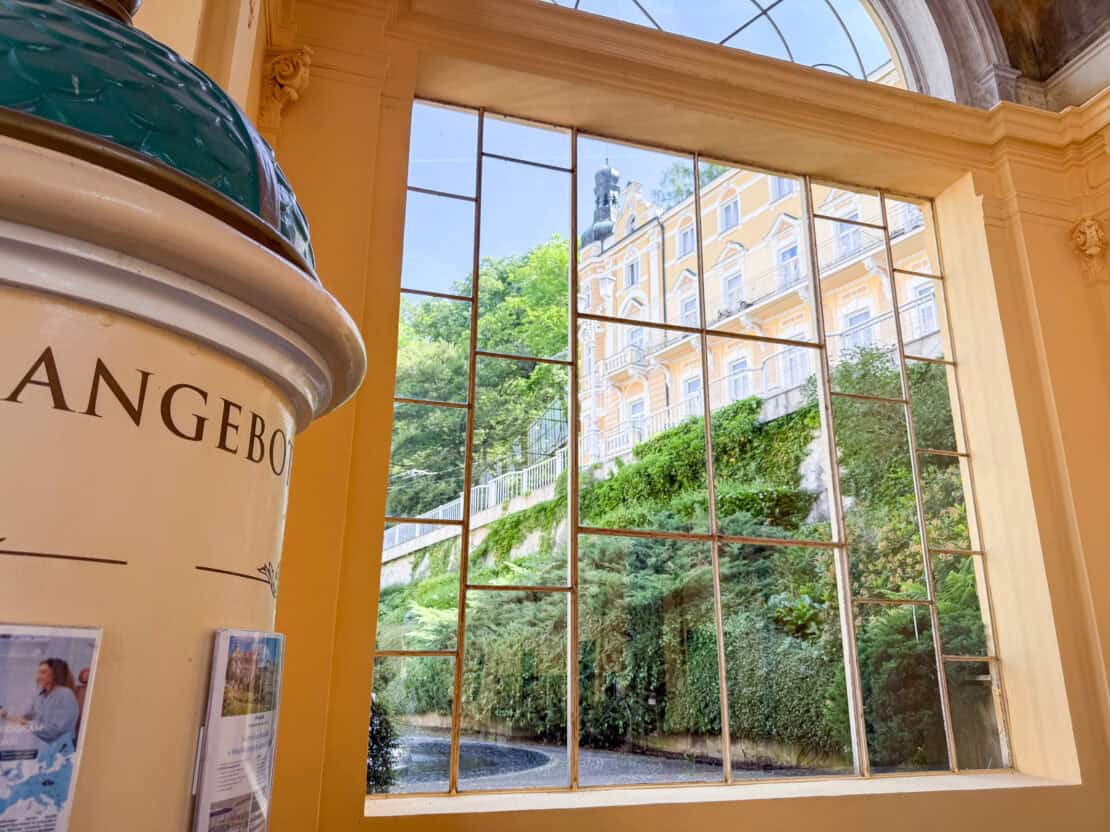
Today, that legacy of clinical wellness is beautifully preserved at properties like the Falkensteiner Spa Resort Marienbad. Set in a magnificent, century-old Art Nouveau building, the resort treats nature as a legitimate remedy, complete with an in-house medical doctor and direct access to the healing powers of its own private mineral spring, the Alexandra Spring.
And it was in this setting that they insisted I try forest bathing.
Before this experience, my idea of forest bathing was simply taking a hike while remembering to look up and appreciate the trees.
While that in itself holds immense value, this structured session pushed the concept further, balancing elements that felt a bit excruciating at first with moments of profound relaxation.
What Forest Bathing Actually Feels Like
The experience began with a head-to-toe visualization exercise, similar to the relaxation phase at the end of a yoga practice. You are guided to let the stress drain sequentially out of your head, your shoulders, and all the way down your body.
While it always feels slightly silly during the first few minutes, by the end, I could physically feel my muscles relaxing and my breathing slow down.
Next, our guide, Lucia, instructed us to slow down and observe our surroundings as if we were aliens seeing a forest for the very first time. If you have toddlers, you are likely familiar with this exact behavior – that instinct to completely stop, slow down, and intently process the micro-world around you.
I began to notice things I would normally trample right past while chatting with a friend:
- A tiny, incredibly shiny, inky-black beetle.
- The subtle silver moss blanketing the roots.
- The intricate geometric patterns of the ferns.
- The gentle rustling of the clover.
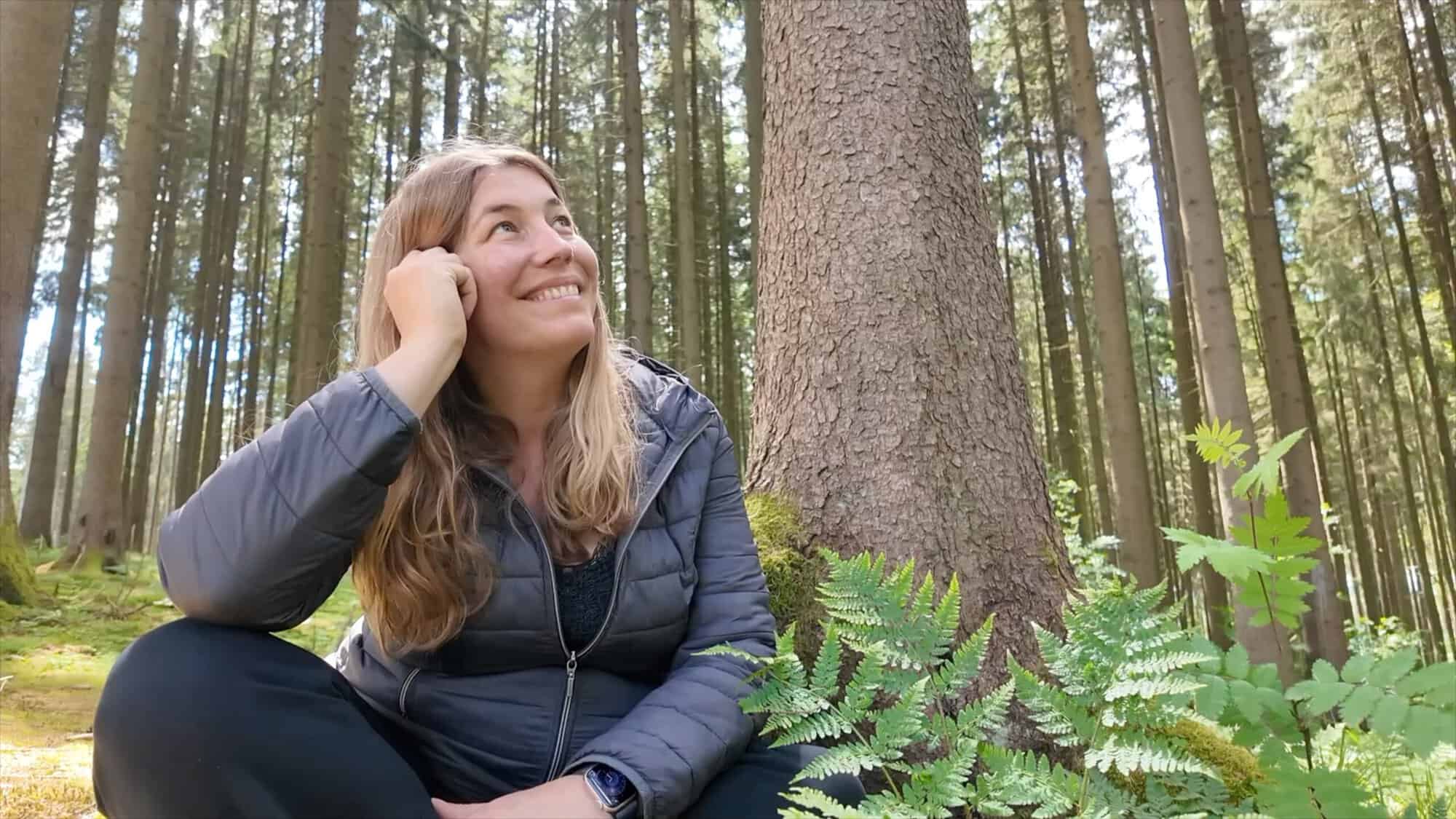
Feeling self-conscious in the forests of the Czech Spa Triangle
Self Conscious
I still felt self conscious, I’ll admit. But I did find myself tuning into an absolute orchestra of birdsong that usually gets lost in the noise of daily life.
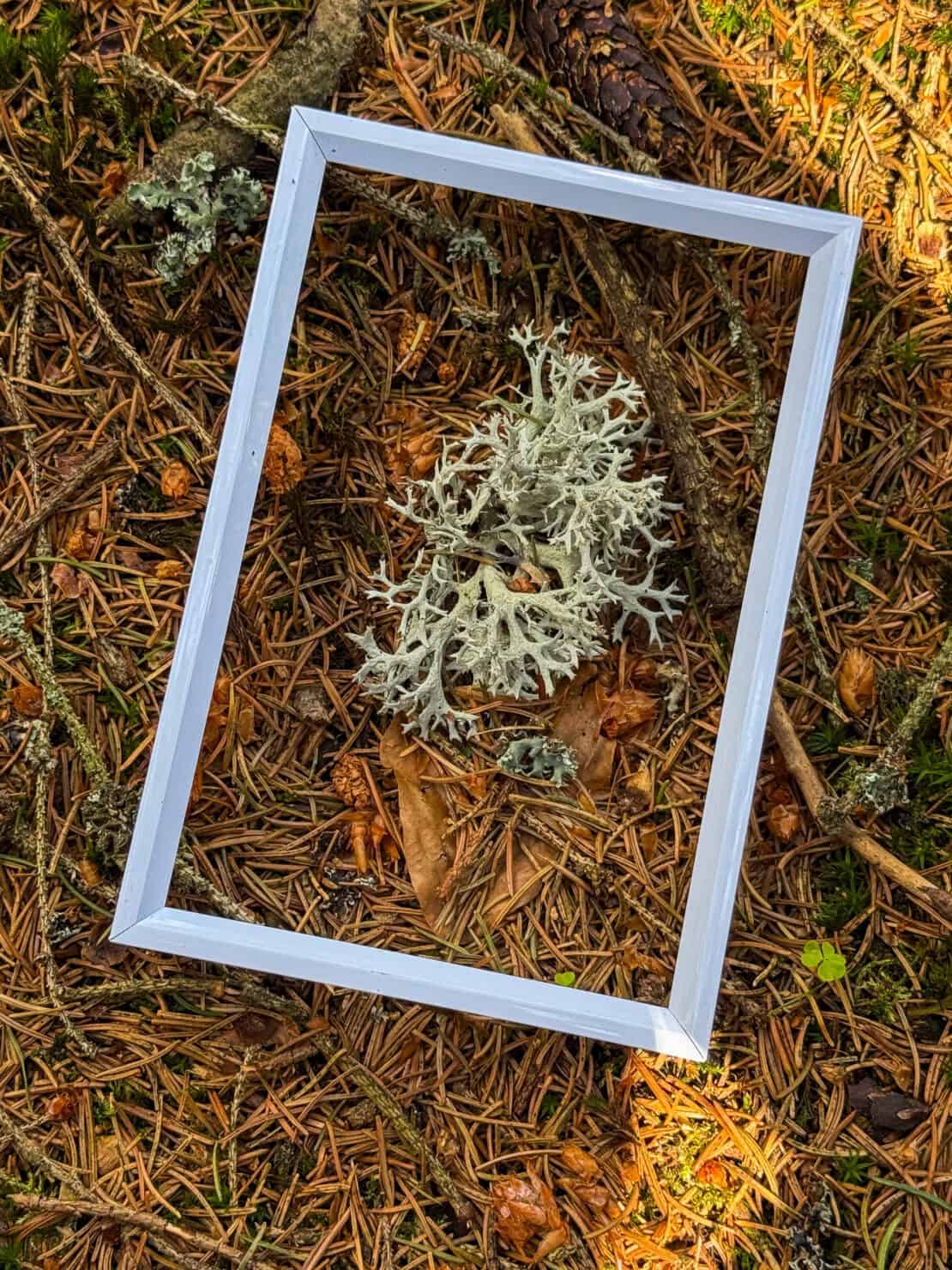
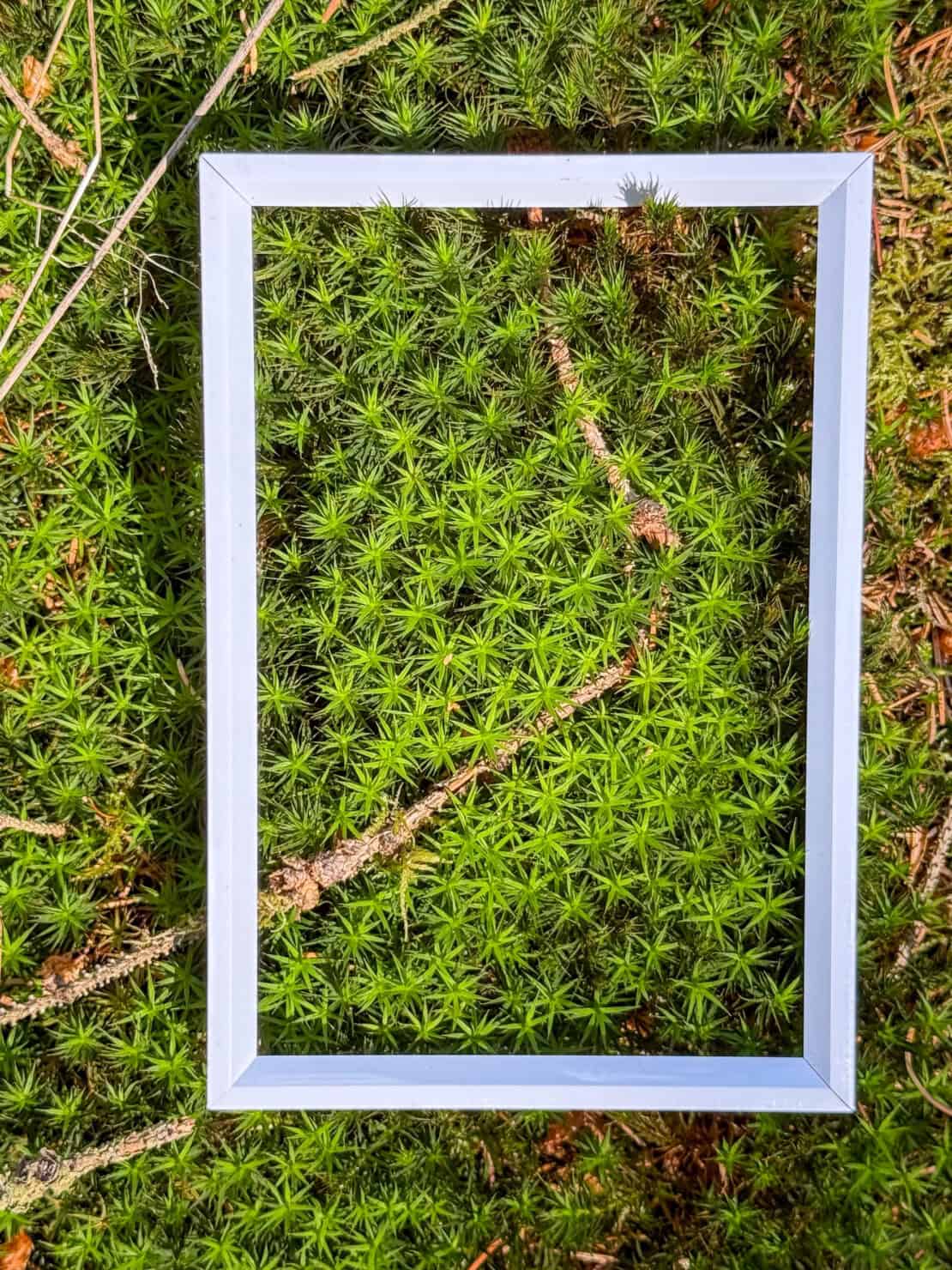
To take it a step further, we were given a physical white photo frame and asked to walk around to find and isolate something truly special. As a travel journalist, this initially felt a bit like a busman’s holiday – I frame shots for a living.
But observing what others chose to frame made me stop and think.
Depending on your mood, looking at a framed twig might seem entirely pointless.
But if you slow down, that twig begins to look like the Amazon River cutting through a dark jungle canopy viewed from space.
The forest essentially transforms into a free, open-air art gallery, delivering a distinct boost of creative inspiration and calm.
We concluded the session by sitting on sweet, leaf-shaped mats as Lucia poured a hot, pine-infused drink. It was a deliberate attempt to wake up our internal balance and fully engage all eight of our senses – including sight, sound, taste, and touch.
The Secret History Behind This Forest
This practice took place in the historic Slavkov Forest (Slavkovský les) near Mariánské Lázně in the Czech Republic.
Long before modern wellness trends, this region was the ultimate playground for European royalty and cultural icons. The King of England, the Czar of Russia, Kafka and Beethoven all frequented these springs, alongside a melting pot of the era’s most influential artists, and thinkers.
The tides turned dramatically with the World Wars.
Luxury hotels were converted into sanatoriums, and during the Cold War era, the Soviet Union began sending the proletariat out to taste the mineral spring waters and indulge in the mud baths.
Paid for entirely by the state for two to three weeks at a time, this wasn’t done out of pure luxury – it was a calculated effort to keep the industrial workforce healthy.
Eventually, Soviet authorities began questioning the financial return on these massive spa investments. To justify the cost, they initiated extensive scientific studies and controlled experiments to measure exactly how these mineral waters, skin treatments, and forest atmospheres medically affected the human body.
That clinical approach to spa therapy continues in the region to this day.
What the Science Actually Says
Today, modern institutes are still working hard to research these environmental health effects, though teasing the exact variables apart in a strict scientific manner is notoriously difficult.
When people visit a spa town, they leave behind their domestic stresses, their jobs, and their bad habits. They have time to rest, walk, and focus on their physical well-being.
This reminds me of the famous behavioural research I learned about at Cambridge during my Neuroscience degree. It analysed U.S. soldiers who developed drug addictions while serving in the Vietnam War.
When they returned home to an entirely different environment, their recovery rates were astronomically higher than homegrown civilians struggling with addiction in their everyday environments. It provoked a whole field of research into just how heavily our habitat dictates our habits.
Shinrin-yoku: the invention of Forest Bathing?
This brings us back to the core concept of forest bathing, which was formally categorised in Japan during the 1980s as Shinrin-yoku. It isn’t a brand-new medical invention; it is simply a clever way of packaging an ancient truth to encourage city dwellers to unplug and return to nature.
While the scientific studies surrounding it may not always match the massive, robust scale of pharmaceutical trials, the credible data we do have is not nonsense either. Time spent surrounded by green spaces is proven to improve physical recovery, lower cortisol, and boost mental health.
Ultimately, my scientific conclusion is simple: whether or not you require a mountain of peer-reviewed data to convince you, spending intentional time in a forest is a fabulous idea.
It is good for the mind, body, soul, and – crucially – it incentivizes us to protect the planet’s forests.
Enjoyed this article?
Sign up for our newsletter to get inside access to our upcoming travel essays and to be the first to hear about our UNESCO historic spa towns project.