Here is our honest answer, based on years of travel in Spain, to the question: is Valencia worth visiting?
Who Should Visit Valencia?
I’m going to get straight to the point. I love Valencia. It’s simply one of my favourite cities in Spain. It has nightlife, the beach, UNESCO World Heritage Sites, fresh orange juice and it’s also the place that invented paella.
I’ve visited in my young, wild party days and my responsible parent days and each and every time, I’m longing to go back.
So, is Valencia worth visiting? It’s a question that often comes up when planning a trip to Spain. With Madrid and Barcelona dominating most itineraries, and cities like Seville (or Sevilla) and Granada and Cordoba drawing attention for their architecture and atmosphere, Spain’s third-largest city can feel like an afterthought.
Which, to be honest, just illustrates how much those other cities have to offer rather than indicating any lack of substance about Valencia.
So – is Valencia worth visiting? The short answer: yes. But probably not for the reasons you think.
Practical Travel Guide: What You Need to Know First
First things first. How difficult is it going to be for you to get there? Before getting into whether Valencia is a city worth your time, it helps to understand how it works in practice. Because part of its appeal lies in how easy it is to experience.
What to Pack
Packing for Valencia is refreshingly straightforward, but a few details make a difference:
- Comfortable walking shoes (the old city’s cobbles and long distances around the city can add up)
- Light layers (temperatures shift between sun and shade, especially in spring and autumn)
- Sun protection year-round (even in February you can be dining outdoors)
- A reusable water bottle
- Swimwear if you’re tempted by its beach city appeal
Make sure to have sturdy luggage for the cobbles. We hear great things about these lightweight yet stylish suitcases from Eminent. They come in a range of colours and styles.
Where to Stay in Valencia
Where you stay in Valencia will shape the kind of trip you have.
- Central Valencia (Old City): Ideal for first-time visitors who want easy access to major things to see like Valencia Cathedral and Plaza de la Reina
- Ruzafa: A more local, lived-in neighbourhood, particularly good if you want to eat in Valencia beyond the obvious
- Near the coast: Best if you want to balance time in Valencia with the sea, though you’ll be slightly removed from the historic centre.
Getting There and Around
Valencia is well connected from the UK, making it an easy addition to a wider trip to Spain. There are direct flights from many UK airports. For further afield, you’re probably best flying into Madrid or Barcelona or taking the train from there. You can just about pull off a day trip visit from Barcelona (it’s about three hours each way) – so if that’s your only option, say, before a Mediterranean cruise you can squeeze it in. But Valencia is more fun if you can relax and enjoy it.
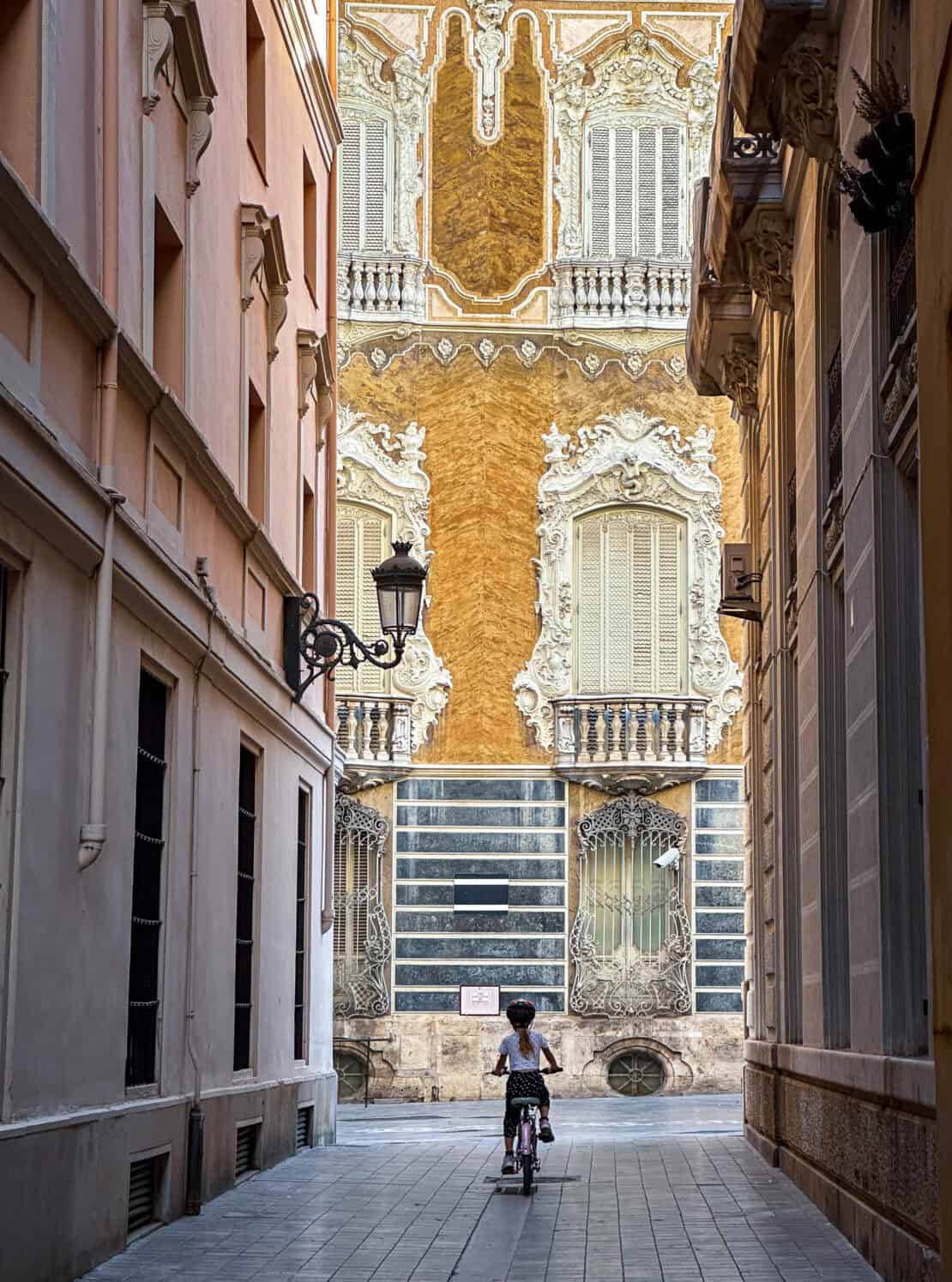
Once there, getting around Valencia is simple. The metro works well, but the real joy lies in cycling. The long stretch of Turia Park makes it possible to move across large parts of the city without traffic, linking many of the main things to see. I’ve even done this when my daughter was eight years old – and unthinkable plan in, say, London.
Best Time to Visit Valencia
The best time to visit Valencia is spring or autumn.
Summer can be intensely hot, while winter in Spain remains mild but quieter. October stands out as an especially good time to visit Valencia, with warm days and fewer crowds.
A quick note about Las Fallas, though. Taking place every March, this festival transforms the city with towering satirical sculptures, daily fireworks, and near-constant noise. It’s rooted in local tradition but feels almost surreal in scale. Imagine a blend of art exhibition and controlled chaos. On the final night, people set fire to many of the sculptures, drawing huge crowds – and also some anxiety.
It can be an extraordinary time to visit Valencia, but it’s not for everyone. Accommodation prices rise, the city becomes crowded, and sleep can be difficult. If you prefer a calmer trip to Spain, it’s worth planning around it rather than during it.
Sustainability Notes
Valencia tries to offer a more sustainable way to explore a city in Spain. Its cycling infrastructure, emphasis on local produce, and abundance of green spaces all make lower-impact travel feel natural rather than forced.

Why Valencia Is Worth a Visit
Bold, Bright White and New Combined with Classical Stone
I know that so many places claim to be a city of contrasts that the term has become a cliche – but in Valencia, it’s true.
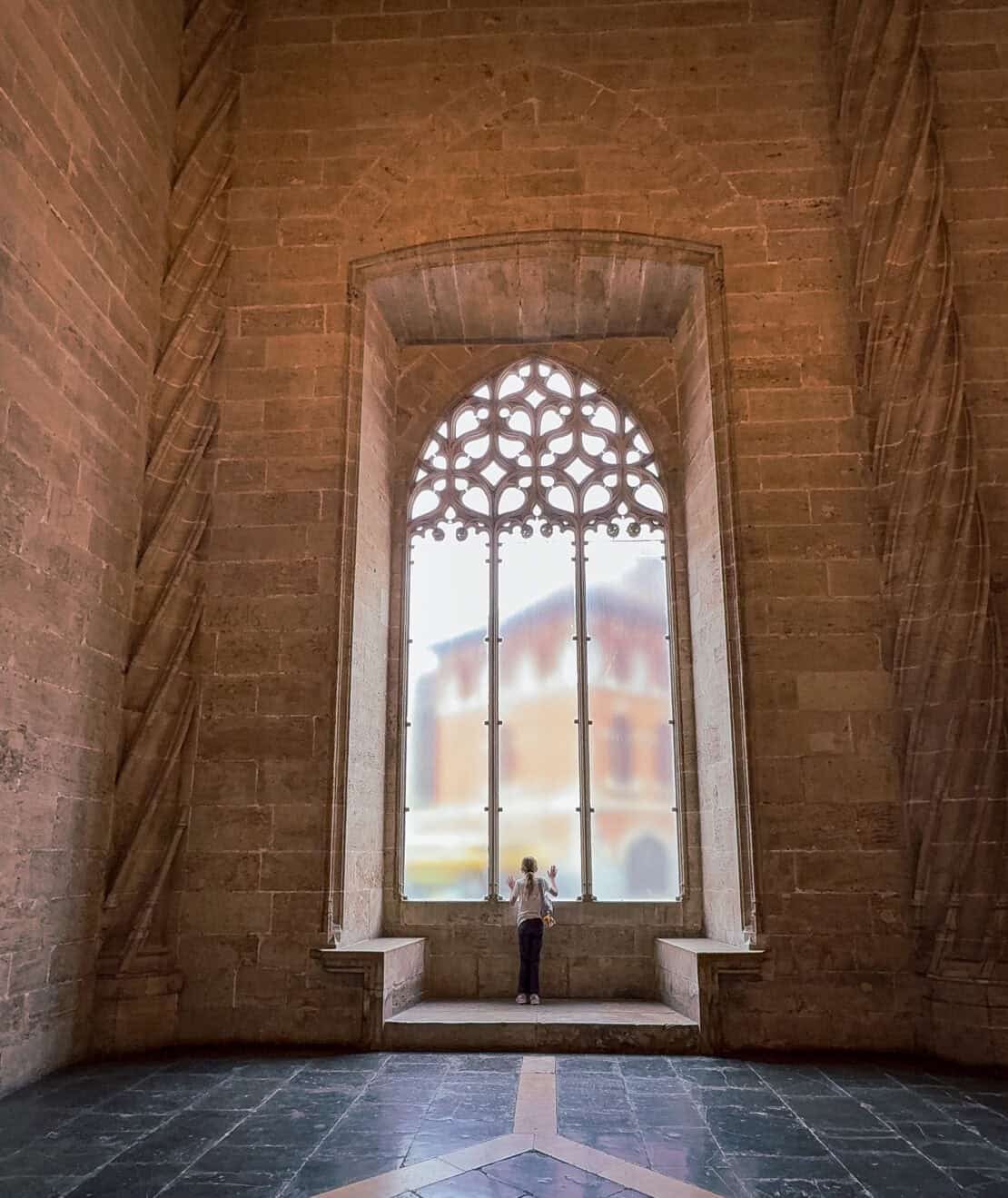
In the old city, you’ll find layers of history, including the intricate gothic structure ofLa Lonja de la Seda (the Silk Exchange), one of the city’s UNESCO-listed buildings. This was once the centre of Valencia’s silk trade, when the city was a major Mediterranean power. Inside, twisted stone columns rise like palm trees, as a quiet reminder of the wealth that flowed through here. You can even visit the silk museum and watch silk worms up close.
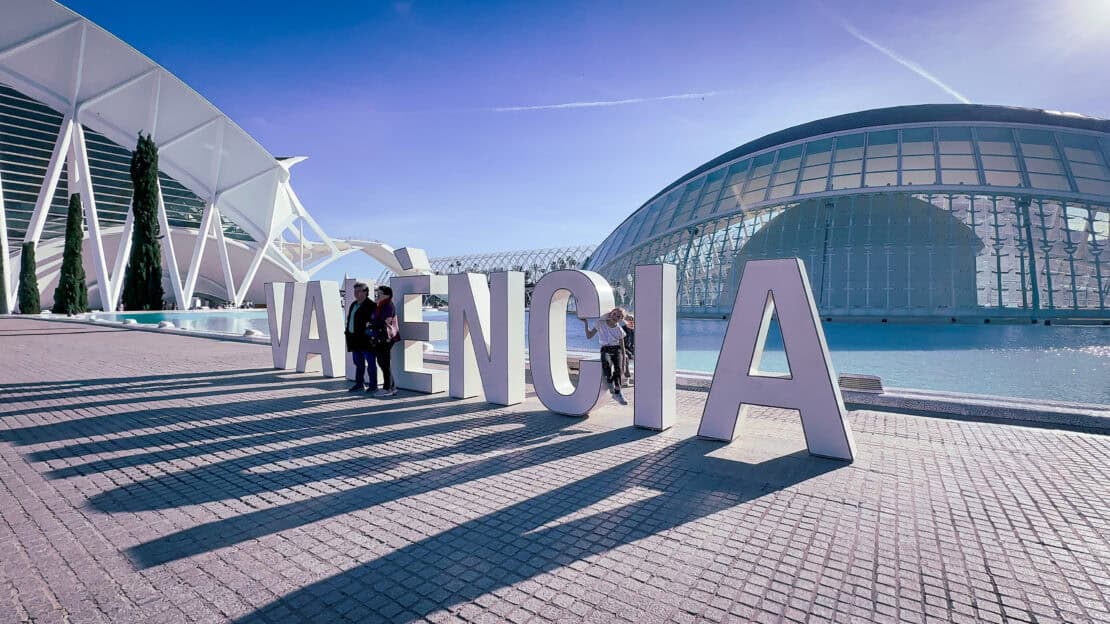
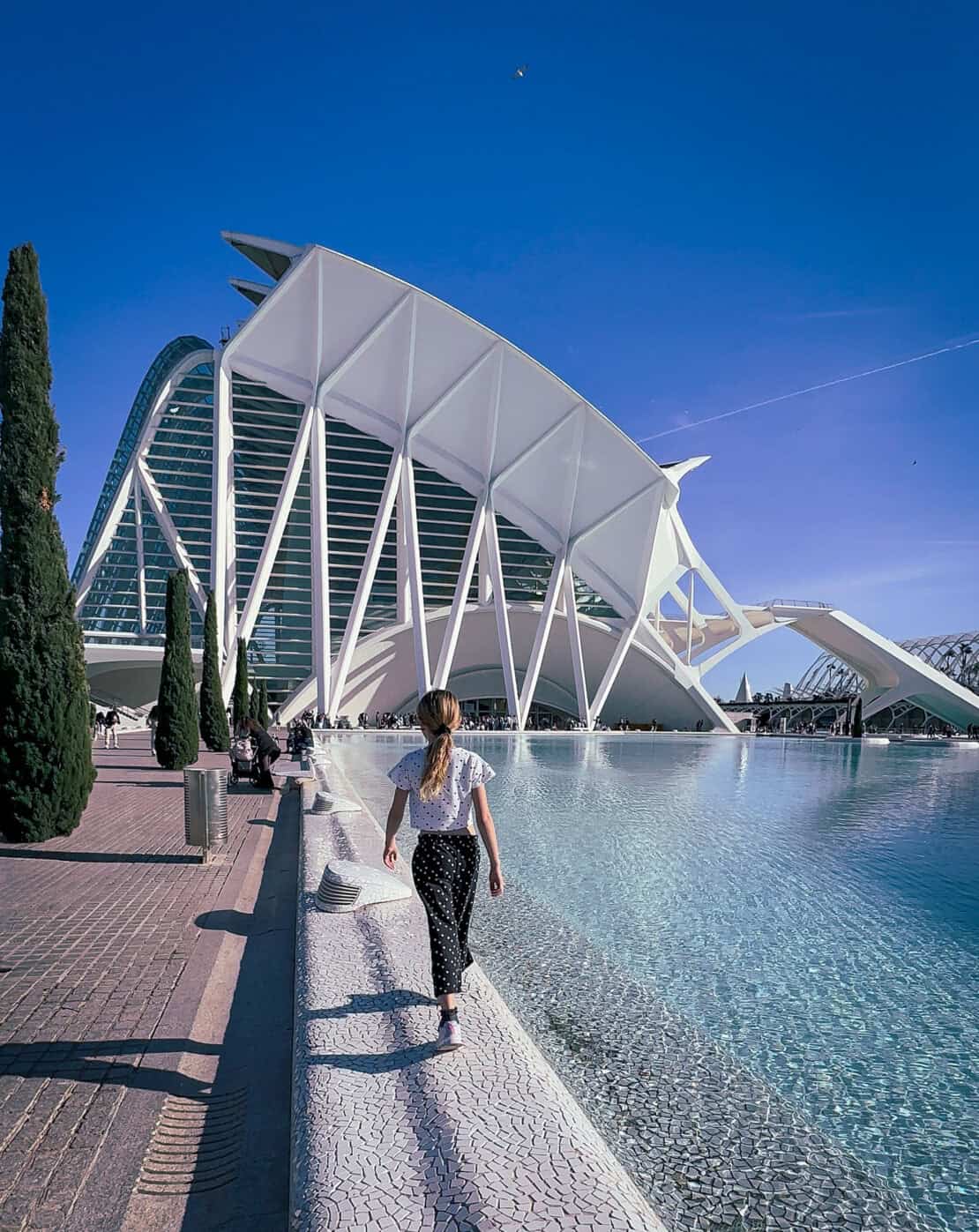
Then, not far away, the skyline shifts completely. The futuristic City of Arts and Sciences – the Ciudad de las Artes – soars into the sky like a spaceship. This futuristic complex is arguably Valencia’s most unique feature: striking, divisive, and impossible to ignore.
Oranges, Horchata and a Sense of Place
Valencia’s identity is rooted in what grows around it.
Orange groves stretch beyond the city, shaping both the landscape and its culinary traditions. While the fruit itself often travels abroad, its presence lingers in everything from desserts to scented streets.
Then there’s horchata, the local drink made from tiger nuts grown in the nearby countryside. Slightly sweet, slightly earthy, and often served ice cold, I’ve rarely found it anywhere else at all.
I’m not saying that you have to visit for these two things – but they do add in some pizazz.
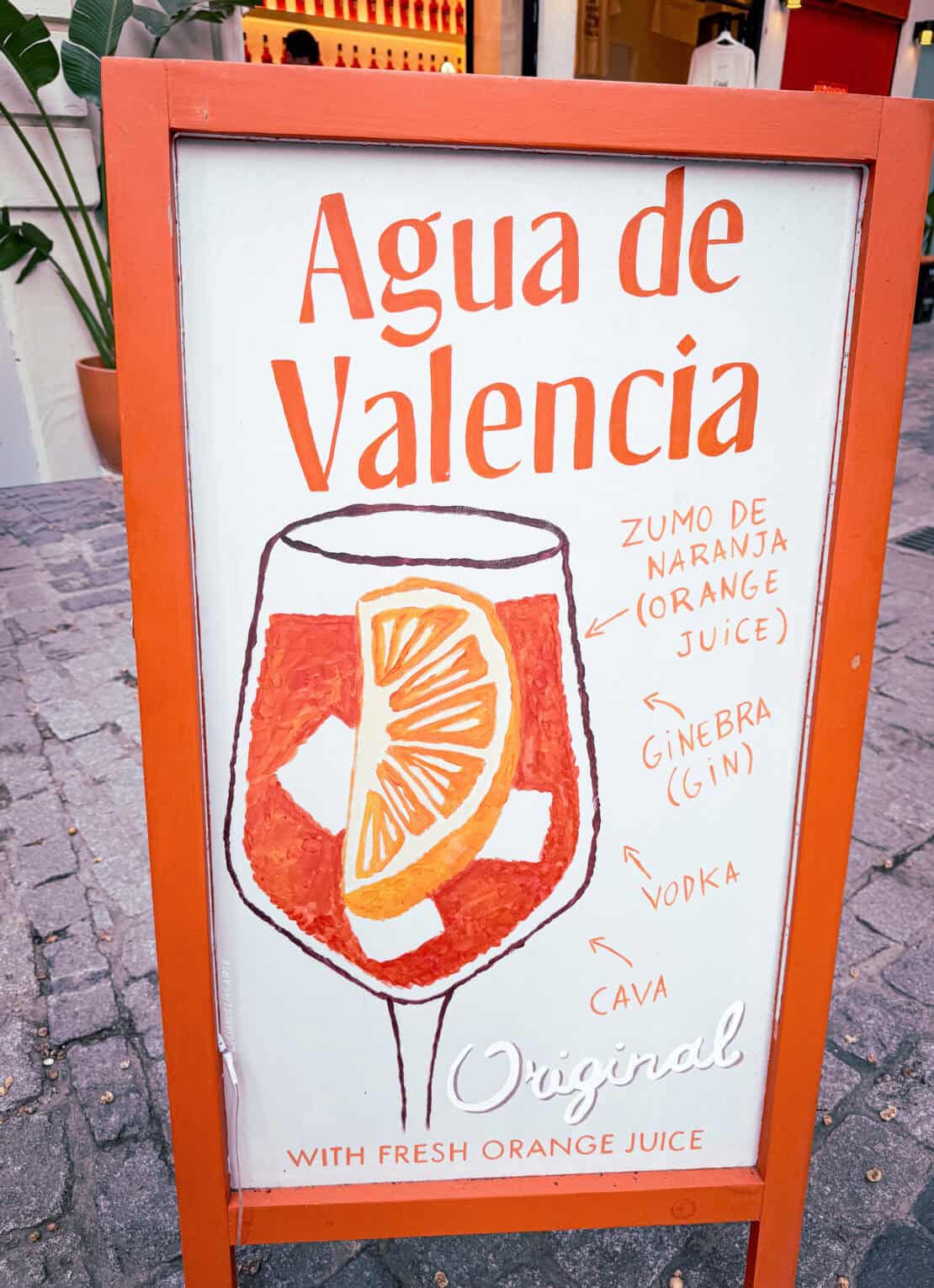
There’s also Aigua de Valencia, an orange juice based cocktail that does slip down rather easily….
The Turia Gardens: Changing the Course of a River
One of the most defining features of central Valencia is also one of its most unexpected.
After a devastating flood in 1957, the Turia River was diverted south of the city. What remained became the Turia Gardens, a long green corridor running through Valencia.
Today, these green spaces connect neighbourhoods, museums, playgrounds, and cycle routes. It’s one of the reasons Valencia is perfect for travel with kids. You can spend days cycling along these safe and protected paths, stopping off for tapas and making your way to the stunning City of Arts and Sciences Complex, with its aquarium.
The Home of Paella: How to Eat in Valencia
Paella in Valencia is the real McCoy. Not the seafood-heavy version found in imitations elsewhere, but one with rabbit, chicken and snails, seared gold and gently headed for hours in a dish bigger than a small child. A visit to the surrounding rice fields of Albufera, just south of the city, make this make sense.
Beyond that, markets, small restaurants, and neighbourhood cafés easily offer an authentic experience. Make sure to check out the central market and I’ll be back with an article about my favourite places eat in Valencia soon.
- Recommended reading: the best tapas bars in Seville
A Beach City, Baby
If Spain to you means sun, sand and sea, then Valencia won’t let you down.
Wide stretches of sand sit within easy reach of central Valencia, making it entirely possible to move between culture and coastline in a single day. Even in warmer months, it tends to feel more relaxed than other coastal hotspots, with fine dining options available right on the beach itself.
A More Relaxed Alternative to Madrid and Barcelona
Compared with Madrid and Barcelona, Valencia feels more manageable. Prices are often lower, crowds thinner, and the pace noticeably slower. It’s a beautiful city, thus far spared the headaches of overtourism found elsewhere in Spain, and it combines edgy street art with an elegant Old Town like nowhere else I’ve seen in the country.
Why Valencia Might Not Be for You
That same calm can feel like a lack of impact.
If this is your first trip to Spain and you’re hoping for a concentration of major landmarks, Valencia may feel quieter than Seville or Barcelona. It doesn’t push itself forward in the same way.
The City of Arts and Sciences is visually striking – but not everyone finds it as moving as, say, the Alhambra in Granada or the collection of work from Gaudi, like the Sagrada Familia, in Barcelona. And while you will find impressive art, it’s hard for anywhere to beat the Golden Triangle in Madrid or the history of Madrid’s Literary Quarter.
This third largest city also isn’t the best base for day trips, unlike Seville or Malaga.
Valencia vs Other Spanish Cities
Valencia vs Barcelona
Barcelona has Gaudi. Valencia has the Arts and Sciences.
Valencia vs Madrid
Madrid offers capital city energy and art. Valencia offers balance with the beach.
Valencia vs Seville (Sevilla)
Seville feels bigger and offers day trip options to Cordoba and Granada. Valencia is self-contained.
Who Valencia Is Perfect For
- Travellers who enjoy slower exploration
- Those interested in food and regional identity
- Families who want flexibility and green spaces
- Anyone looking for hidden gems in a city in Spain that isn’t overexposed
Who Might Be Disappointed
- First-time visitors wanting Spain’s most famous sights
- Those looking for constant activity
- Travellers who prefer dramatic architecture at every turn
Is Valencia Worth Visiting For… (Your Questions Answered)
Is Valencia worth visiting with kids?
Yes, absolutely, it’s almost made for kids! With green spaces, beaches, and attractions like the Oceanogràfic (Europe’s largest aquarium), it’s an easy and engaging destination for families. Plus, tapas allows you to try lots of different dishes with picky eaters without losing the will to go on.
Is Valencia worth visiting in October?
Absolutely. October is one of the best times to visit Valencia, with warm weather and fewer crowds. It’s still warm enough to sit outside to eat – and to swim if you are hardy.
Is Valencia worth visiting for a day?
It’s possible, but limited. In one day, with a Valencia guide, you can zoom around the city centre and head to the Ciudad de las Artes to see them from the outside. To properly explore Valencia, allow at least two to three days.
Is Valencia worth visiting in winter?
Yes, particularly for culture and food. It’s quieter, but still pleasant but you won’t be lazing around on the beach.
Is Valencia worth visiting for food?
Definitely. From paella to horchata, the connection between food and place is strong here.
Is Valencia worth visiting over Barcelona?
It depends. For iconic sights, Barcelona wins. For a more relaxed, authentic Spanish experience, Valencia is perfect. And it’s definitely worth visiting both – they are two of the best cities in Europe.