
From the cenotes of the Yucatan to the giant mantas of the Pacific, here’s your guide to scuba diving in Mexico, and when to go.
Scuba Diving in Mexico: Why Look Beyond the Caribbean?
Ask a diver about Mexico and the answer usually starts in Cozumel. Fair enough. But the country has two coastlines. On the Pacific side, hammerheads circle the seamounts, mantas hover over cleaning stations and sea lions bark from islands without a single hotel.
Some of the remotest sites lie beyond the reach of day boats, so many divers book liveaboard diving trips in the Sea of Cortez and wake up each morning somewhere new.
Here at the Lab, we like our adventures with the small print included. So which coast suits you? Do you need a logbook as thick as a Tolstoy novel for the Pacific? And when do the big animals turn up?
Let me take you through the best places to go scuba diving in Mexico, season by season.
We’ll begin where most divers do.

The Caribbean Classics: Cozumel, Cenotes and the Riviera Maya
If you’re diving Mexico for the first time, start here. The water is warm, the scuba diving spots sit within easy reach of Cancun and almost every beach town on the Riviera Maya has dive shops. (For anyone who learnt to swim in British seas, it feels like cheating.)
Cozumel Island: The Lazy River
Most visitors who dive in Cozumel come for the drift dives. A current sweeps along the island’s west coast, and you hover over coral walls while sponges the size of armchairs scroll past. Think of it as a travelator, with the odd turtle drifting by…
The island sits on the Mesoamerican Reef, which runs south past Belize’s Great Blue Hole to Honduras. No reef in North America is longer.
Palancar Gardens is the classic dive site for new divers, with easy diving when the current behaves. Elsewhere, it can rip, so do as your dive guides say. Stay at a resort on the island, or take the ferry over.
Playa del Carmen: The Bull Run
From mid-November to March, bull sharks in the final stage of pregnancy gather off Playa del Carmen. Researchers are still working out where they go to give birth. Locals fondly call them las gordas, the chubby ones. Not, one assumes, to their faces.
The bull shark dive is for certified divers only. Choose a dive operator that never uses bait, which changes how sharks behave. Call it responsible tourism with fins on.
Playa is also the handiest place to stay for the cenotes.
Prefer something gentler? Puerto Morelos, to the north, has a protected reef shallow enough for a beginner and calm enough for young snorkellers. It’s a relaxed base, too, if you’re visiting Mexico with children.
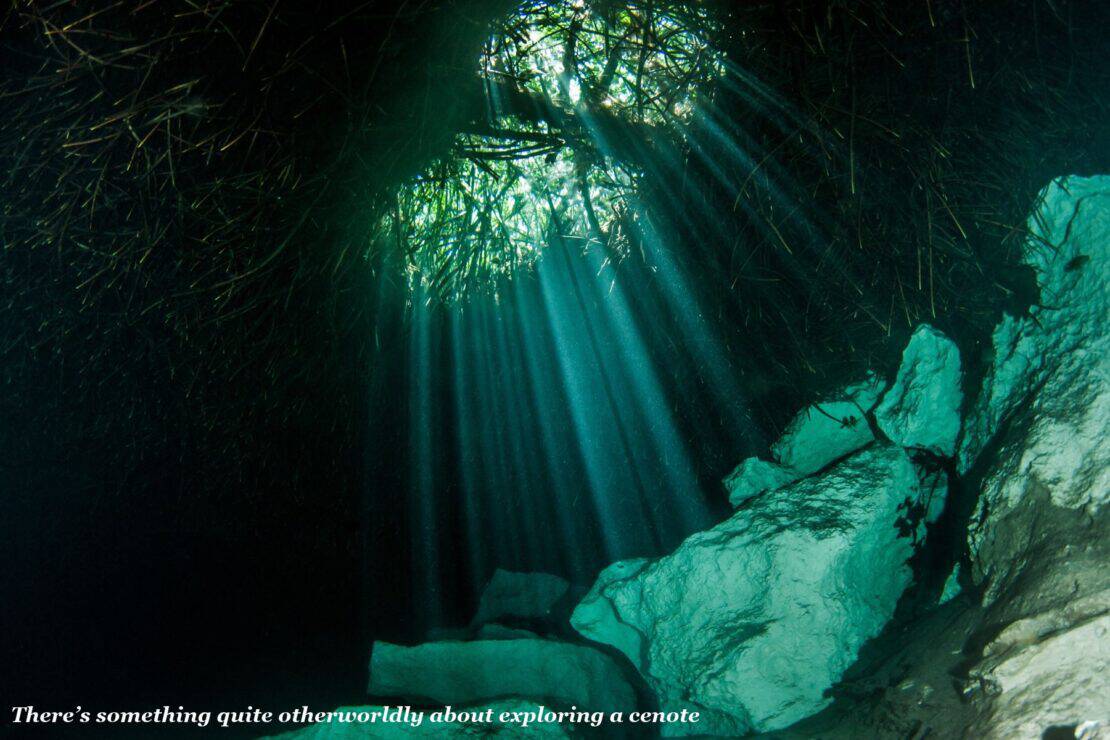
The Cenotes: Diving Through a Cloud
South towards Tulum, the jungle hides the strangest dives on this coast. The Yucatan Peninsula has almost no rivers above ground, so rain soaks through the limestone and collects in cenotes, from the Yucatec Maya ts’onot, a hole with water. To the Maya, these were doorways to Xibalba, the underworld, and some became sites of ritual offering.
Cenote diving comes in two kinds. First, cavern diving stays within sight of daylight and suits most qualified divers. Second, cave diving goes beyond the light and you’ll need specialist training to take part.
To dive the cenotes, base yourself in Tulum and save a morning for Cenote Angelita. At about 30m (100ft), a milky cloud of hydrogen sulphide hangs across the water, and dead branches poke through it like a forest in fog.
You breathe from your tank, so the poisonous gas never reaches your lungs. Don’t be surprised if a whiff of that rotten egg smell makes it through the regulator, though.
Wetsuit dry? Then it’s time for the other coast.
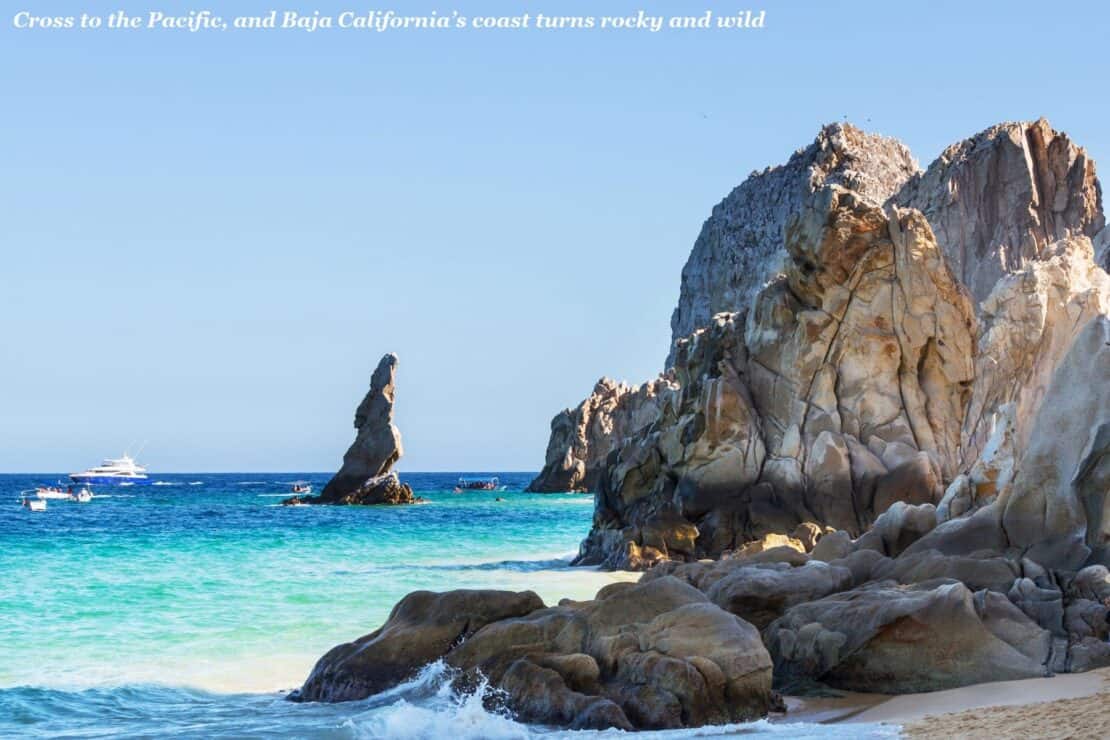
The Pacific Side: Baja California and the Sea of Cortez
Cross to the Pacific and the diving experience changes. The water runs cooler in winter, the boat rides grow longer and the marine life gets bigger.
Between Baja and the mainland lies the Sea of Cortez, the so-called aquarium of the world.
That line is usually credited to Jacques Cousteau, although UNESCO will say that only the gulf was once given the name. (Ever the diplomat.)
Either way, a third of all whale and dolphin species are found here, and the gulf’s islands and protected areas form a UNESCO World Heritage Site.
La Paz: Sea Lions and Whale Sharks
Up the coast from Cabo San Lucas, La Paz keeps its liveliest residents offshore. Boats head out to the sea lion colony at Los Islotes, off Espiritu Santo Island, where the youngsters nibble fins and cameras. All good fun – until it happens to your camera. (Still choosing one? Compare the GoPro and Insta360 for travel.)
The colony closes for the summer breeding season, so check dates before you book.
In the winter months, whale sharks gather in the bay to feed. Encounters are snorkel-only, so scuba divers leave their tanks on the boat. Five swimmers and one guide at most may join each shark, and nobody is allowed to touch.
A swim beside one still ranks among the best wildlife experiences in the world.
Cabo Pulmo: The Comeback Reef
Near the southern tip of Baja Mexico, Cabo Pulmo protects the only coral reef in the Gulf of California. When John Steinbeck sailed down from Monterey, a classic stop on a road trip from San Francisco to LA, he and the marine biologist Ed Ricketts found every piece they broke off crawling with crabs, worms and snails.
By the 1980s, overfishing had taken most of its big predators. So the village backed a national marine park, declared in 1995, and put down its nets.
Between 1999 and 2009, fish biomass rose by 463%, according to a ten-year study published in PLoS ONE. Word, it seems, got around. Today many former fishermen take visitors out to see spiralling schools of jacks, on a reef Steinbeck might recognise.
Which leaves the long crossing.
Socorro Island: Mexico’s Big-Animal Frontier
Mexico’s wildest dive destination is four volcanic islands in the Pacific Ocean, about 24 hours by boat from Cabo San Lucas, and only a liveaboard will get you there.
Officially, they’re the Revillagigedo Archipelago, named after an 18th-century viceroy of New Spain. Sensibly, divers around the world call them Socorro, after the largest island. The name means help, which feels apt about halfway across.
They also go by the Mexican Galapagos. Like the Galapagos Islands in Ecuador, the islands sit where ocean currents meet, so the food keeps coming.
Here the giant manta ray is the star, with wingspans of up to 7m (23ft). The mantas linger in divers’ bubbles for minutes at a time. A hammerhead may pass in season, and humpback whales arrive from January to April.
This is open ocean diving, with strong currents and long safety stops in the blue, so most boats insist on Advanced Open Water certification. No dive sites in Mexico ask more of you, or give more back. For experienced divers, it’s some of the best diving in the world.
What About Great White Shark Diving?
Guadalupe Island, off the Pacific coast of Baja, once drew crowds to meet great whites from the safety of a cage. Since January 2023, Mexico has banned all tourism there, after concerns that the boats were harming the animals. The great white sharks still return each year. Nobody is allowed to watch.
Lab Notes: Tips for Scuba Diving in Mexico
When to go: Plan your dive trip around the animals, since the best scuba diving shifts with the seasons. In the summer months, the Sea of Cortez warms up and many liveaboards move in. The Caribbean offers warm water diving all year, but hurricane season runs from June to November.
Insider tip: Leave a full day between your last dive and your flight home. After several days of diving, your tissues hold extra nitrogen, and lower cabin pressure can let it form bubbles (the bends, as divers call it). Divers Alert Network advises waiting at least 18 hours. That’s the small print we promised.
So, Which Coast?
If you ask me, start in the Caribbean and save Socorro for when your logbook reaches Tolstoy proportions. As for Cousteau’s aquarium, the jury’s still out. Maybe it’s time to go and find out for yourself?