
Today’s Portuguese ceramics represent the crossroads of history. And make for a good salad dish, too. Here’s what to know before you buy.

Portuguese Pottery: The Handmade Souvenirs That Bring Portugal Home
My story of understanding Portuguese ceramics starts in an unusual place: Spain.
I’d moved to Seville and been moved by the artistry on the door numbers as we traipsed around prospective houses on an oppressively hot day.
Seville’s artisans cluster around Triana, the “wrong side of the tracks” and the area where Columbus recruited most of his sailors for his history defining voyage across the ocean. Even today, the accent in the “New World” for Spanish resembles the rather lispless vocals of sevillanos.
But my time there gave me an appreciation for the skill and stories behind azulejos: expertly crafted tiles with repeating patterns and a pleasingly over representative selection of deep blue.
It wasn’t until later that I realised that Portugal, too, is a dab hand at handmade ceramics. And a few more years after that before I realised how well they function as souvenirs.
- Recommended reading: the best Spain and Portugal itinerary
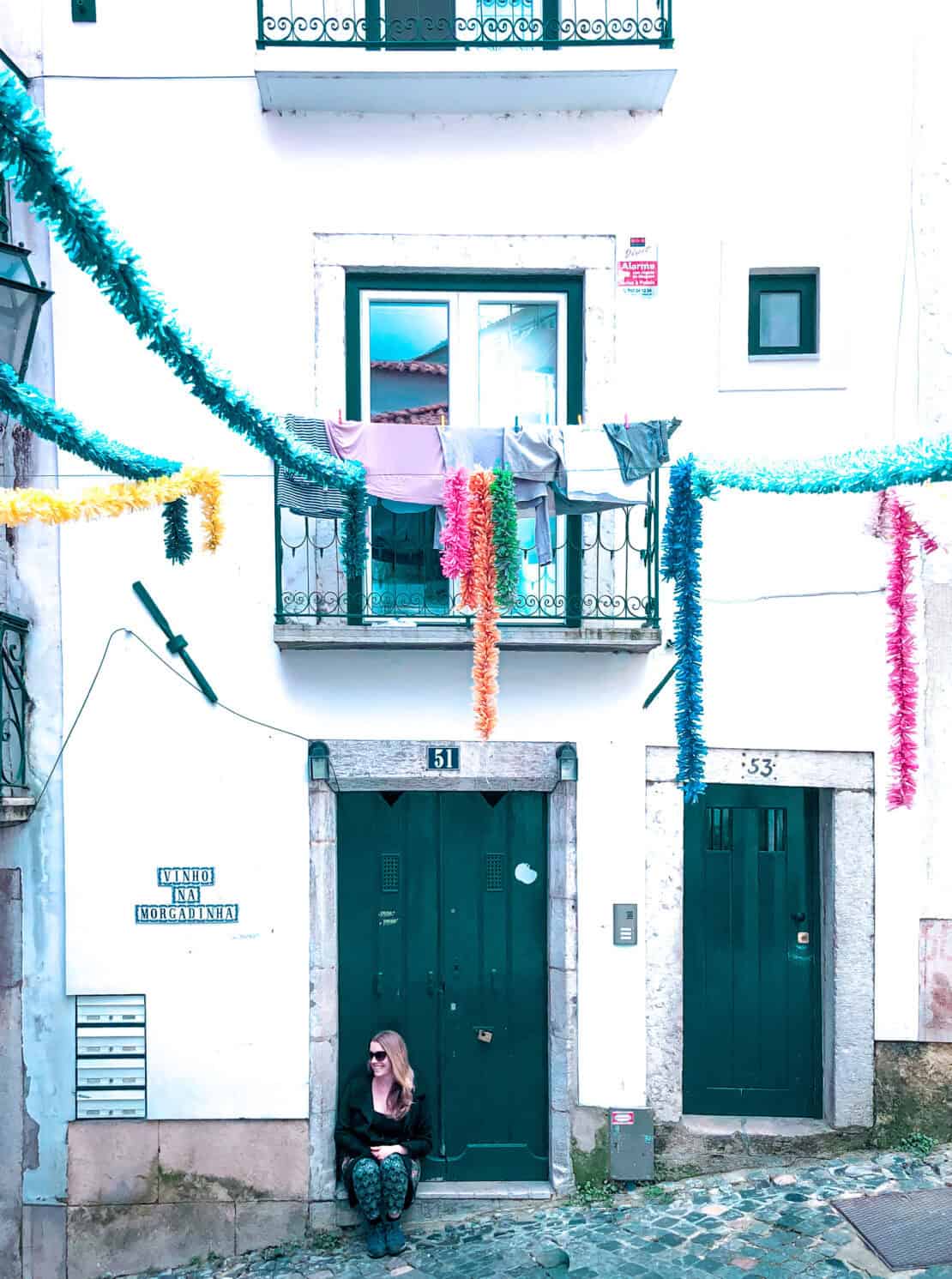
Why They Make for Great Souvenirs
Yes, there’s the worry about transporting them at the airport – but once home, you have a friend for life.
Years after a trip, a hand-painted plate hanging in the kitchen, a favourite espresso cup or a decorative ceramic vase filled with flowers can still trigger the hippocampal cortex and remind you of your trip.
They combine beauty with practicality and tell the story of a country with a remarkable artistic heritage.
Plus, across Portugal, ceramic traditions remain very much alive. From hand-painted tiles that decorate churches and railway stations to colourful Portuguese dinnerware found in family homes and restaurants, pottery is present.
And while both Italy and Spain have their own famous ceramic traditions, it’s hard to beat the distinctive style and craftsmanship found in pieces made in Portugal.
~ Can You Buy Portuguese Ceramics Online? ~
Take a look at Portuguese Treasures, a family-run passion project that stocks not only Portuguese ceramics but cork products too.
They stock beautiful plates, homewares and more (and I particularly like the look of the starburst jade ones.)
Part of our World Table Series in the Cultural Compass
Discover more in our list of the best souvenirs to buy in 2026 and the items you need to take home from Porto.

Why Portuguese Pottery Is So Special
For a lot of the inspiration for the success of azulejos, we have to thank the Moors.
When they swept across the Iberian Peninsula, they brought Islam with them. And with that, the rules that forbade depicting human forms, relying instead on repeating patterns.
By the fifteenth century, ceramic tile production had become an important part of Portuguese culture, and today these designs remain one of the country’s most recognisable features.

Over each century that followed, regional styles emerged, as did landscapes and images of people as Christianity replaced Islam. Some workshops specialised in practical Portuguese dinnerware, while others focused on decorative ceramic pieces, porcelain and hand-painted tiles.
What makes authentic handmade pottery so appealing is the human touch. Artisans shape the clay, apply the glaze and decorate each piece individually before firing it in the oven. The result is that no two ceramic pieces are ever completely identical.
And these slight variations are signs of genuine craftsmanship.
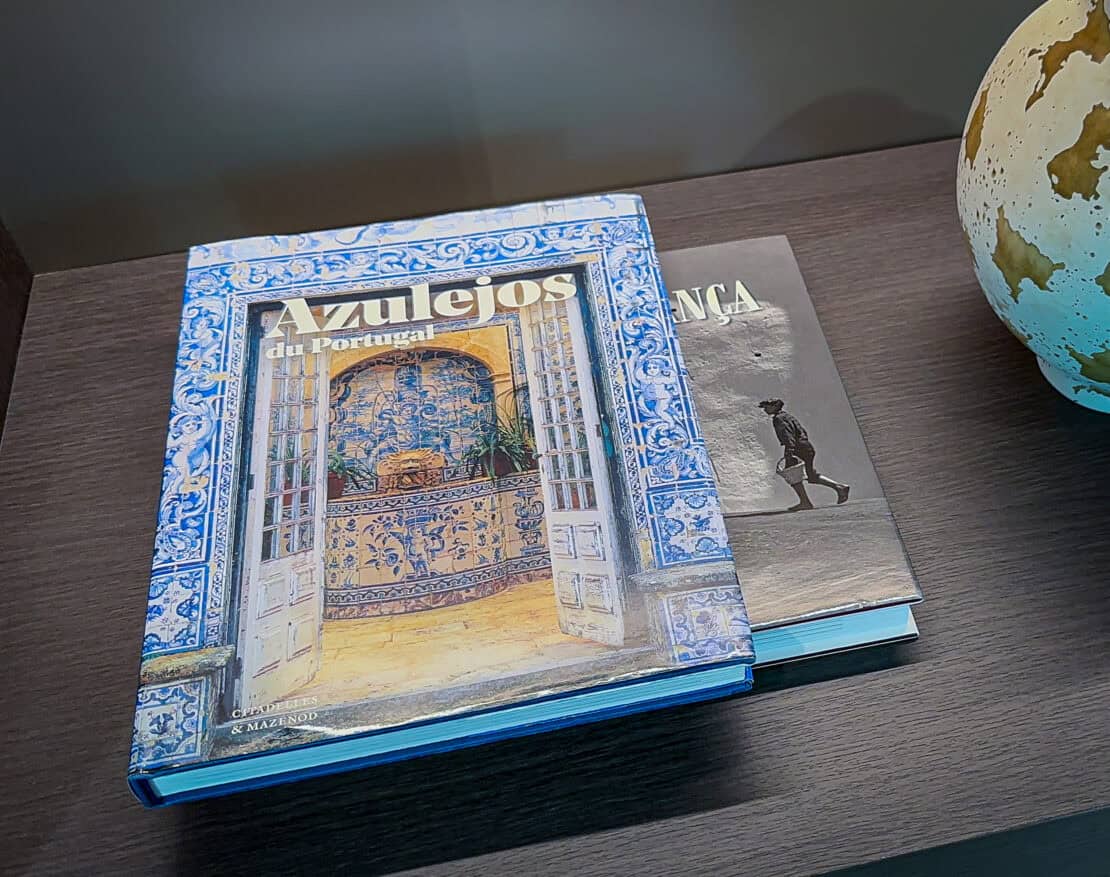
Azulejo and Portuguese Ceramics: What’s the Difference?
When people think about Portuguese ceramics, they often picture blue and white azulejos covering churches, palaces and city buildings.
An azulejo is a decorative ceramic tile with a tin glaze, designed for both protection and decoration. These hand-painted tiles often depict religious scenes, historical events or floral motifs. The technology came from the Moors and the tiles help to cool down buildings as well as make them look good.
Portuguese pottery, meanwhile, refers to everything from serving bowls and plates to vases, cups and contemporary stoneware. Both forms reflect the country’s artistic heritage and both make excellent souvenirs.
The Most Popular Portuguese Ceramic Souvenirs
Portuguese Dinnerware
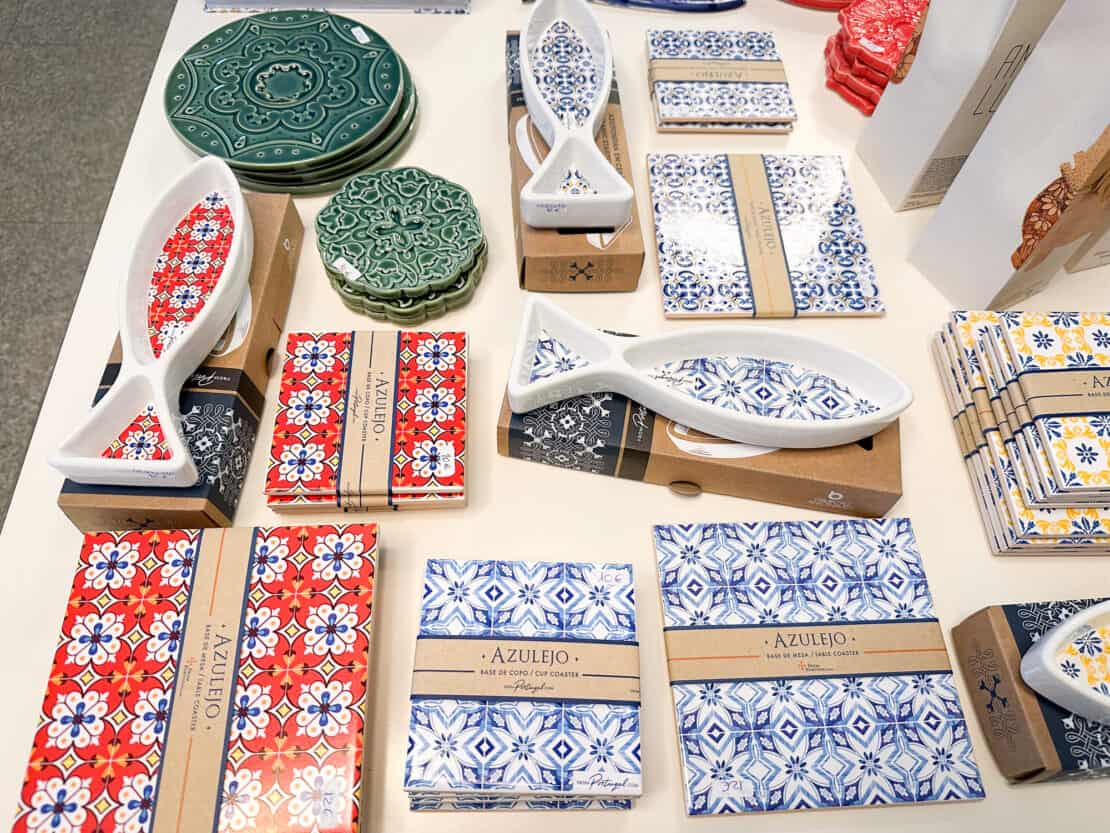
One of the easiest ways to bring Portugal home is through Portuguese dinnerware. Beautiful serving platters, bowls and plates are designed to be used rather than hidden away.
Many pieces feature floral patterns, blue and white designs or colours inspired by Portugal’s coastal landscapes. And, luckily, you can find one of my favourite colours: turquoise tones are especially popular in contemporary collections.
Decorative Ceramic Tiles
A single ceramic tile can be easier to pack than a full dinner set. And it can make for an excellent coaster.
You can buy hand-painted tiles inspired by traditional azulejo patterns. Framed individually, they become striking wall decorations at home – or you can just lean them against a shelf.
Look out for a mix of vintage examples as well as those from modern artists reinterpreting traditional styles.
Not sure what to do with them when you’re home? See this handy guide to displaying your travel souvenirs.
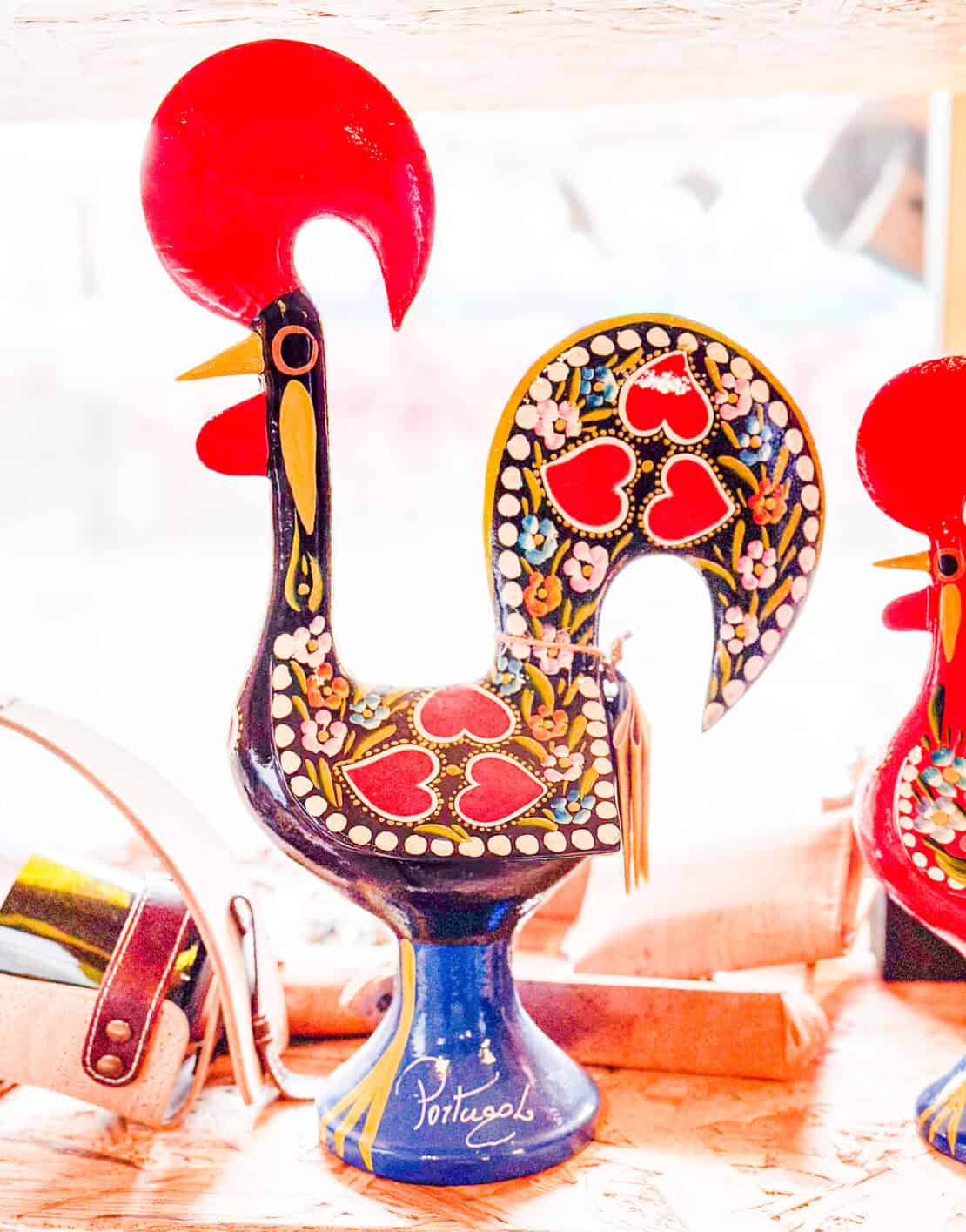
The Barcelos Rooster
The colourful rooster remains one of Portugal’s most recognisable symbols.
Inspired by a medieval legend, whereby a cooked cockerel crowed to save an innocent man, these cheerful ceramic figures appear in markets and workshops throughout the country.
Vases and Artistic Pieces
Portuguese artists have never been afraid to experiment with shape. In Caldas da Rainha, whimsical ceramic pieces inspired by fruit and vegetables have become famous around the world.
Elsewhere, contemporary designers are creating modern collections that combine traditional craftsmanship with minimalist style.
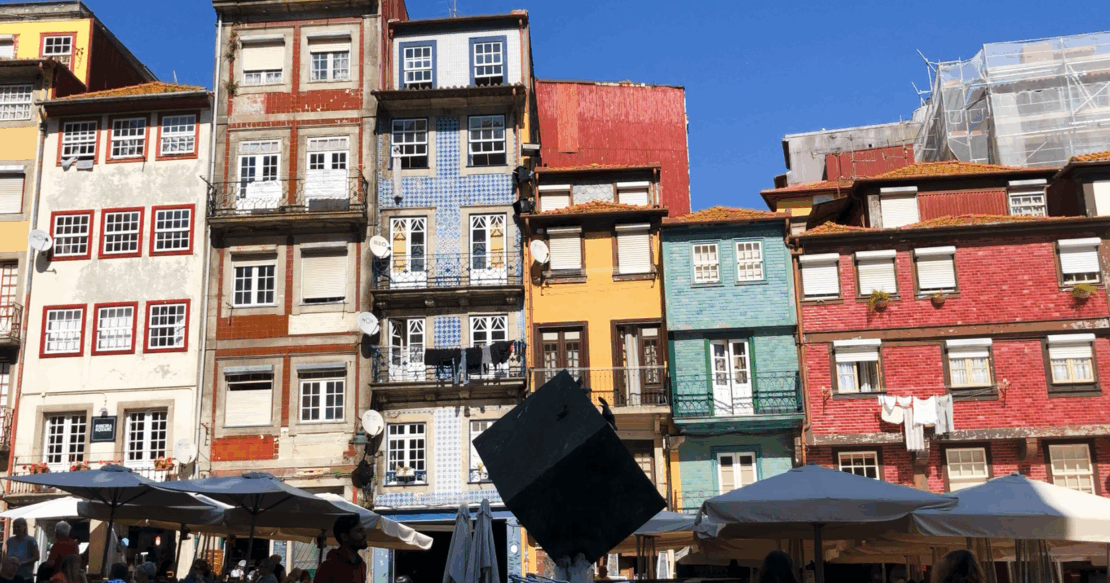
The Best Places to Buy Handmade Ceramics in Portugal
Caldas da Rainha
Caldas da Rainha has been associated with ceramics since the nineteenth century and remains one of the country’s most important pottery centres. The city combines historic factory production with independent workshops and small artisans.
Alcobaça
Known for colourful tableware and floral designs, Alcobaça produces some of Portugal’s most distinctive ceramics. Many pieces are still made using traditional methods that help preserve local heritage.
São Pedro do Corval
This small village in the Alentejo is often described as Portugal’s pottery capital. Family workshops line the streets, and you can watch makers shape clay using techniques passed down through generations.
Lisbon
Portugal’s capital offers everything from traditional pottery shops to modern designer studios. Lisbon is also home to numerous examples of hand-painted tiles adorning churches, public buildings and private homes. Here’s what not to miss while you’re in Lisbon.
The City of Aveiro
Often called the Venice of Portugal, the city of Aveiro combines canals, colourful architecture and a strong artistic tradition. Local shops sell both contemporary and vintage ceramics inspired by the surrounding coastal landscape.
Casa Cubista in the Algarve
Among the most carefully curated shops in the country, Casa Cubista has become known for showcasing authentic handmade products from small artisans. Its collections celebrate Portuguese craftsmanship while introducing contemporary design influences.
How to Recognise Authentic Handmade Pottery
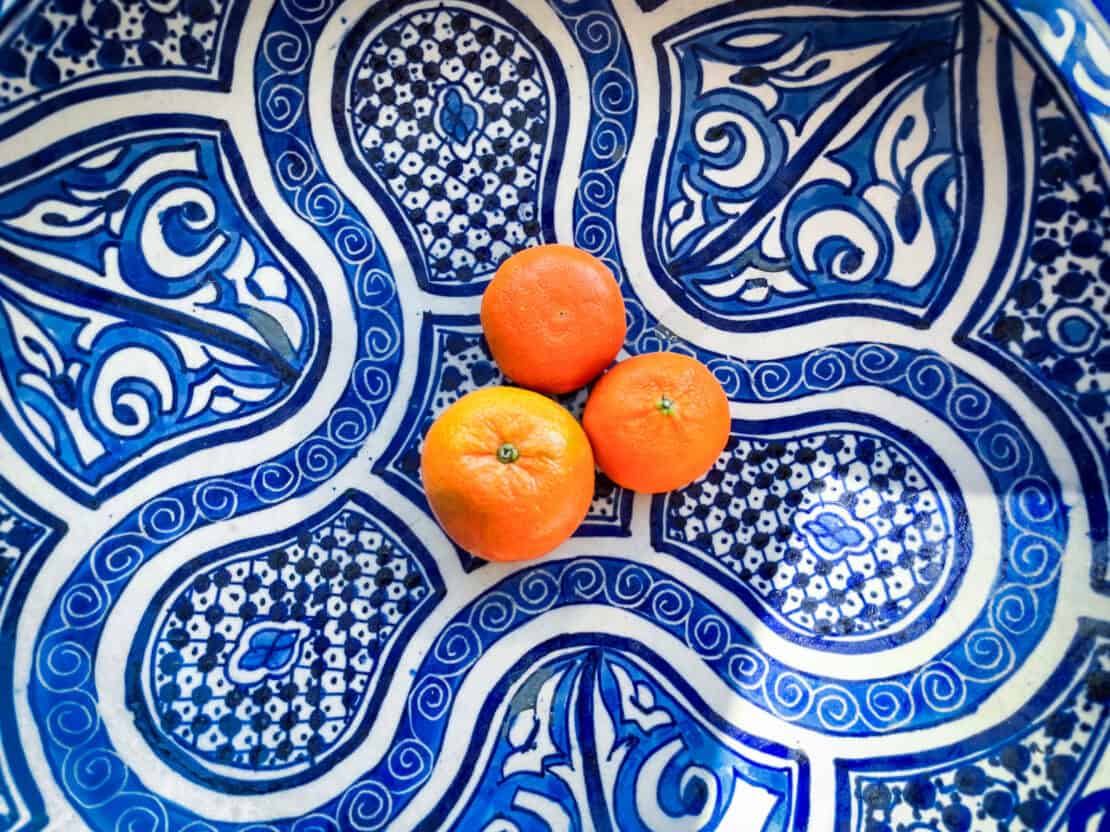
Authentic handmade ceramics usually reveal subtle variations in shape, colour and brushwork.
Look underneath a plate, cup or vase and you may find the signature of an artist, workshop or factory. These marks help identify where the piece was made in Portugal.
A sticker saying “Made in Taiwan” is usually a good clue, too.
What’s All the Fuss About Anyway?
I write a lot about souvenirs from around the world because they matter more often than we think.
Beyond their beauty, Portuguese ceramics help preserve traditions that have survived for centuries, and which form part of a sense of identity.
Many workshops remain family businesses, supporting small artisans and keeping skills alive. And it’s not that family-run businesses are inherently more worthy. But there is an increased chance that the business will have more awareness of the community they live in and the concerns of the future than, perhaps, a faceless corporation oceans away.
In a world of mass production, supporting local producers is an excellent way to support sustainable tourism.
More About Portugal
- The best Portugal road trip itinerary
- Work out where to eat in Lisbon with our food guide crafted from local advice.
- Authentic and unusual things to do in Portugal
- Check out the best places to stay in Lisbon here.
- The best Spain and Portugal itinerary
- 21 Unusual things to do in Porto, city of the north
- Avalon Alegria Review: Is a Portugal Douro River Cruise for You?
- The best souvenirs from Porto
- Bola de Lamego: the Portuguese treat that’s better than it looks
- The best things to do in the Costa Vicentina, the untamed coast of Europe
- Is Porto worth visiting?
- How to spend one day in Porto
- Secret streets of Lisbon: your self-guided tour